logo elektroda
logo elektroda
X
logo elektroda

LCSC GigaDevice GD32VW553 Datasheet - WiFi 6+BLE 5.2, 4 MB, 160Mhz MCU - OpenGD32 Firmware

divadiow 1041 35

TL;DR

  • GigaDevice’s GD32VW553 is a Wi‑Fi 6 + Bluetooth LE 5.2 combo MCU family built around a 32-bit RISC-V core running at up to 160 MHz.
  • The board work pairs a specs roundup with a hands-on flash-and-boot test on an LCSC GD32VW553HMQ6 board using GigaDevice’s all-in-one programmer and OpenGD32VW553 firmware.
  • The tested chip identifies as GD32VW553HMQ6 with 4096KB flash, 320KB SRAM, and no external flash; the family also offers 2 MB and 4 MB variants.
  • OpenGD32 boots successfully, the AP appears as expected, and the LCSC board maps the user button to PA0 and the LED to PC13.
  • At the time of posting, the MCU is mostly seen on development boards, and no commercial product using it had been identified yet.
Generated by the language model.
ADVERTISEMENT
📢 Listen (AI):
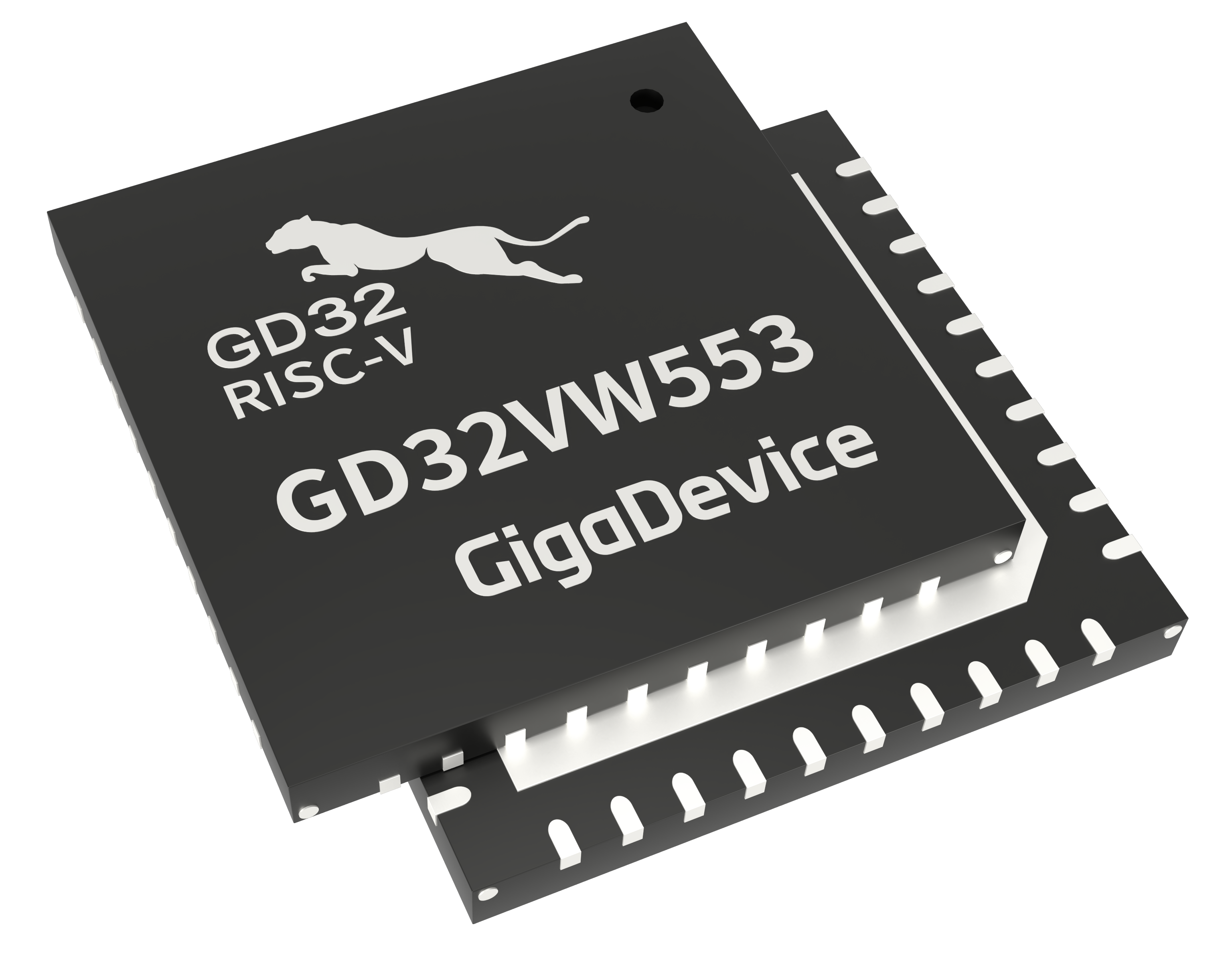
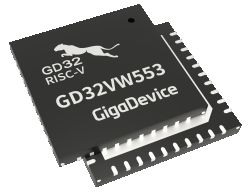
  • The GD32VW553 is a GigaDevice Combo Wireless MCU family based on a 32-bit RISC-V core running at up to 160 MHz. GigaDevice announced the official launch on 6 November 2023, with samples and evaluation boards available for request at that time and mass production/delivery scheduled from December 2023.

    GigaDevice positions the series for wireless application scenarios including smart home appliances, smart home systems, industrial Internet, and communication gateways. It also describes the family as suitable for budget-constrained scenarios such as office equipment, payment terminals, and other IoT products. GigaDevice separately mentions industrial control interconnection, lighting equipment, and socket panels as application scenarios for the device voltage and high-temperature range.
    LCSC GigaDevice GD32VW553 Datasheet - WiFi 6+BLE 5.2, 4 MB, 160Mhz MCU - OpenGD32 Firmware

    Main specifications:

    * CPU: 32-bit RISC-V core
    * Maximum clock: 160 MHz
    * Wireless: 2.4 GHz Wi-Fi 6 + Bluetooth LE 5.2
    * Wi-Fi standards: IEEE 802.11ax, backward compatible with IEEE 802.11b/g/n; HT20 listed in the product selector
    * Wi-Fi 6 features listed by GigaDevice: OFDMA, MU-MIMO, Target Wake Time
    * Bluetooth: Bluetooth LE 5.2
    * BLE data modes: 2 Mbps high-speed mode, plus 125 kbps / 500 kbps coded PHY modes
    * Flash: 2 MB or 4 MB internal Flash, depending on part
    * SRAM: 320 KB
    * Instruction cache: 32 KB configurable I-Cache
    * Supply voltage: 1.8 V to 3.6 V
    * Packages: QFN32 and QFN40
    * GPIO: up to 21 GPIOs on QFN32 parts, up to 28 GPIOs on QFN40 parts in the product selector; the launch article says up to 29 programmable GPIO pins
    * ADC: 12-bit ADC, 1 unit, up to 9 channels
    * Timers: GigaDevice's launch article lists 2 × 32-bit general-purpose timers, 2 × 16-bit general-purpose timers, 4 × 16-bit basic timers, and 1 × PWM advanced timer. The current product selector lists 2 × 32-bit GPTM, 2 × 16-bit GPTM, 1 × 16-bit advanced timer, 1 × 16-bit basic timer, 1 × 64-bit SysTick, 2 watchdogs, and 1 RTC.
    * Interfaces: 3 × U(S)ART, 2 × I²C, 1 × SPI, and 1 × four-wire QSPI
    * Security features listed by GigaDevice: WPA/WPA3 support, hardware DES, 3DES, AES, Hash acceleration, PKCAU, and TRNG
    * Temperature range: -40 °C to +85 °C or -40 °C to +105 °C, depending on part suffix
    * Development support: GD32VW55x Wi-Fi & BLE SDK, RTOS support, hardware drivers, wireless protocol stack, application routines, IoT communication protocols, API documentation, application notes, GD32 Embedded Builder, GD32 IDE, GD-LINK, GD32 All-In-One Programmer, SEGGER Embedded Studio support, and IAR support
    * Certifications stated by GigaDevice: Wi-Fi 6 certification, Bluetooth certification, and FCC/CE RF compliant

    Part NoPackageFlashSRAMGPIOTemperature range
    GD32VW553KIQ7QFN322 MB320 KBup to 21-40 °C to +105 °C
    GD32VW553KMQ7QFN324 MB320 KBup to 21-40 °C to +105 °C
    GD32VW553HIQ7QFN402 MB320 KBup to 28-40 °C to +105 °C
    GD32VW553HMQ7QFN404 MB320 KBup to 28-40 °C to +105 °C
    GD32VW553KIQ6QFN322 MB320 KBup to 21-40 °C to +85 °C
    GD32VW553KMQ6QFN324 MB320 KBup to 21-40 °C to +85 °C
    GD32VW553HIQ6QFN402 MB320 KBup to 28-40 °C to +85 °C
    GD32VW553HMQ6QFN404 MB320 KBup to 28-40 °C to +85 °C


    sources:
    https://www.gigadevice.com/product/mcu/wireless-mcus/gd32vw553-series
    https://www.gigadevice.com/about/news-and-event/news/gigadevice-launches-gd32vw553-series
    https://www.gigadevice.com/product/mcu/mcus-product-selector/gd32vw553hiq7
    https://fcc.report/company/Gigadevice-Semiconductor-Inc


    At time of posting, GD32VW553 is mostly seen on development boards. I don't believe we've identified a commercial product using this MCU yet.

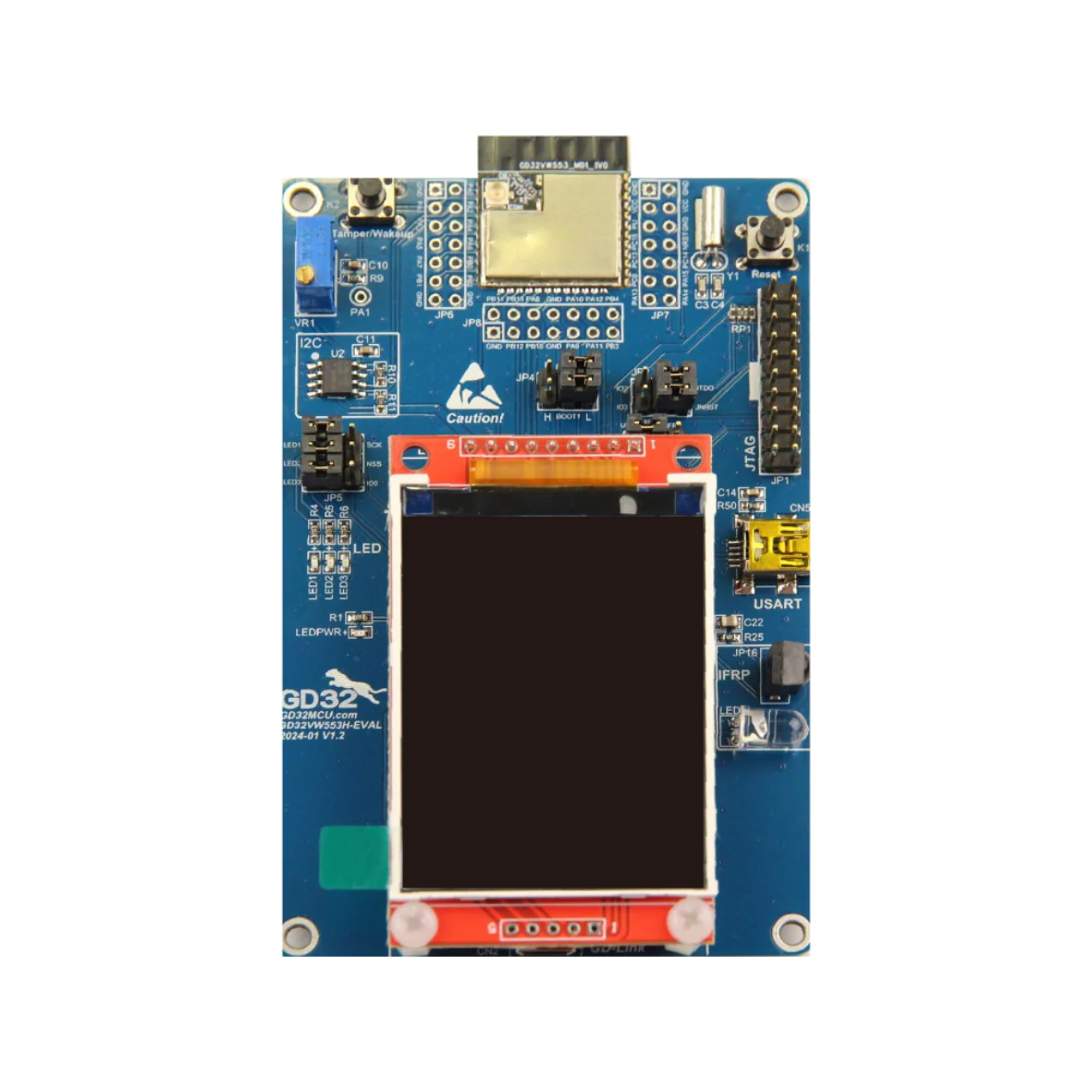
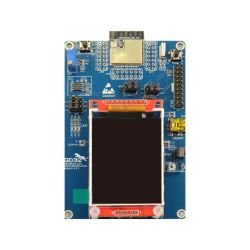
    Official GigaDevice EVAL board
    https://gigadevice.eu/products/gd32vw553h-eval
    LCSC GigaDevice GD32VW553 Datasheet - WiFi 6+BLE 5.2, 4 MB, 160Mhz MCU - OpenGD32 Firmware

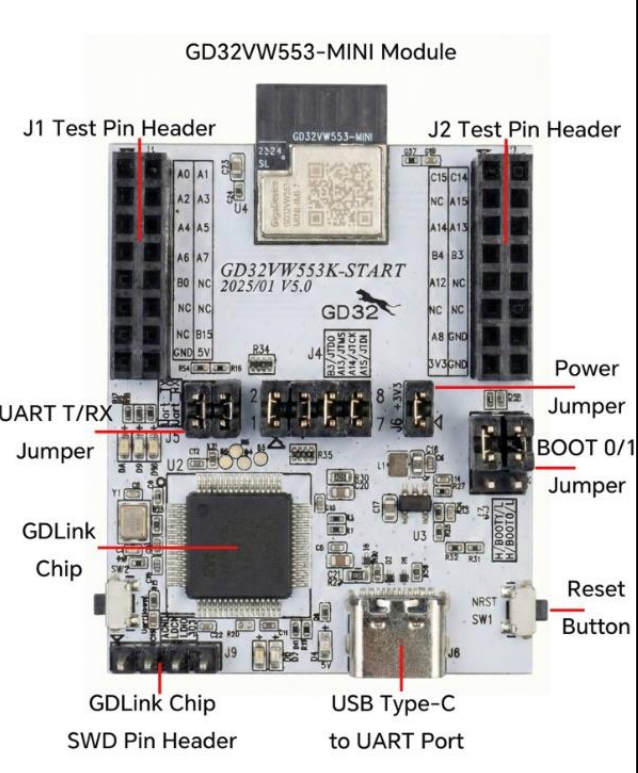
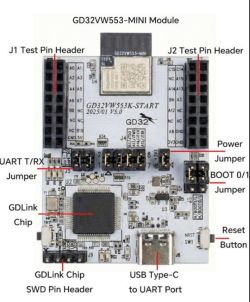
    Official GigaDevice START board
    https://www.gd32mcu.com/data/documents/applic...20GD32VW553%20Quick%20Development%20Guide.pdf
    LCSC GigaDevice GD32VW553 Datasheet - WiFi 6+BLE 5.2, 4 MB, 160Mhz MCU - OpenGD32 Firmware

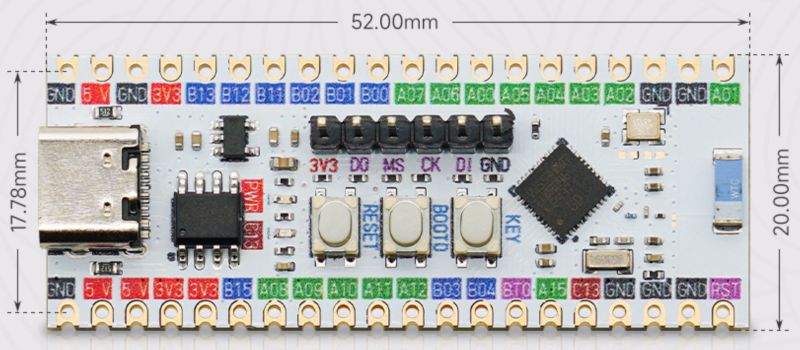
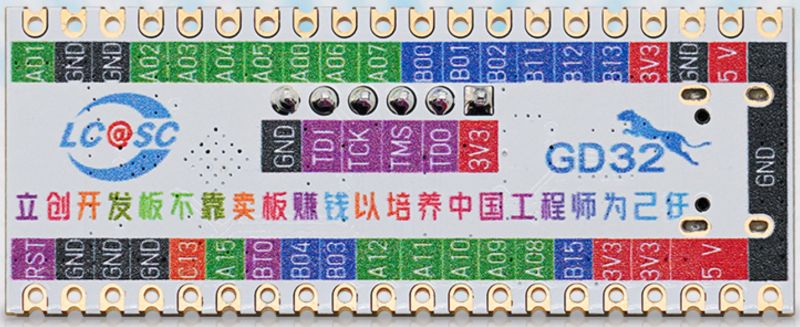
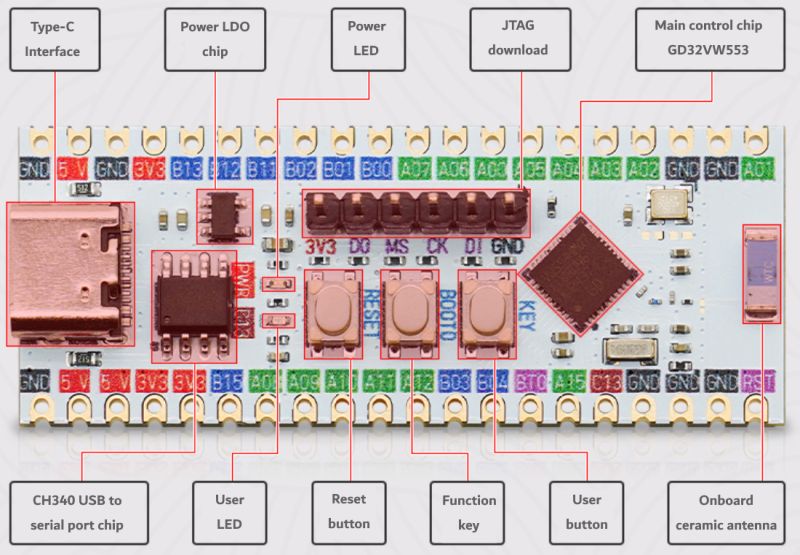
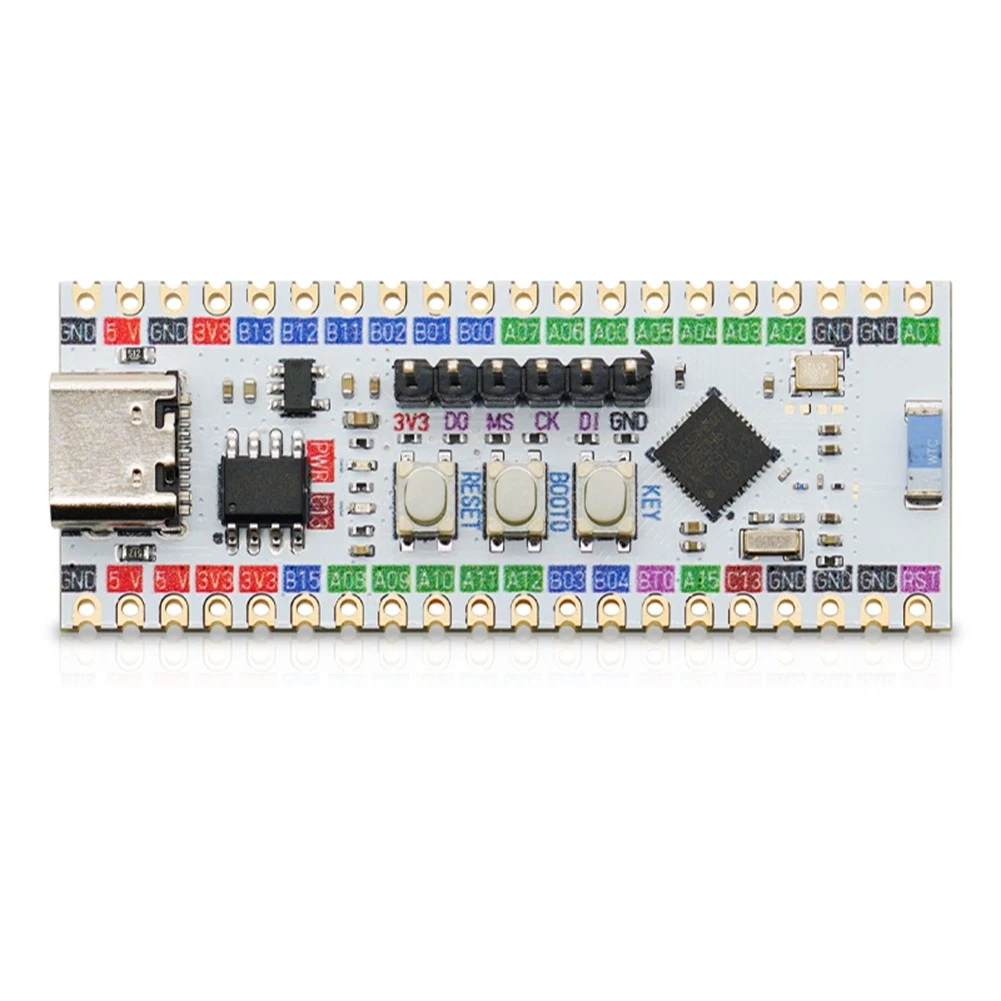
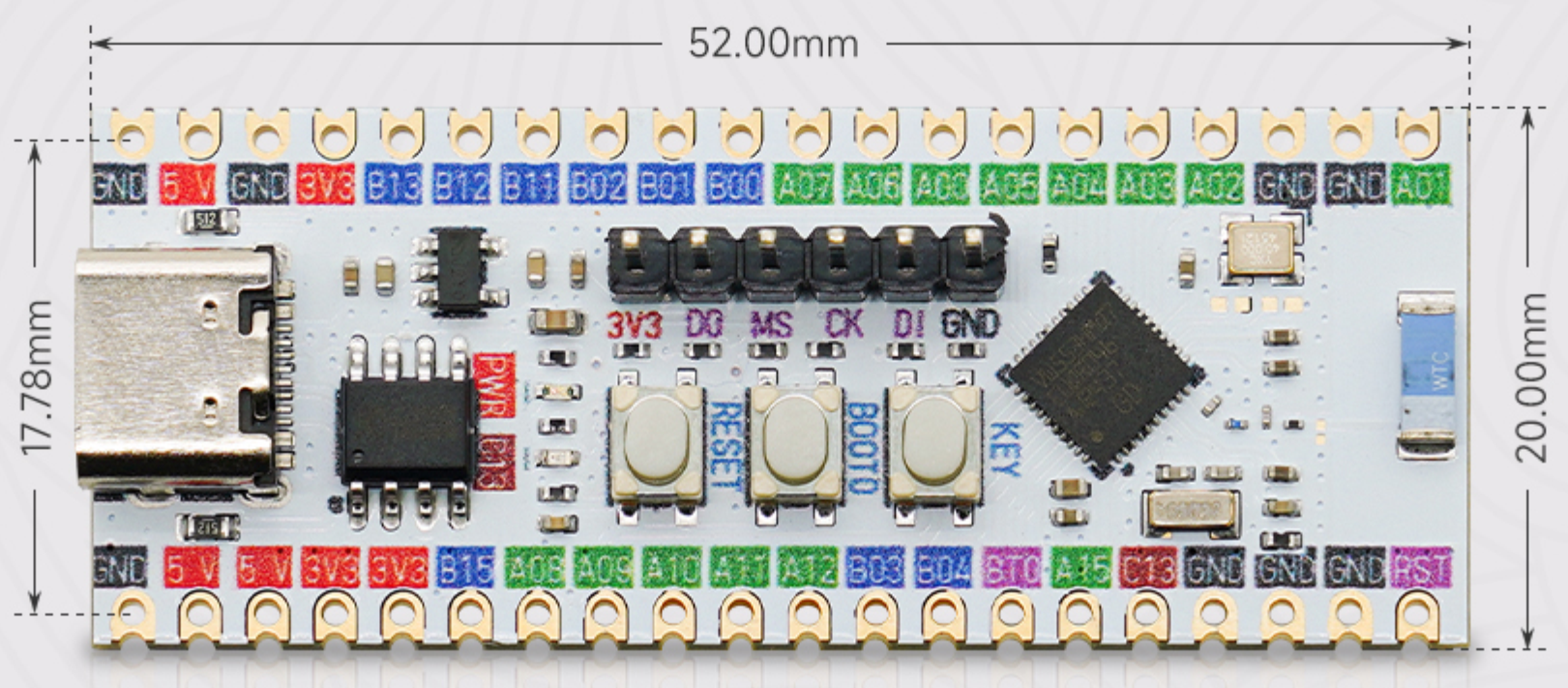
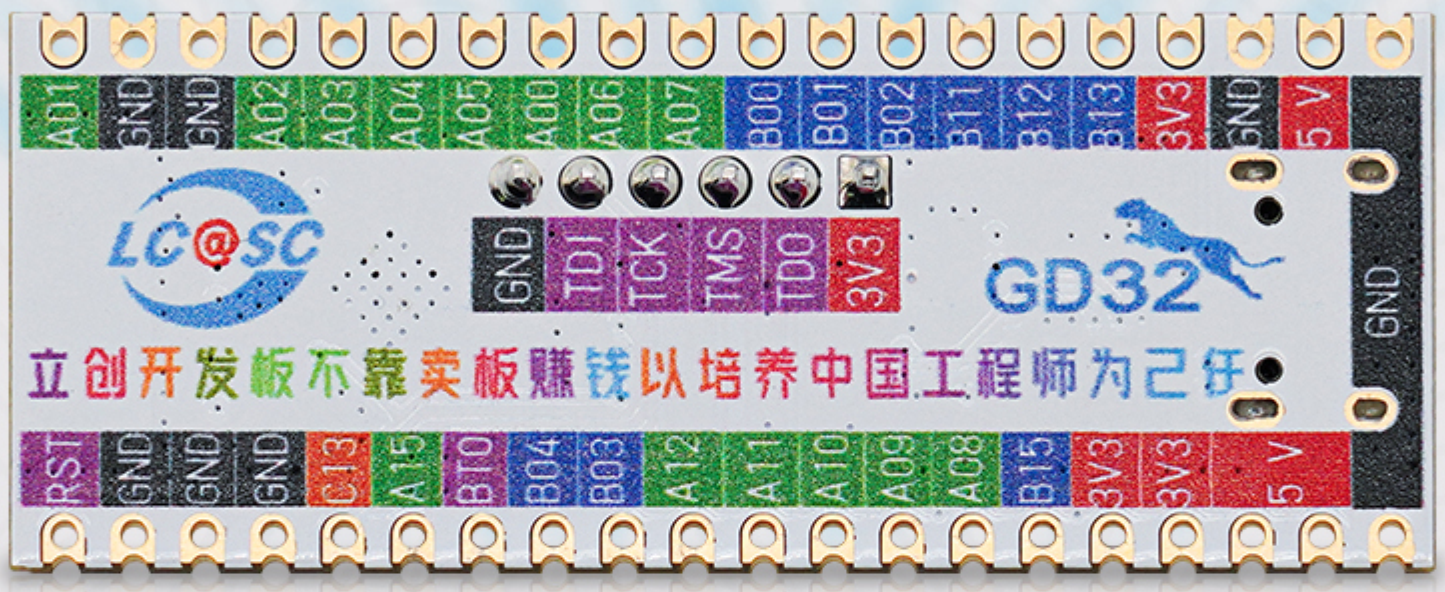
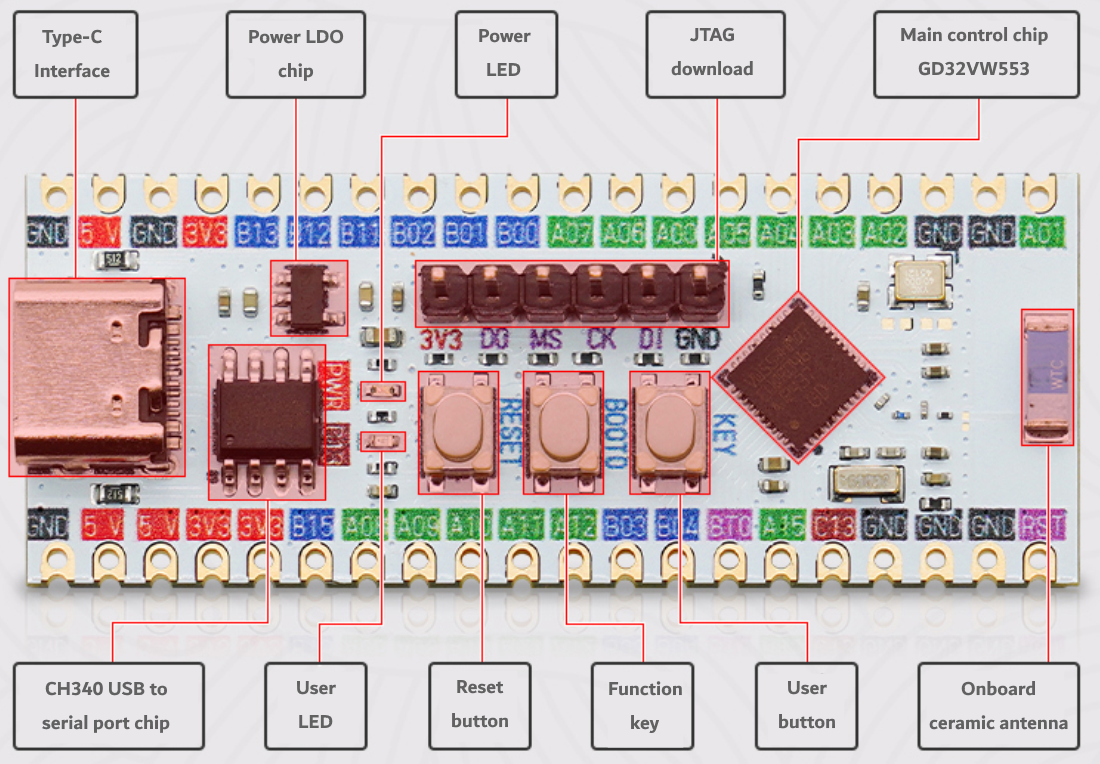
    LCSC-boards LCKFB-GD32VW553-HMQ6
    https://www.lcsc.com/product-detail/C49304632.html
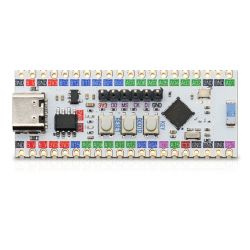
    LCSC GigaDevice GD32VW553 Datasheet - WiFi 6+BLE 5.2, 4 MB, 160Mhz MCU - OpenGD32 Firmware
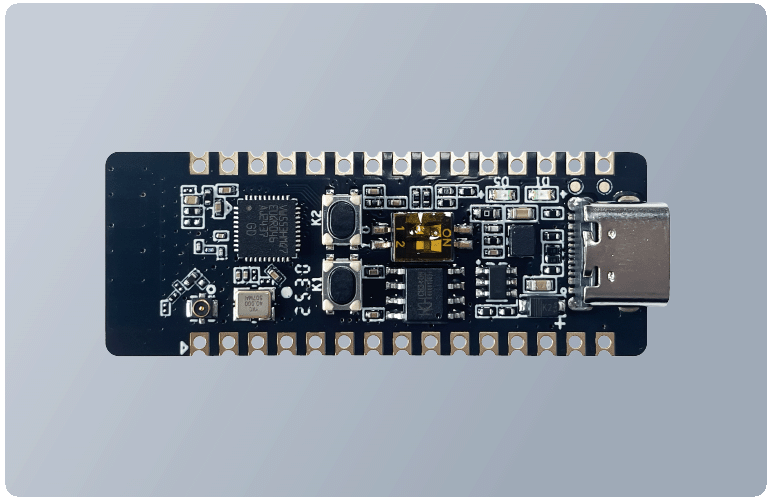
    Firefly Workshop GD32VW553-IOT-V2
    https://www.cecport.com/en/solutionsDetail?id=123
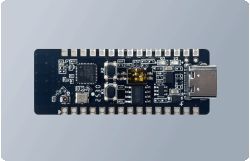
    LCSC GigaDevice GD32VW553 Datasheet - WiFi 6+BLE 5.2, 4 MB, 160Mhz MCU - OpenGD32 Firmware

    undoubtedly others.

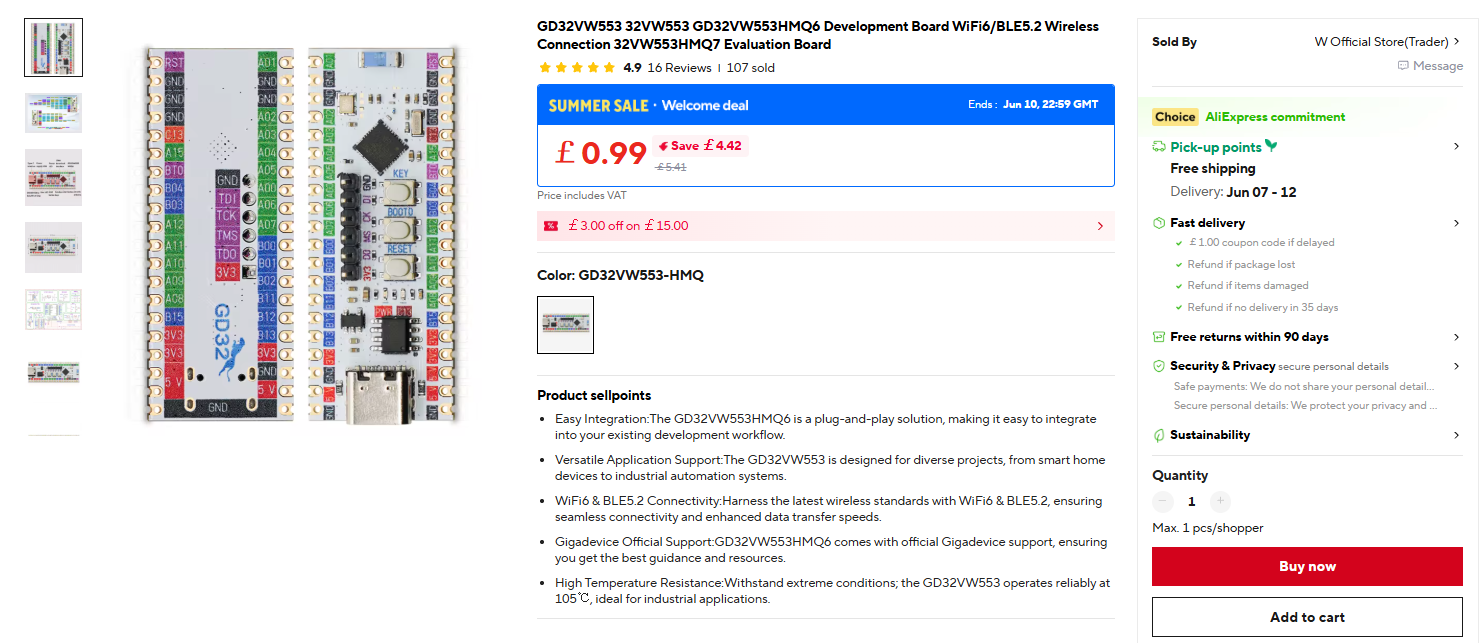
    I bought the GD32VW553HMQ6 LCSC board from Ali Express for £5.14 delivered https://www.aliexpress.com/item/1005009723659760.html
    It seems to be eligible for Welcome Deal pricing at the moment
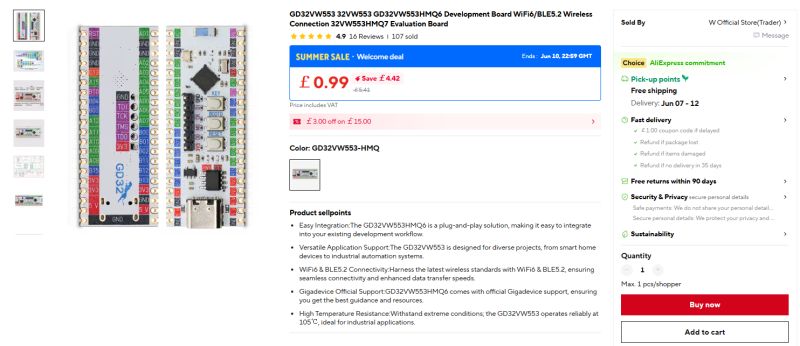
    LCSC GigaDevice GD32VW553 Datasheet - WiFi 6+BLE 5.2, 4 MB, 160Mhz MCU - OpenGD32 Firmware


    LCSC GigaDevice GD32VW553 Datasheet - WiFi 6+BLE 5.2, 4 MB, 160Mhz MCU - OpenGD32 Firmware

    LCSC GigaDevice GD32VW553 Datasheet - WiFi 6+BLE 5.2, 4 MB, 160Mhz MCU - OpenGD32 Firmware

    LCSC GigaDevice GD32VW553 Datasheet - WiFi 6+BLE 5.2, 4 MB, 160Mhz MCU - OpenGD32 Firmware

    LCSC GigaDevice GD32VW553 Datasheet - WiFi 6+BLE 5.2, 4 MB, 160Mhz MCU - OpenGD32 Firmware

    I have just opened the packet and am discovering things as I go.

    GigaDevice supply an all-in-one programming tool for the GD32VW5

    LCSC GigaDevice GD32VW553 Datasheet - WiFi 6+BLE 5.2, 4 MB, 160Mhz MCU - OpenGD32 Firmware
    https://www.gd32mcu.com/en/download/7?kw=GD32VW5

    The 7z download seems to contain English documentation, xmodem stub files, flash and efuse option xmls

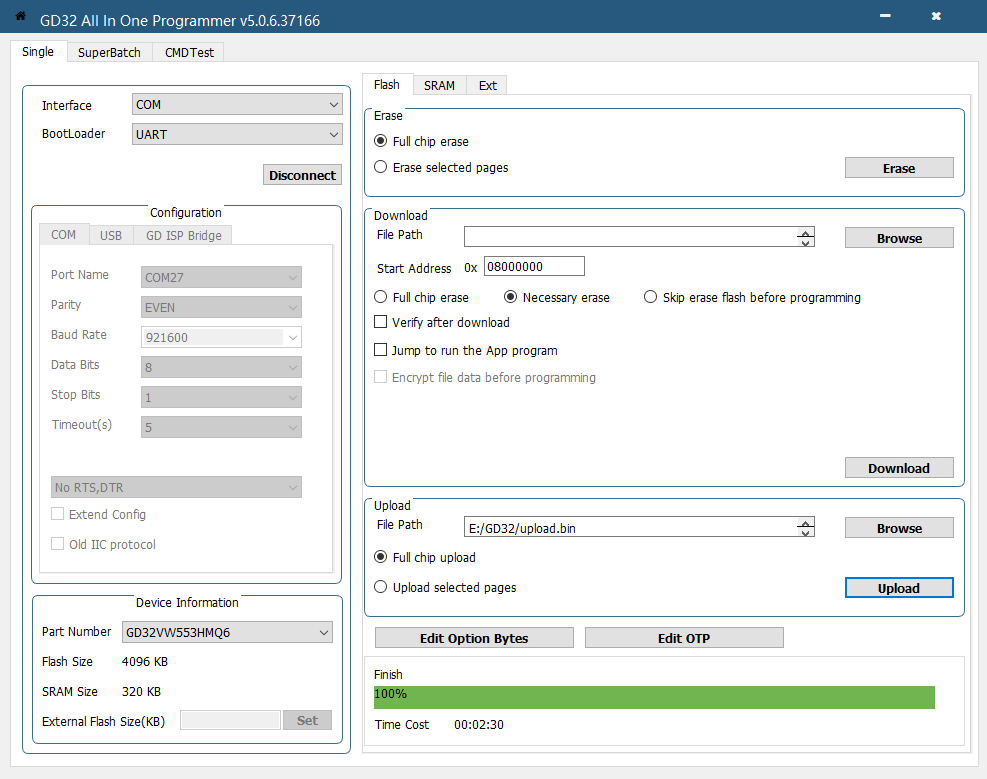
    First, a dump of the factory flash content to file. Hold BOOT0 button down (pulls PC08 high) and RST to get into programming mode.
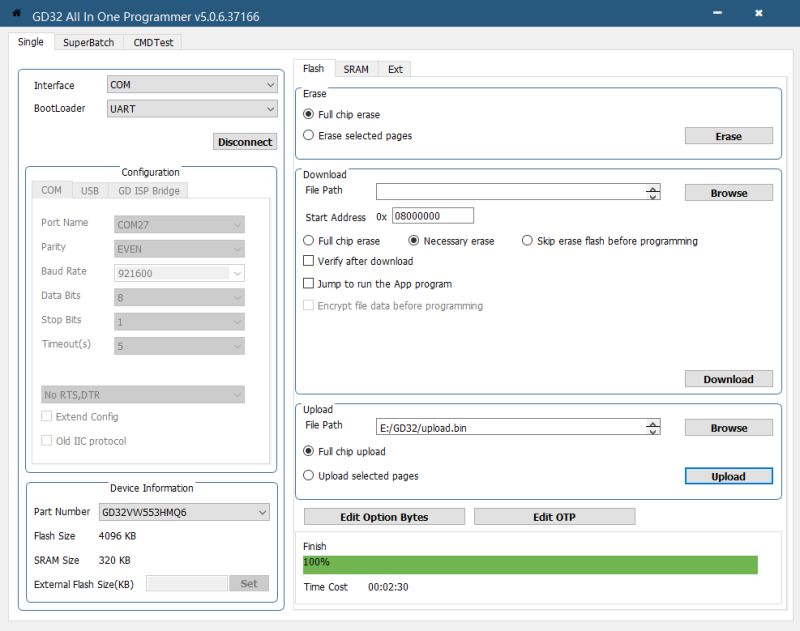
    Connect
    UART button in GD32 AIO app.
    LCSC GigaDevice GD32VW553 Datasheet - WiFi 6+BLE 5.2, 4 MB, 160Mhz MCU - OpenGD32 Firmware

    My chip is detected as GD32VW553HMQ6, 4096KB flash and 320KB SRAM, no external flash.

    Save full chip flash to file with 'Upload' section (upload to your PC, to a file), after specifying destination file name and location.

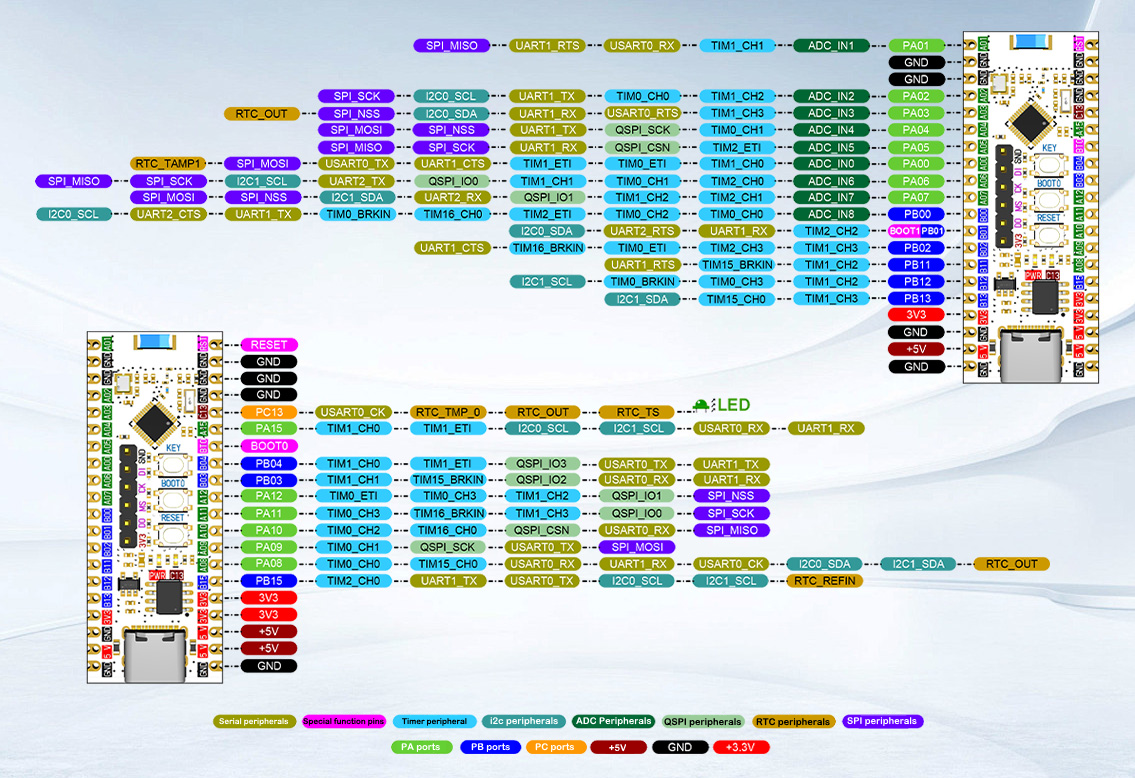
    At boot, factory firmware from PA06 (UART2_TX) @115200 baud prints:
    Code: Text
    Log in, to see the code


    and from PB15 (UART1_TX) simply:
    Code: Text
    Log in, to see the code


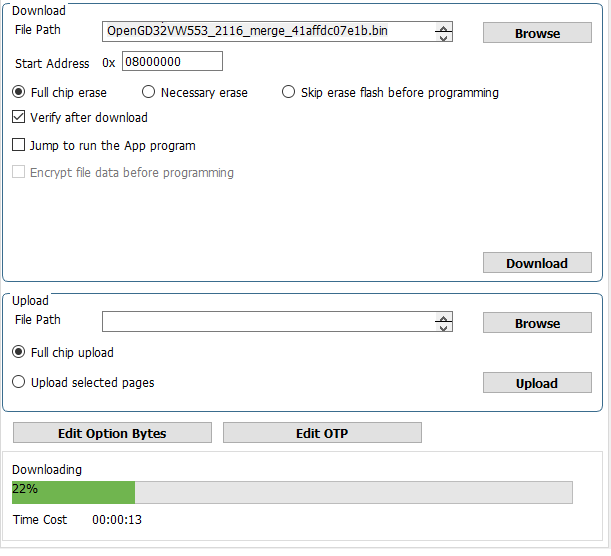
    Now to download (to the GD32) @insmod's OpenGD32VW553 port - the latest development build from https://github.com/openshwprojects/OpenBK7231T_App/actions/runs/26806809717
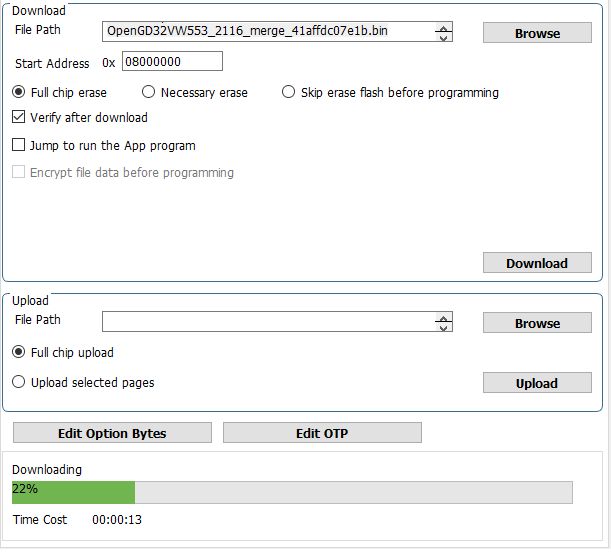
    LCSC GigaDevice GD32VW553 Datasheet - WiFi 6+BLE 5.2, 4 MB, 160Mhz MCU - OpenGD32 Firmware

    OpenGD32 boot log from PA06 at 1500000 baud
    Code: Text
    Log in, to see the code


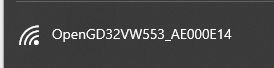
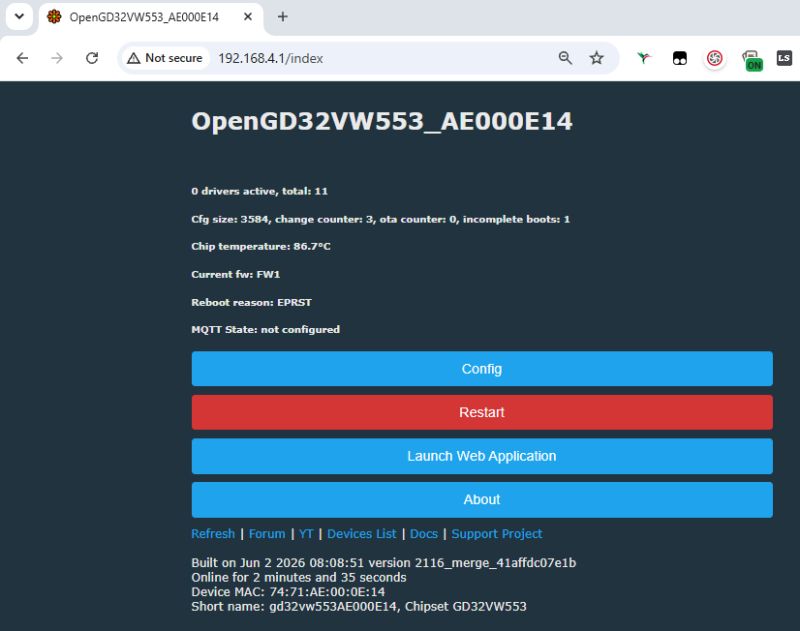
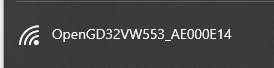
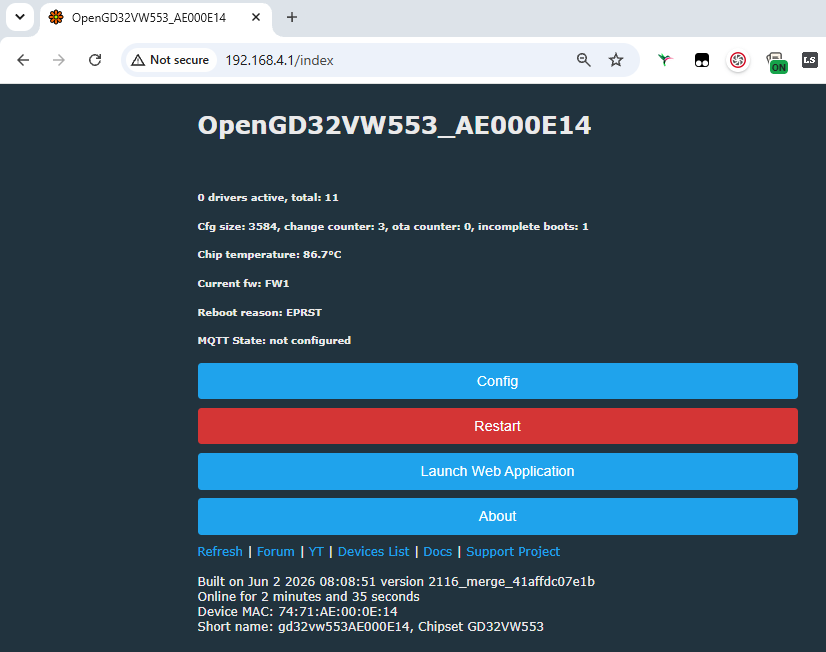
    and AP is seen as expected
    LCSC GigaDevice GD32VW553 Datasheet - WiFi 6+BLE 5.2, 4 MB, 160Mhz MCU - OpenGD32 Firmware

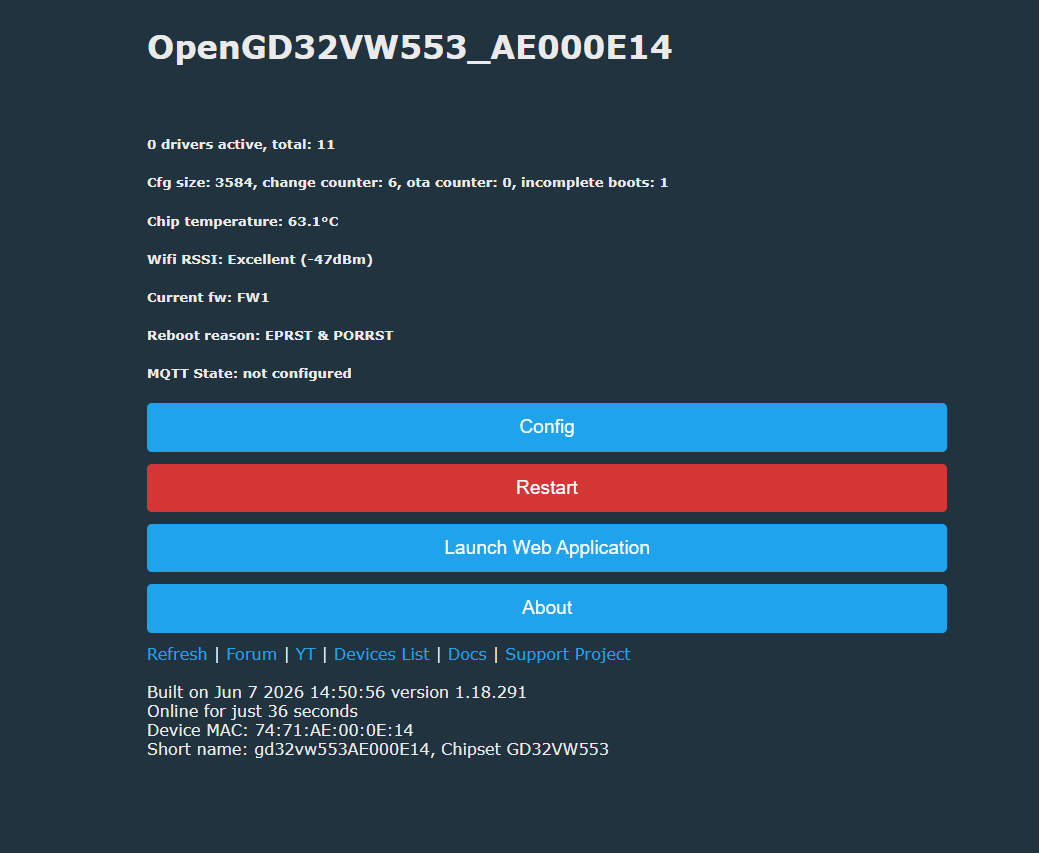
    Screenshot of OpenGD32VW553 status page with Config, Restart, and Launch Web Application buttons

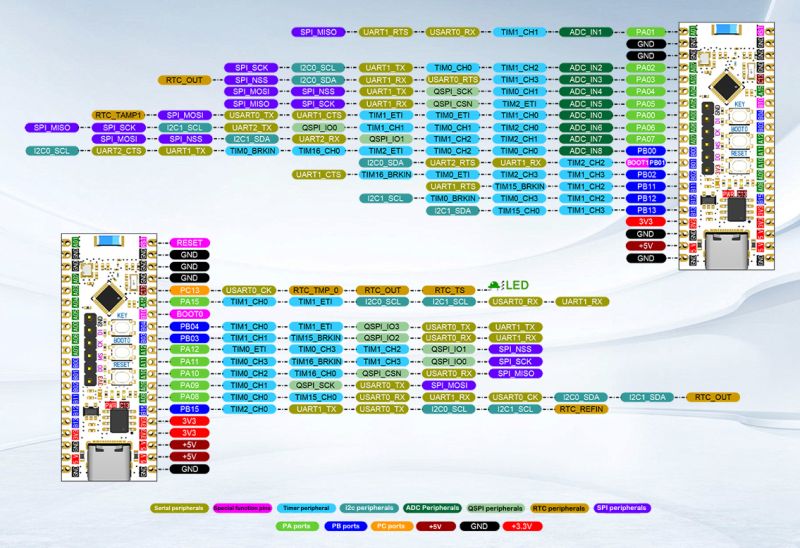
    The user button on the LCSC is PA0. The LED is PC13.
    Attachments:
    • LCSC-boards LCKFB-GD32VW553-HMQ6_datasheet.pdf (10.16 MB) You must be logged in to download this attachment.

    Cool? Ranking DIY
    About Author
    divadiow
    Level 38  
    Offline 
    divadiow wrote 5038 posts with rating 891, helped 438 times. Live in city Bristol. Been with us since 2023 year.
  • ADVERTISEMENT
  • #2 21914645
    p.kaczmarek2
    Moderator Smart Home
    Posts: 14589
    Help: 654
    Rate: 12611
    Thanks for sharing! How is the stability of this new platform? Here is some more info and datasheets:


    GD32VW553xx Datasheet_Rev1.5.pdf
    GD32VW553x...Rev1.5.pdf (1.31 MB)You must be logged in to download this attachment.

    GD32VW553-MINI datasheet Rev1.1 20250225.pdf
    GD32VW553-...250225.pdf (1.33 MB)You must be logged in to download this attachment.

    GD32VW55x User Manual
    GD32VW55x_...Rev1.6.pdf (8.56 MB)You must be logged in to download this attachment.

    Programmer mirror:
    GD32AllInO...6.37166.7z (14.64 MB)You must be logged in to download this attachment.
    Helpful post? Buy me a coffee.
  • #3 21914654
    insmod
    Level 31  
    Posts: 1389
    Help: 164
    Rate: 433
    2.5 days online without any crashes.

    I've tried to implement as much as possible, and i think i've more or less succeeded in it.
    All basic and advanced features i had thought about are supported, except for pin deep sleep. Even log port switching is supported.

    Dev board has a very wonky antenna, it may experience the same problem as ECR6600 if not aligned to router properly (up to disconnecting and failing to reconnect). I’ve encountered that issue, even though I’m only 2–3 meters from the router.

    I considered developing a custom stub for easier flasher integration, but i failed to upload anything to sram via programmer tool.

    SDK is configured for 4MB flash, but there are 2MB variants.

    1500000 baud rate was my decision to squeeze out a little more performance (UART is polling, i think, not DMA). Changeable via second argument of logport command. First argument can be -1 to restore default log port.
  • #4 21914683
    divadiow
    Level 38  
    Posts: 5038
    Help: 438
    Rate: 891
    insmod wrote:
    Dev board has a very wonky antenna


    I guess ceramic antennas are maybe not so great. I didn't know they were a thing tbh.


    GD32 dumps from our respective boards https://github.com/divadiow/FlashDumps/tree/main/IoT/GD32VW55X

    insmod's GD32 detected as GD32VW553HMQ7 despite being advertised at point-of-sale as GD32VW553HMQ6.
    The only listed difference I think being the operating temperature range (see table above).

    The fw is self-described as
    This firmware is for WiFi & BLE rf test.


    It initially boots into image1 (0x1EA000), the AT-command firmware.
    AT
    <Enter> to start after opening COM port in terminal at 115200
    Code: Text
    Log in, to see the code

    In the RF app there's a switch to flick to the AT image, but I don't see an equivalent in the AT app to switch to RF

    image_switch
    ->
    Switch image successful, please reboot now!
  • #5 21914756
    p.kaczmarek2
    Moderator Smart Home
    Posts: 14589
    Help: 654
    Rate: 12611
    What are the security mechanisms available in GD32? Does it have something like Beken keys? I am wondering if this SDK is indeed Tuya-ready
    Helpful post? Buy me a coffee.
  • #6 21914775
    insmod
    Level 31  
    Posts: 1389
    Help: 164
    Rate: 433
    AES encryption + secure boot. I don't think Tuya uses them.
  • #7 21914829
    p.kaczmarek2
    Moderator Smart Home
    Posts: 14589
    Help: 654
    Rate: 12611
    I think that firmware encryption/secure boot (and HTTPS) are mandatory for new IoT products in EU, but Tuya is not obviously in EU, it's China all the way. Curious to see what will they do.

    @ElektrodaBot are there any regulations and requirements for new IoT products in EU? Keep answer short and try to use simple words, no law jargon. Give sources and specifics.
    Helpful post? Buy me a coffee.
  • ADVERTISEMENT
  • #9 21915346
    p.kaczmarek2
    Moderator Smart Home
    Posts: 14589
    Help: 654
    Rate: 12611
    @divadiow those are huge, anything interesting in there?

    It seems that AI didn't get my requets. Let me retry.
    @ElektrodaBot are there any regulations and requirements for new IoT products in EU? Keep answer short and try to use simple words, no law jargon. Give sources and specifics.

    Strange, it seems no AI for me today. Anyway, @insmod is it ready to merge?
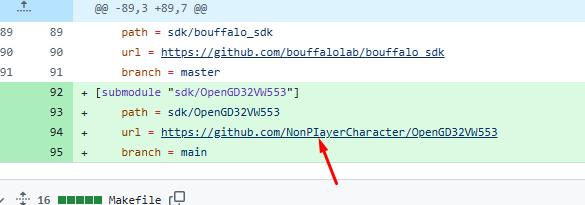
    Btw, I've spotted something interesting. I didn't notice that's the correct way to spell this username:
    Screenshot of a Git diff adding a submodule entry, with a red arrow pointing to a GitHub URL
    Some fonts can spoil things too quickly.
    Helpful post? Buy me a coffee.
  • #10 21915352
    insmod
    Level 31  
    Posts: 1389
    Help: 164
    Rate: 433
    Flasher mode: GD32VW553
    Going to open port: COM7.
    Port ready!
    Bootloader version: 0x30
    Product ID: 7HMP
    Uploading stub to 0x20002000...
    0x0..0x100..0x200..0x300..0x400..0x500..0x600..0x700..0x800..0x900..0xA00..0xB00..0xC00..0xD00..0xE00..0xF00..0x1000..0x1100..0x1200..0x1300..0x1400..0x1500..0x1600..0x1700..0x1800..0x1900..0x1A00..0x1B00..0x1C00..0x1D00..0x1E00..0x1F00..0x2000..0x2100..0x2200..0x2300..0x2400..0x2500..0x2600..0x2700..0x2800..0x2900..0x2A00..0x2B00..0x2C00..0x2D00..0x2E00..0x2F00..0x3000..0x3100..0x3200..0x3300..0x3400..0x3500..0x3600..0x3700..0x3800..0x3900..0x3A00..0x3B00..0x3C00..0x3D00..0x3E00..0x3F00..0x4000..
    Stub uploaded! Jumping...
    Flash ID: 0x000016
    Flash size is 4MB
    0x3F1000..
    Getting hash...
    Hash matches BC6B1E3E5D6005A657BD21992BD5F32CBF469E1940972D09FF7AD6C434652519!
    Read complete!
    OBK config loaded. You can now view it by clicking 'Change OBK settings' button.
    You can also edit it however you want.
    You can also use 'Write OBK config' button to write it back with your changes.


    Could've been done without stub, but read/write is faster with it. Stub code is ported from ECR.
    Still, erase is very slow. Might not be possible to restore backups yet.
    Flash id is fake.

    Added after 38 [seconds]:

    >>21915346
    Ready
  • #11 21915355
    p.kaczmarek2
    Moderator Smart Home
    Posts: 14589
    Help: 654
    Rate: 12611
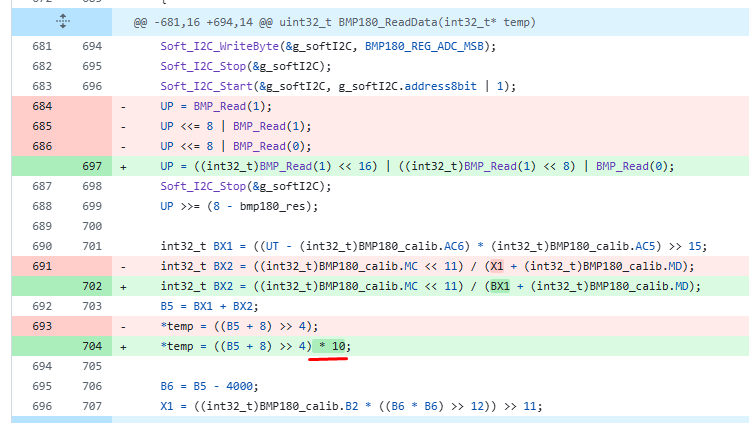
    Edit: was there a bug?
    Screenshot of a C code diff: UP calculation changed and temp assignment multiplied by 10.
    Helpful post? Buy me a coffee.
  • #12 21915357
    insmod
    Level 31  
    Posts: 1389
    Help: 164
    Rate: 433
    Yes, but only for BMP180
  • ADVERTISEMENT
  • #13 21915376
    divadiow
    Level 38  
    Posts: 5038
    Help: 438
    Rate: 891
    p.kaczmarek2 wrote:
    @divadiow those are huge, anything interesting in there?


    not much. delete the toolchain folder and the zip is then 500k

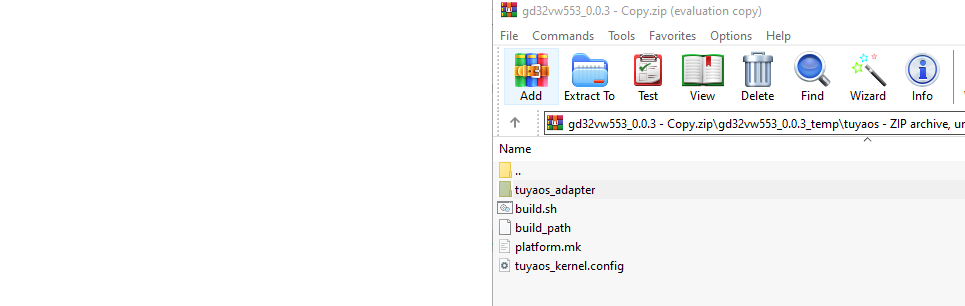
    LCSC GigaDevice GD32VW553 Datasheet - WiFi 6+BLE 5.2, 4 MB, 160Mhz MCU - OpenGD32 Firmware

    these pruduct zips are mainly only the toolchain side, the SDK side is needed to compile for any of the platforms I think.

    I only know of these SDK zips, not posted these before.

    https://images.tuyacn.com/smart/sdk/b679f97d19afb983f00ab8e1935b81f4cfb15910.tar.gz - TuyaOS-3.8.31
    https://images.tuyacn.com/smart/sdk/5a2aba8c411c9a23fefd557c4fa9ce5b90f206d8.tar.gz - TuyaOS-3.11.31

    Added after 29 [minutes]:

    divadiow wrote:
    I only know of these SDK zips, not posted these before.


    actually

  • ADVERTISEMENT
  • #15 21915530
    ElektrodaBot
    AI OpenAI ChatGPT4
    Posts: 8809
    Help: 357
    Rate: 936
    p.kaczmarek2 wrote:
    @divadiow those are huge, anything interesting in there?

    It seems that AI didn't get my requets. Let me retry.
    @ElektrodaBot are there any regulations and requirements for new IoT products in E...
    Short answer

    Yes. If an IoT product is sold in the EU, the EU rules apply, even if the cloud/SDK/vendor is Tuya in China. The EU importer/seller/manufacturer must make it compliant.

    Main rules

    RuleSince / whenApplies toSimple meaning
    RED cybersecurity rules1 Aug 2025Wi-Fi/BLE/Zigbee/radio IoTDevice must not harm networks, must protect user data/privacy, and must protect against fraud where relevant. (eur-lex.europa.eu)
    EN 18031 standardscited in EU OJ in 2025Practical RED test routeEU-listed standards for internet-connected radio devices. They explicitly cover things like passwords and security checks. (eur-lex.europa.eu)
    Cyber Resilience Act — CRAreporting from 11 Sep 2026, full rules from 11 Dec 2027Almost all connected hardware/softwareSecure-by-design, updates, vulnerability handling, SBOM/docs, CE evidence. (digital-strategy.ec.europa.eu)


    Are AES, secure boot, HTTPS mandatory?

    Not usually by exact name. The EU normally says what must be protected, not “use AES-256”.

    In practice, for a normal cloud IoT product:

    - HTTPS/TLS / MQTT-TLS: effectively yes, because data in transit must be protected. (eur-lex.europa.eu)
    - Signed firmware updates: effectively yes, because updates must be securely distributed and firmware/program integrity must be protected. (eur-lex.europa.eu)
    - Secure boot: not always named, but strongly expected if you need to prove only trusted firmware can run.
    - Firmware encryption: not always required. Firmware signing is more important. Encryption hides code; signing proves it is genuine.

    Practical checklist for new EU IoT

    A serious EU-market IoT device should have:

    - no shared default password;
    - protected cloud traffic, e.g. TLS;
    - signed OTA updates;
    - no easy firmware downgrade;
    - protected keys/secrets;
    - debug UART/SWD/JTAG locked in production;
    - published security update period;
    - vulnerability contact/reporting process;
    - CE documentation showing cybersecurity compliance.

    So for Tuya/GD32 devices: open UART flashing and unsigned firmware may be fine for dev boards, but not for a compliant mass-market EU IoT product after these rules bite.
    You can call me in any topic by writing @ElektrodaBot. Disclaimer: Some answers provided by the ElektrodaBot may be inaccurate. Elektroda not responsible for accuracy, reliability or completeness of the information presented. All ElektrodaBot responses should be verified by the user. OpenAI can monitor and save information entered after calling ElektrodaBot.
  • #16 21915723
    divadiow
    Level 38  
    Posts: 5038
    Help: 438
    Rate: 891
    insmod wrote:
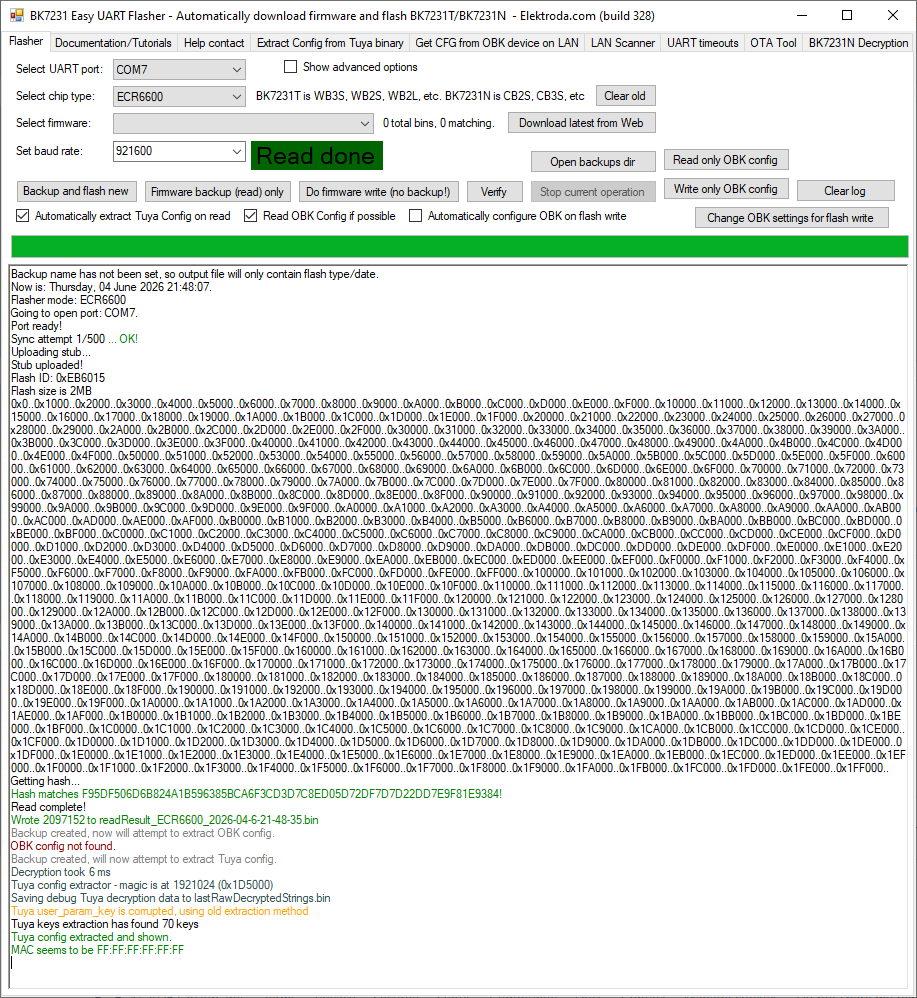
    moved a lot of ECR functions to a base class, and didn't test if ECR still works.


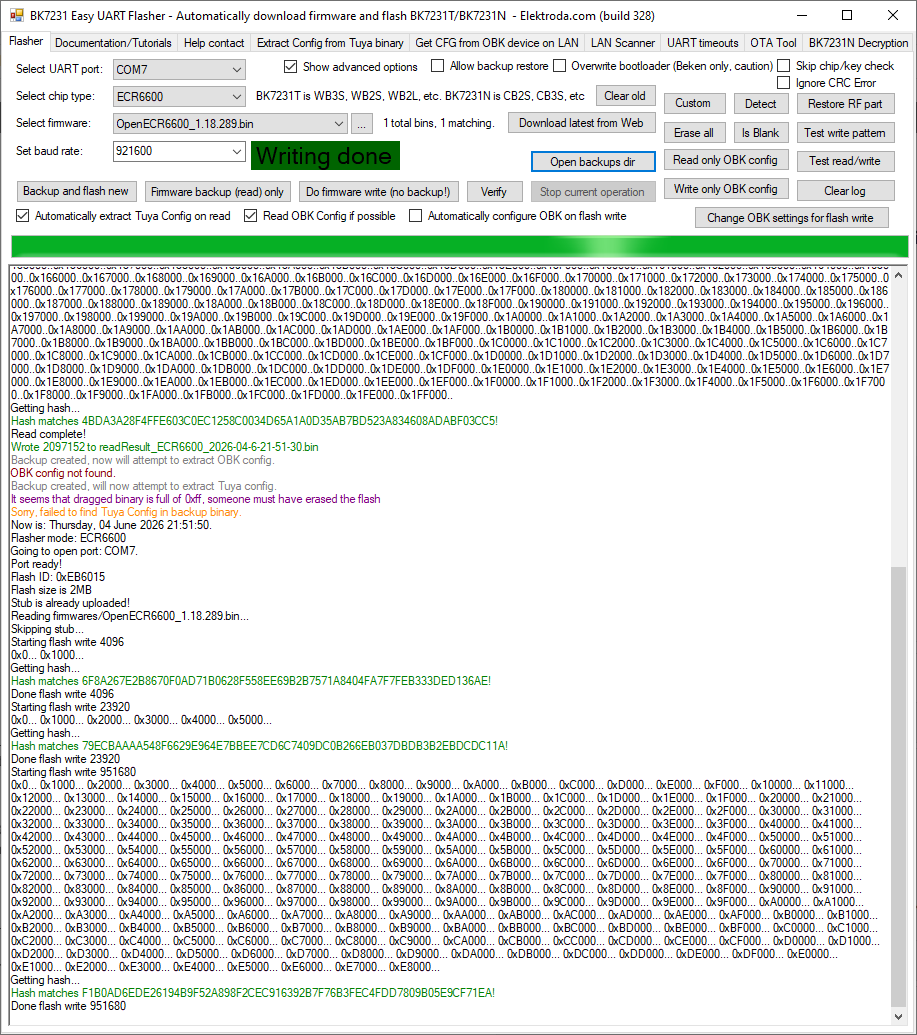
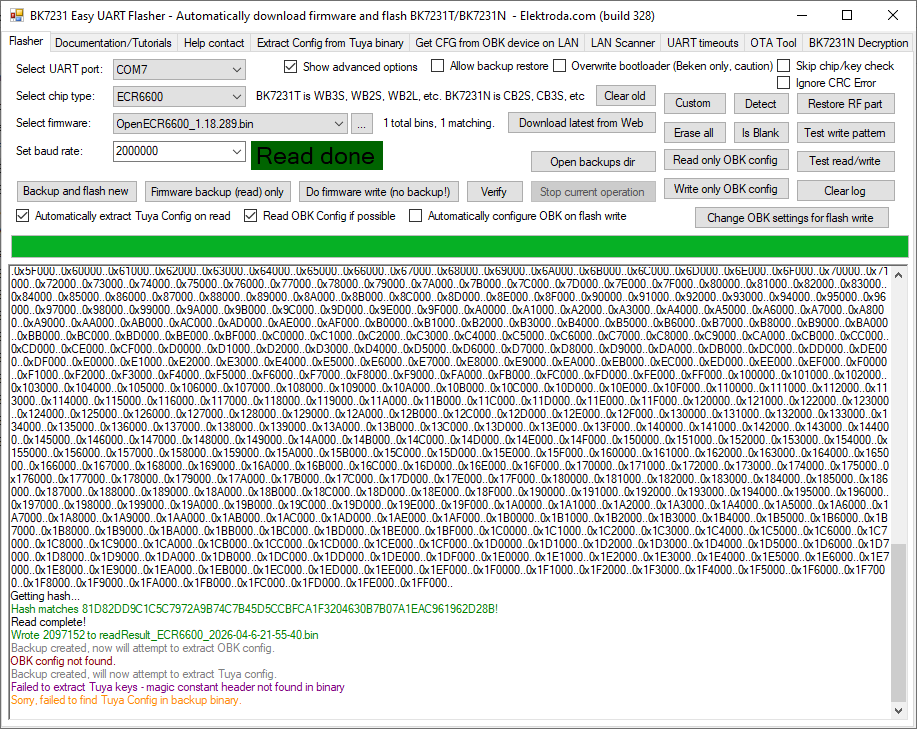
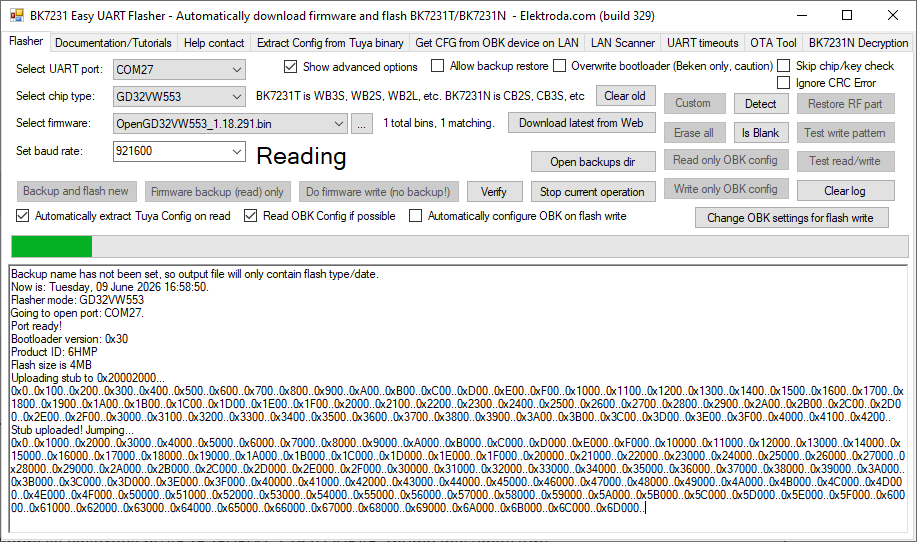
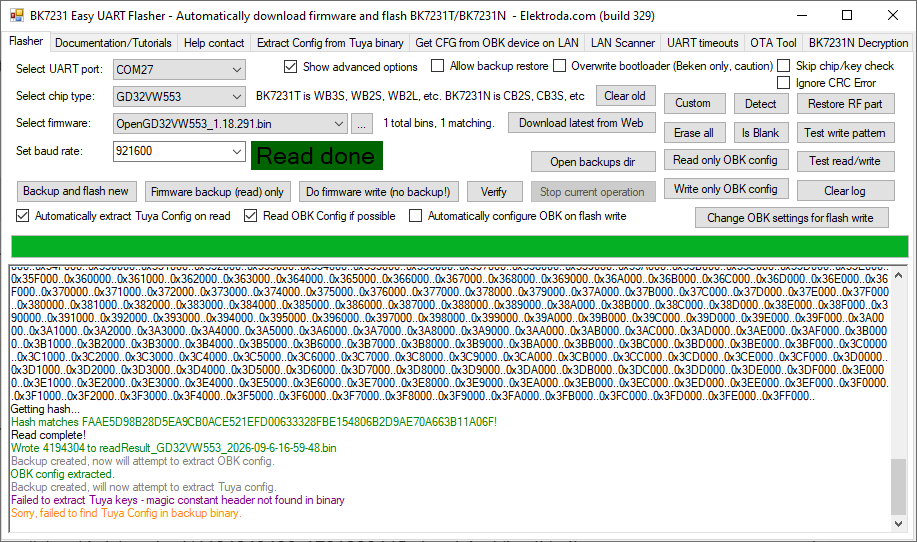
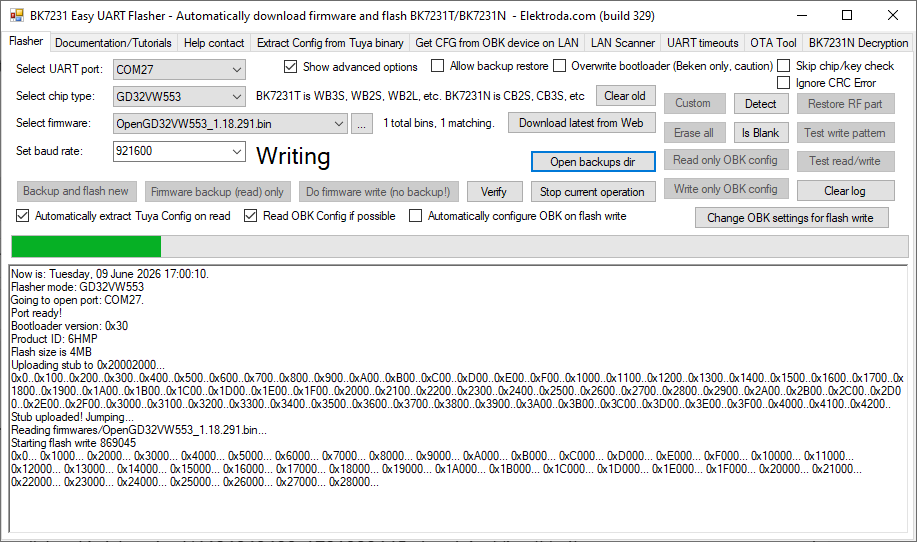
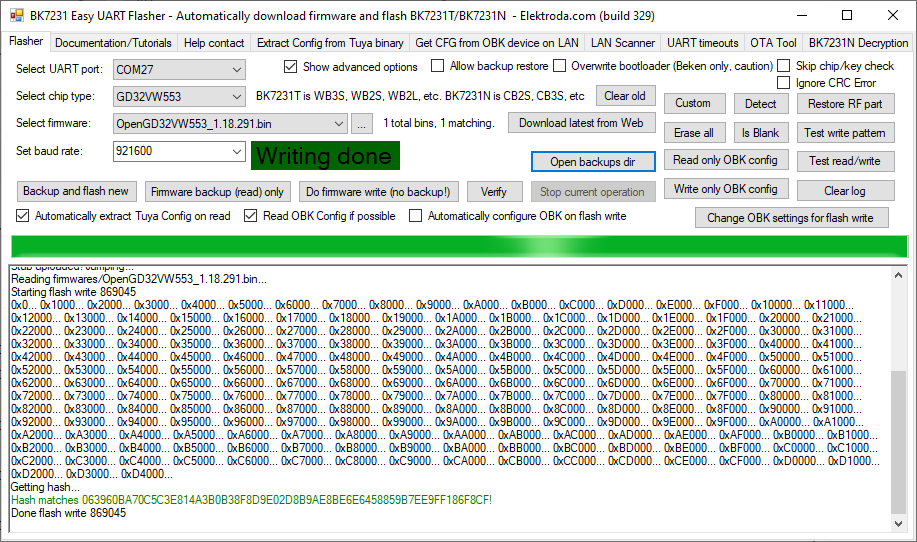
    Screenshot of BK7231 Easy UART Flasher showing read logs and the green “Read done” message. Screenshot of BK7231 Easy UART Flasher showing “Writing done” and a flashing log panel Screenshot of BK7231 Easy UART Flasher showing firmware read log and a large hex data panel.

    seems OK reading and writing still. no erase completion notice up top or log, but it reads back as empty
  • #17 21916009
    p.kaczmarek2
    Moderator Smart Home
    Posts: 14589
    Help: 654
    Rate: 12611
    Ok, I merged both PRs now. I will also review other pending changes. What's next on plan?
    Helpful post? Buy me a coffee.
  • #18 21916010
    insmod
    Level 31  
    Posts: 1389
    Help: 164
    Rate: 433
    >>21916009
    I'm planning on porting BK7236, but using their open T3 sdk, not bk_idk.
  • #19 21916353
    insmod
    Level 31  
    Posts: 1389
    Help: 164
    Rate: 433
    @divadiow since you have HMQ6 chip, what is the product ID it reports in the flasher? 7HMP for HMQ7.
  • #20 21916356
    divadiow
    Level 38  
    Posts: 5038
    Help: 438
    Rate: 891
    >>21916353

    Bootloader version: 0x30
    Product ID: 6HMP

    Added after 5 [minutes]:

    GD32VW553KIQ6 -> 6KIP
    GD32VW553KMQ6 -> 6KMP
    GD32VW553HIQ6 -> 6HIP
    GD32VW553HMQ6 -> 6HMP

    GD32VW553KIQ7 -> 7KIP
    GD32VW553KMQ7 -> 7KMP
    GD32VW553HIQ7 -> 7HIP
    GD32VW553HMQ7 -> 7HMP

    apparently there are 1,319 (!) part-number records in GD_MCU_DLL.dll
    Attachments:
    • GD32AllInOneProgrammer_GD_MCU_DLL_partno_pid_map.csv (65.44 KB) You must be logged in to download this attachment.
  • #23 21917058
    p.kaczmarek2
    Moderator Smart Home
    Posts: 14589
    Help: 654
    Rate: 12611
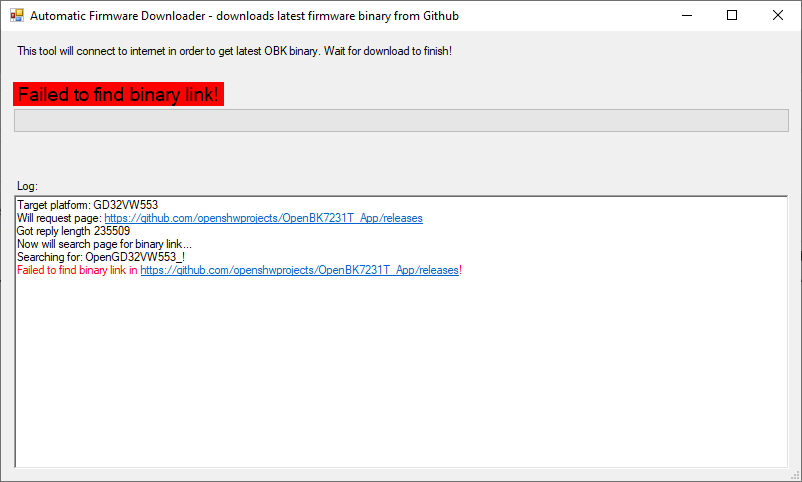
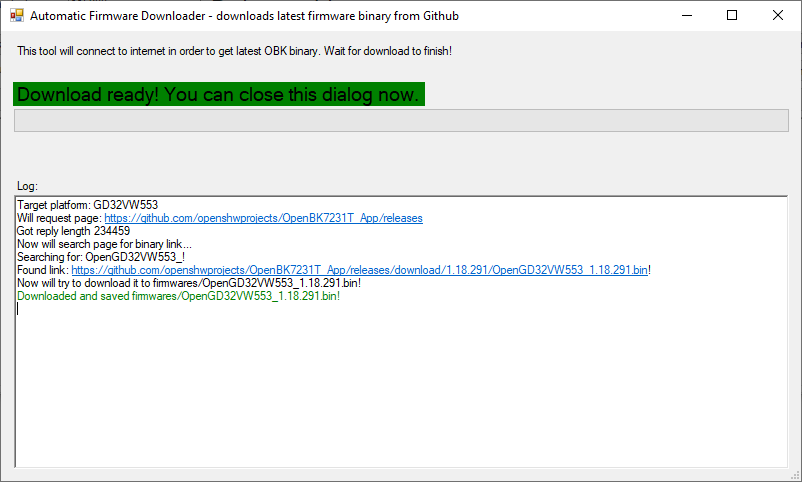
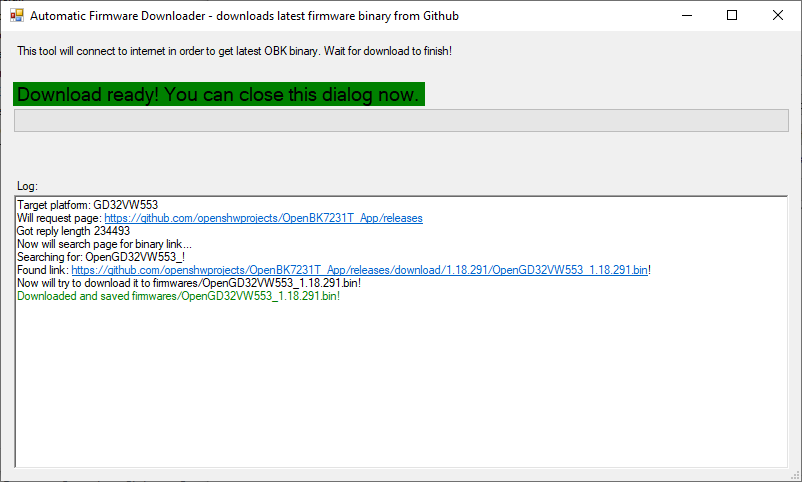
    Ok, you're welcome. Autodownloader works?
    Helpful post? Buy me a coffee.
  • #25 21917333
    divadiow
    Level 38  
    Posts: 5038
    Help: 438
    Rate: 891
    insmod wrote:
    I'm planning on porting BK7236, but using their open T3 sdk, not bk_idk.


    does that also mean BK7258 too because of their relationship?
  • #26 21918214
    p.kaczmarek2
    Moderator Smart Home
    Posts: 14589
    Help: 654
    Rate: 12611
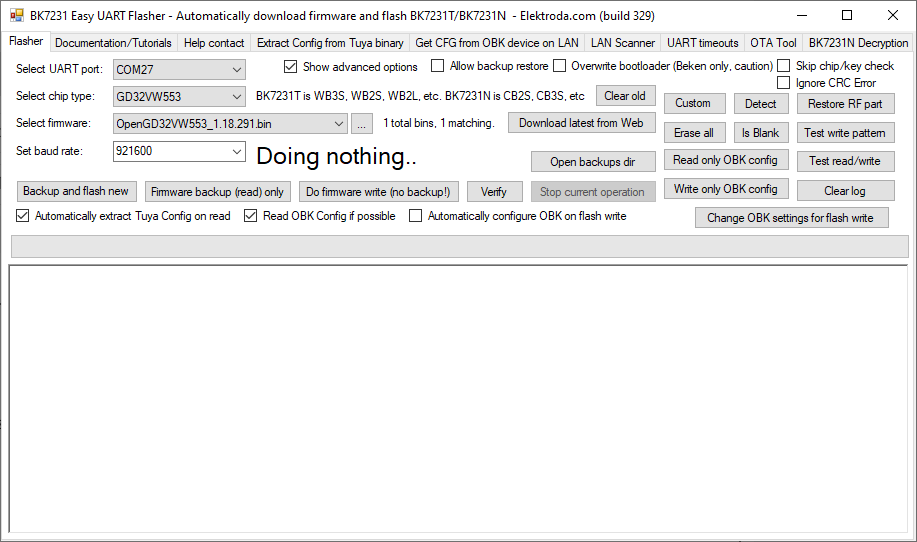
    Hey @divadiow , have you checked how well OBK sensor drivers are working with GD32? Can you also share some screenshots from GD32 in our flasher? I'm working on a video, so it could be really helpful.

    We also need GD32 entry here: https://openbekeniot.github.io/webapp/devicesList.html
    Helpful post? Buy me a coffee.
  • #27 21918224
    divadiow
    Level 38  
    Posts: 5038
    Help: 438
    Rate: 891
    I haven't actually tested much.

    some EF grabs

    LCSC GigaDevice GD32VW553 Datasheet - WiFi 6+BLE 5.2, 4 MB, 160Mhz MCU - OpenGD32 Firmware LCSC GigaDevice GD32VW553 Datasheet - WiFi 6+BLE 5.2, 4 MB, 160Mhz MCU - OpenGD32 Firmware
    read in progress
    LCSC GigaDevice GD32VW553 Datasheet - WiFi 6+BLE 5.2, 4 MB, 160Mhz MCU - OpenGD32 Firmware
    read complete
    LCSC GigaDevice GD32VW553 Datasheet - WiFi 6+BLE 5.2, 4 MB, 160Mhz MCU - OpenGD32 Firmware
    write in progress
    LCSC GigaDevice GD32VW553 Datasheet - WiFi 6+BLE 5.2, 4 MB, 160Mhz MCU - OpenGD32 Firmware
    write complete
    LCSC GigaDevice GD32VW553 Datasheet - WiFi 6+BLE 5.2, 4 MB, 160Mhz MCU - OpenGD32 Firmware

    plain home
    LCSC GigaDevice GD32VW553 Datasheet - WiFi 6+BLE 5.2, 4 MB, 160Mhz MCU - OpenGD32 Firmware

    will do some other bits. brb

    Added after 21 [minutes]:

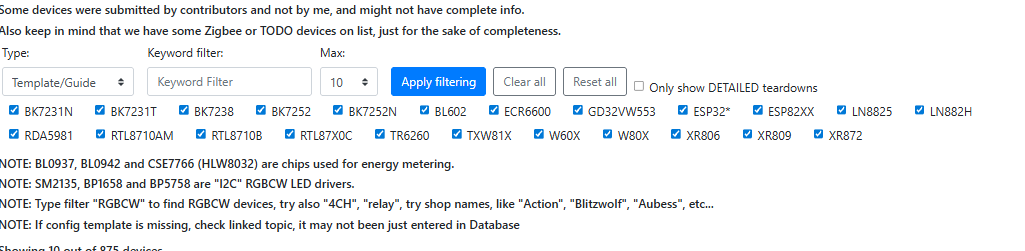
    add GD32 platform filter https://github.com/divadiow/OpenBekenIOT-weba...mmit/6d0e573e14a5dc30a20c779c8baa98bd12afa075

    Screenshot of a webpage with keyword filters and a checkbox list of chip/device names.

    add LCSC dev board https://github.com/OpenBekenIOT/webapp/pull/283
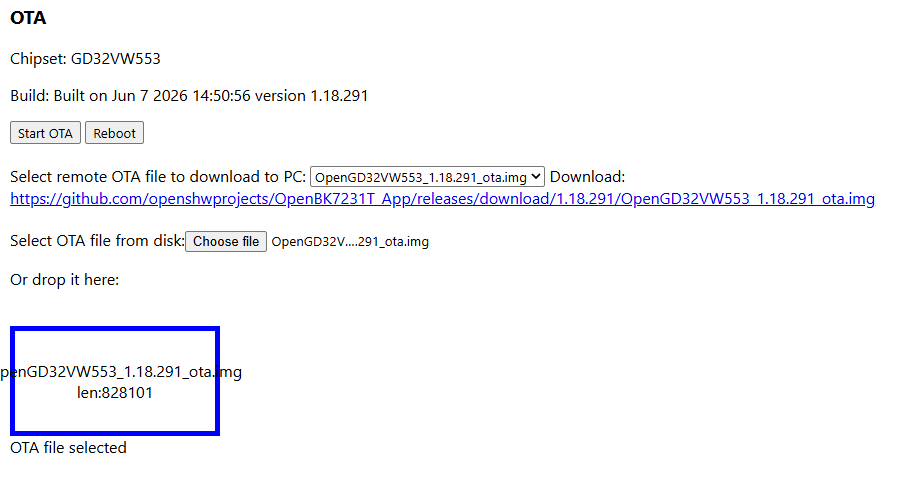
    ota https://github.com/OpenBekenIOT/webapp/pull/281
  • #28 21918239
    insmod
    Level 31  
    Posts: 1389
    Help: 164
    Rate: 433
    There's some issue with TCP server.
    It may crash, but restart thread causes an assert, making it reboot.
    Stable otherwise.
  • #29 21918244
    p.kaczmarek2
    Moderator Smart Home
    Posts: 14589
    Help: 654
    Rate: 12611
    HTTP server, I presume? Which LWIP is used by the SDK? Do you compile HTTP in single threaded (blocking) mode or multithreaded (creates new thread per client)?

    Btw, I think we could add captive portal for OBK. With this, it could open page right after connecting to WiFi. No need to type 192.168.4.1...
    Helpful post? Buy me a coffee.
  • #30 21918252
    insmod
    Level 31  
    Posts: 1389
    Help: 164
    Rate: 433
    >>21918244
    New multi-threaded one, LWIP 2.2.0. The problem is that restart fails, and the code is poorly written. Even if it works on most devices.
    Need something like a separate health check thread?
📢 Listen (AI):

Topic summary

✨ Discussion centers on the GigaDevice GD32VW553 wireless MCU family, a 32-bit RISC-V platform running up to 160 MHz with Wi‑Fi 6 and BLE 5.2, 4 MB flash, and availability of datasheets and user manuals. The reply shares additional documentation links, including GD32VW553xx datasheet Rev.1.5, GD32VW553-MINI datasheet Rev.1.1, and the GD32VW55x user manual, and asks about the platform’s stability.
Generated by the language model.

FAQ

TL;DR: The GD32VW553 packs a 160 MHz RISC-V core, Wi-Fi 6, BLE 5.2, and up to 4 MB flash; one developer reports “2.5 days online without any crashes.” This FAQ helps firmware developers and board buyers understand specs, flashing, UART logs, and the main antenna-related reconnect issue on low-cost LCSC boards. [#21914654]

Why it matters: It is one of the cheapest new Wi-Fi 6 plus BLE 5.2 RISC-V MCU platforms discussed with real OpenGD32 bring-up details and field notes.

Option Flash Package GPIOs Temperature range
GD32VW553KxQ6 2 MB or 4 MB QFN32 up to 21 -40 °C to +85 °C
GD32VW553HxQ6 2 MB or 4 MB QFN40 up to 28 -40 °C to +85 °C
GD32VW553KxQ7 2 MB or 4 MB QFN32 up to 21 -40 °C to +105 °C
GD32VW553HxQ7 2 MB or 4 MB QFN40 up to 28 -40 °C to +105 °C

Key insight: The platform already boots OpenGD32 and exposes a usable AP, but board-level antenna behavior is the main practical limit. The software looks workable; RF consistency looks more fragile than the core firmware path.

Quick Facts

  • The MCU combines a 32-bit RISC-V core at up to 160 MHz with 2.4 GHz Wi-Fi 6 and Bluetooth LE 5.2, targeting low-cost IoT and gateway designs. [#21914506]
  • Internal memory is 320 KB SRAM with either 2 MB or 4 MB flash, and the tested LCSC board used a GD32VW553HMQ6 with 4096 KB flash and no external flash detected. [#21914506]
  • Electrical and environmental range matters for embedded design: supply voltage is 1.8 V to 3.6 V, while part suffixes span -40 °C to +85 °C or -40 °C to +105 °C. [#21914506]
  • On the low-cost board, the factory image prints on PA06 at 115200 baud, while the OpenGD32 build logs on PA06 at 1500000 baud and creates an AP at 192.168.4.1/24. [#21914506]
  • A practical field result is already available: one developer reported 2.5 days of uptime with no crashes, but also warned that the dev board antenna can disconnect and fail to reconnect if router alignment is poor at 2–3 m. [#21914654]

What are the main specifications of the GigaDevice GD32VW553, including CPU speed, Wi‑Fi 6, BLE 5.2, flash, SRAM, and package options?

The GD32VW553 is a 32-bit RISC-V wireless MCU clocked up to 160 MHz. It integrates 2.4 GHz Wi-Fi 6, Bluetooth LE 5.2, 320 KB SRAM, and either 2 MB or 4 MB internal flash. GigaDevice lists QFN32 and QFN40 packages, with up to 21 GPIOs on QFN32 parts and up to 28 GPIOs on QFN40 parts. Supply voltage is 1.8 V to 3.6 V, and temperature grades reach either +85 °C or +105 °C, depending on suffix. [#21914506]

How stable is the OpenGD32 firmware port on the GD32VW553 in real use, and what uptime has been reported so far?

The reported stability is good so far, with 2.5 days online without any crashes. The developer also says most planned basic and advanced features already work, except pin deep sleep. That makes the port usable for early testing, but not yet feature-complete. In short, the current evidence shows solid short-term uptime, not long-term production validation. [#21914654]

How do I put the LCSC GD32VW553 board into programming mode and dump the factory flash with the GD32 All-In-One Programmer?

Use BOOT0 and reset to enter the built-in programming mode, then read flash with the PC tool. 1. Hold the BOOT0 button so PC08 is pulled high, then press RST. 2. In GD32 AIO Programmer, use the Connect UART button. 3. In the Upload section, choose a destination file and save the full chip flash to your PC. The tested board identified itself as GD32VW553HMQ6 with 4096 KB flash and 320 KB SRAM. [#21914506]

Why does the LCSC GD32VW553 development board sometimes disconnect or fail to reconnect to Wi‑Fi, even when it is only a few meters from the router?

The main cause reported in the thread is the dev board’s weak or awkward antenna behavior, not a confirmed firmware crash. The developer says the antenna is “very wonky” and may behave like the ECR6600 if it is not aligned properly to the router. That issue appeared even at only 2–3 meters distance and could lead to disconnects followed by failed reconnects. [#21914654]

Which UART pins on the GD32VW553 LCSC board output the factory boot log and READY message, and what baud rates are used?

PA06 outputs the factory boot log on UART2_TX at 115200 baud, and PB15 outputs a simple READY message on UART1_TX. After flashing OpenGD32, PA06 is also used for the new debug log, but at 1500000 baud instead. Those pin assignments give you two practical serial observation points during bring-up. [#21914506]

How do I flash insmod's OpenGD32VW553 build from the OpenBK7231T_App GitHub Actions onto a GD32VW553HMQ6 board?

Flash it with the same GD32 programming path used for the factory image, then verify the new UART log and AP. 1. Download the latest development build from the OpenBK7231T_App GitHub Actions link mentioned in the thread. 2. Put the board into programming mode with BOOT0 plus RST and use the GD32 AIO tool over UART. 3. After flashing, watch PA06 at 1500000 baud and confirm the AP appears at 192.168.4.1/24. [#21914506]

What do the GD32VW553 boot log messages like 'Boot from Image 1', 'WiFi calibration done', and 'PHY initialization finished' mean?

They indicate a normal staged boot, RF setup, and radio initialization sequence. “Boot from Image 1” means the bootloader selected the first firmware image and validated it before jumping to the main image at 0x081ea000. “WiFi calibration done” shows radio calibration completed, and “PHY initialization finished” means the physical-layer wireless block finished initialization. The same thread also shows the factory firmware reporting SDK Version v1.0.3 with build date 2025/05/14 14:15:13. [#21914506]

Where can I find the GD32VW553 datasheet, user manual, SDK, and programmer tools for this Wi‑Fi 6 plus BLE MCU?

The thread points to both official vendor files and mirrored attachments. It lists the GD32VW553 series product page, the launch page, the GD32VW5 download area for the all-in-one programmer, and a quick development guide PDF for the START board. It also includes attached copies of the GD32VW553xx Datasheet Rev1.5, GD32VW553-MINI datasheet Rev1.1 dated 2025-02-25, the GD32VW55x User Manual, and a programmer mirror. [#21914645]

What is OFDMA in Wi‑Fi 6, and why is it relevant on the GD32VW553 series?

“OFDMA” is a Wi-Fi 6 radio feature that splits a channel into smaller resource units, improving efficiency when many small transfers share airtime. It matters here because GigaDevice explicitly lists OFDMA among the GD32VW553 Wi-Fi 6 features, alongside MU-MIMO and Target Wake Time. That makes the chip more relevant for dense IoT traffic than a plain legacy 802.11b/g/n-only MCU. [#21914506]

What is PKCAU on the GD32VW553, and how does it relate to the chip's hardware security features like AES, Hash, and TRNG?

“PKCAU” is a hardware public-key cryptography accelerator unit that speeds asymmetric security operations, offloading heavy math from the MCU core. On the GD32VW553, it sits alongside hardware DES, 3DES, AES, Hash acceleration, and a TRNG in the security feature list. Together, those blocks support stronger embedded security than a software-only implementation on the 160 MHz core. [#21914506]

GD32VW553 QFN32 vs QFN40: which package is better if I need more GPIOs or a different temperature range?

Choose QFN40 if you need more GPIOs, and choose by suffix if you need a wider temperature grade. The product table lists up to 21 GPIOs on QFN32 parts and up to 28 GPIOs on QFN40 parts. Temperature range does not depend on package alone; both package families appear in -40 °C to +85 °C and -40 °C to +105 °C variants. [#21914506]

How do the 2 MB and 4 MB GD32VW553 variants affect firmware support, especially when the SDK is configured for 4 MB flash?

Flash size matters because the current SDK setup mentioned in the thread is configured for 4 MB, while 2 MB variants also exist. That means binaries or partition assumptions may need adjustment before moving the same firmware to smaller parts. The tested board used a 4 MB GD32VW553HMQ6, so the demonstrated OpenGD32 bring-up matches the larger flash configuration, not the 2 MB edge case. [#21914654]

What is the logport command in OpenGD32VW553, and how do I use it to switch the log UART or change the 1500000 baud debug speed?

The logport command switches the log UART and can also change baud rate. The developer says the first argument can be -1 to restore the default log port, and the second argument sets the baud rate. The current build uses 1500000 baud by design to improve performance because the UART is thought to be polling rather than DMA-driven. [#21914654]

How does the GD32VW553 compare with the ECR6600 for low-cost Wi‑Fi development boards, especially in antenna behavior and reconnect reliability?

The thread compares them mainly on antenna behavior, not CPU or feature parity. The developer says the GD32VW553 dev board may show the same router-alignment sensitivity as the ECR6600, including disconnects and failed reconnects. That means the GD32VW553 currently looks promising in firmware support, but its low-cost board RF behavior may still resemble the ECR6600’s practical weakness. [#21914654]

What are the user button and LED pin assignments on the LCSC GD32VW553-HMQ6 board, and how can I use PA0 and PC13 in custom firmware?

The LCSC GD32VW553-HMQ6 board maps the user button to PA0 and the LED to PC13. In custom firmware, treat PA0 as a local input for buttons, pairing triggers, or mode selection, and use PC13 as a status output for boot, Wi-Fi, or error indication. Those two pins are already identified in the thread, so they are the safest first targets for board-specific GPIO testing. [#21914506]
Generated by the language model.
ADVERTISEMENT