FAQ 
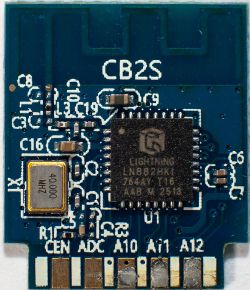
TL;DR: For owners of the TNCE TY-BK-A60 bulb, the LN882HKI can be flashed over 3.3 V UART using U0-RX, U0-TX, GND, and the P21 boot pad; as one expert put it, "A9 must be low before powering it up." This solves cloud lock-in and enables OpenLN882H with full RGBCW control and Home Assistant pairing on this LN882H-based E27 bulb. [#21877425]
Why it matters: This thread turns a cheap Tuya WiFi bulb into a documented, repeatable cloud-free smart-lighting target instead of a one-off hardware hack.
| Option |
Chip / path |
Flash method |
Result from thread |
| TNCE TY-BK-A60 |
LN882HKI / LN882H |
UART on U0 + P21 boot pad |
Full RGBCW working in OpenLN882H |
| Some older ESP devices |
ESP family |
OTA / Tuya-convert |
Not applicable here |
| Similar AliExpress bulbs |
BL602 / CB2L / BW2L / BZ2L / LN882H |
Varies by module and pad access |
Must identify module first |
| Matter bulb example |
ESP8684-WROOM-05 |
UART download blocked |
Flash path effectively blocked |
Key insight: On LN882H bulbs, success depends less on the app brand and more on the exact chip, UART port, and boot pin behavior. In this case, using U0 instead of U1 was the decisive fix when flashing initially failed.
Quick Facts
- The documented bulb is a TNCE Smart E27 Bulb TCDPA601WL265, model TY-BK-A60, manufactured on September 10, 2024. [#21446472]
- The original dump was read only partially, but the author reports the flash is not full 2 MB in useful data and appears to be 0xFF past the 1 MB mark. [#21446472]
- The working OpenLN882H RGBCW mapping uses 5 PWM channels on LN882H pins 1, 4, 5, 6, and 7. [#21446472]
- The bulb was bought on AliExpress for a few US dollars and was stated to sometimes cost as low as $1, making it a low-risk test target. [#21446472]
- Similar bulbs in the same buying stream arrived with BL602, CB2L, BW2L, BZ2L, LN882H, and ESP8684 platforms, so the external listing does not guarantee the internal SoC. [#21473843]
How do you flash a TNCE TY-BK-A60 RGBCW WiFi bulb with an LN882HKI chip using a USB-to-UART adapter and the U0/P21 pads?
You flash it over the LN882H boot UART, not by OTA. 1. Open the E27 bulb enough to access the board, then solder wires to
U0-TX,
U0-RX,
GND, and
P21. 2. Pull
P21 low, power the module from a
3.3 V USB-to-UART adapter, and start the LN882H flasher. 3. Remove the boot strap, power-cycle, join the OpenLN882H access point, then configure Wi-Fi and pins. The thread shows this worked without fully removing the screw thread and ended with full RGBCW support.
[#21446472]
What is the P21 or SP21 pad on an LN882H bulb board, and how is it used to enter boot mode?
P21, also labeled SP21 on some boards, is the LN882H boot-selection pad tied to
GPIOA_9. You use it by grounding it
before power-up so the chip enters boot mode instead of normal firmware startup. Later troubleshooting confirmed that the pad continuity to
GPIOA_9 was correct and that the module recognized the low state. If the pad is released, the bulb resumes normal operation and prints standard boot logs again.
[#21877012]
Why doesn’t Tuya-convert or OTA flashing work on LN882HKI bulbs the way it does on some ESP-based devices?
Tuya-convert does not work here because the LN882HKI is not an ESP chip and the thread states the OTA path applies only to some ESP devices. The author says most newer devices are also protected, so even that route is shrinking. OpenLN882H follows a Tasmota-like idea, but it is separate firmware with its own HAL for LN882H. On this bulb, the practical method is wired flashing over UART, not cloud or OTA replacement.
[#21447295]
Which UART pads should be used on the LN882H bulb for flashing, and how do U0 and U1 differ during troubleshooting?
Use
U0, not U1, for flashing the LN882H bulb. The original guide identifies
U0-TX and
U0-RX as the programming UART, while a later user initially wired the
U1 interface because it showed serial logs. That caused confusion: U1 exposed runtime output, but flashing only worked after moving the wires back to
U0. This is the key troubleshooting difference: logs alone do not prove you are on the bootloader UART.
[#21878105]
Why would an LN882H bulb print normal boot logs or enter ATE mode instead of download mode when GPIOA_9 is pulled low?
It does that when the timing, wiring, or UART choice is wrong. The thread shows one device printed
“GPIOA_9 high level, will enter Normal mode!” when the boot strap was ineffective, and later printed
“GPIOA_9 low level, will enter ATE mode!” when the low level was detected. In this case the real fault was using
U1 instead of
U0, so the user saw behavior that looked wrong even though the boot pin state changed. Power must be fully removed between attempts.
[#21878105]
What baud rates and serial commands should be tested when an LN882H flasher shows no response in boot mode?
Start with
115200 baud in a terminal and send the command
version. The thread’s recovery advice says that a module already in boot mode should answer with
“Mar 14 2021/00:23:32”. Another expert also suggested testing different baud rates in both the custom flasher and the original LN882H tool if there is still no response. If you see no boot text at all, that can be normal for boot mode.
[#21877425]
How do you verify that an LN882H module is really in boot mode after grounding A9/P21 before power-up?
Verify it by grounding
A9/P21 before power-up, then checking that the module stops printing normal firmware logs. One expert states,
“It shouldn’t be printing anything if in boot mode.” To confirm, open the COM port at
115200 baud and type
version. A valid bootloader response is
“Mar 14 2021/00:23:32”. If you still see Tuya startup logs, the chip is in normal mode or you are on the wrong UART.
[#21877425]
What is GPIO Doctor in the OpenLN882H web app, and how does it help find RGB and CW pin assignments on an unknown bulb?
“GPIO Doctor” is a diagnostic web-app tool that probes unknown GPIO behavior, helps identify which pins drive LEDs or functions, and speeds board bring-up when no pin extraction exists for that platform. In this bulb, the author used it because LN882H did not yet have automatic GPIO extraction. That let them first identify the
CW channel, then later find the
RGB pins and finish a working
RGBCW setup in the Configure Module menu.
[#21446472]
How do you configure full RGBCW output in OpenLN882H for the Tuya TNCE Smart E27 bulb model TY-BK-A60 after flashing?
Set the discovered LED pins as five PWM outputs in OpenLN882H. The working JSON in the thread assigns
pin 1 = PWM;4,
4 = PWM;5,
5 = PWM;1,
6 = PWM;2, and
7 = PWM;3 for the
TY-BK-A60 on
LN882H. The author first got
CW working, then found the RGB channels and confirmed full RGBCW operation. After that, the bulb could be paired with Home Assistant like other OpenBK-style devices.
[#21446472]
What’s the difference between an LN882H bulb that uses raw PWM channels and one that uses a BP5758 LED driver?
A raw-PWM bulb drives its LED channels directly from multiple transistor-switched PWM outputs, while a BP5758 bulb uses a dedicated LED driver IC. The first TY-BK-A60 teardown showed
five nearby transistors and no I2C controller, so the author concluded it used raw PWMs. A later bulb received on
2025-03-06 still had an
LN882H, but this time with
BP5758 inside, explicitly noted as
“not PWM!” That changes pin discovery and firmware setup strategy.
[#21468442]
Which chips have been found inside similar AliExpress smart bulbs besides LN882H, such as BK7231, BL602, BL702, W800, CB2L, BW2L, and BZ2L?
The thread found a broad mix of platforms, not a single family. Reported examples include
BL602 on
BW2L,
BL702 on
BZ2L in a Zigbee bulb,
CB2L, and additional
LN882H units. The author also warns buyers not to assume they will get
LN882H, BK7231, BL602, or W800 in advance, because identical-looking AliExpress bulbs vary internally. The practical rule is simple: identify the module after purchase, then choose the flashing method.
[#21447336]
What is ATE mode on the LN882H, and how is it different from the actual UART download mode needed for flashing?
“ATE mode” is a factory test mode that confirms a boot pin state, runs manufacturing checks, and is not the same as the serial download bootloader used for firmware flashing. The evidence is direct: one user got
“GPIOA_9 low level, will enter ATE mode!” yet still could not flash or read the device. Another expert then clarified that true boot mode should produce
no normal log output and should answer the
version command on the serial port.
[#21877012]
How does OpenLN882H compare with Tasmota and ESPHome for cloud-free bulbs and Home Assistant integration?
OpenLN882H serves the same goal as Tasmota-style firmware: local control, no vendor cloud, and Home Assistant pairing. The author explicitly describes it as
Tasmota/ESPHome-inspired and says it supports some Tasmota commands, but it is different code built around a dedicated
HAL for LN882H. On this bulb, it exposed a setup AP, accepted Wi-Fi credentials, and then drove full
RGBCW output after GPIO mapping. That makes it a practical cloud-free path for non-ESP Tuya bulbs.
[#21447295]
What are the safest ways to open and reassemble an E27 smart bulb for flashing without fully disassembling the thread or damaging the LED board?
Open the top diffuser first, then disturb as little else as possible. The author removed the dome by hand, then carefully pried the LED board, noting that this step was the risky one and broke part of the edge. The important takeaway is that full disassembly was unnecessary: the flashing pads were reachable without removing the E27 thread. Use controlled force, support the board evenly, and plan wiring before levering the LED plate.
[#21446472]
How can you tell from the outside whether a Matter smart bulb is more likely to use an ESP8684/ESP32-C3 module or a Beken-based module before buying?
You usually cannot tell reliably from the outside. One participant asked exactly that, and the reply was that there was no dependable labeling pattern, only weak brand-level guesses. The thread mentions some
Moes devices can be ESP, and
CozyLife / Aiyatto products had looked promising, but this was not presented as a rule. A Matter bulb in the same discussion arrived with
ESP8684-WROOM-05, and its UART download mode was blocked, showing why external branding is a poor predictor.
[#21469802]
AI summary based on the discussion. May contain errors.