logo elektroda
logo elektroda
X
logo elektroda
Dostępna jest polska wersja

Czy wolisz polską wersję strony elektroda?

Nie, dziękuję Przekieruj mnie tam

[TR6260S1 Transa Semi] Smart LED strip controller 144W 6A RGB, IR, firmware

p.kaczmarek2 2727 8

TL;DR

  • A very cheap 144W, 6A RGB LED strip controller with WiFi, IR remote control, and music-reactive mode was opened to identify its TR6260S1 electronics.
  • Inside, the PCB uses a TR6260S1 WiFi microcontroller, RX/TX/BOT pads, a microphone, and a step-down converter for 3.3V from 12V.
  • The boot log exposes Tuya IOT SDK V:1.0.10 for tr6260, product_type 0x5507, and a SmartLife-26CD access point.
  • Esptool.py and other programmers did not work, no flasher was found, and the controller appears hard to free from the manufacturer cloud.
  • The 144W rating also looks exaggerated given the small transistors marked SMD 3400.
ADVERTISEMENT
Treść została przetłumaczona polish » english Zobacz oryginalną wersję tematu
📢 Listen (AI):
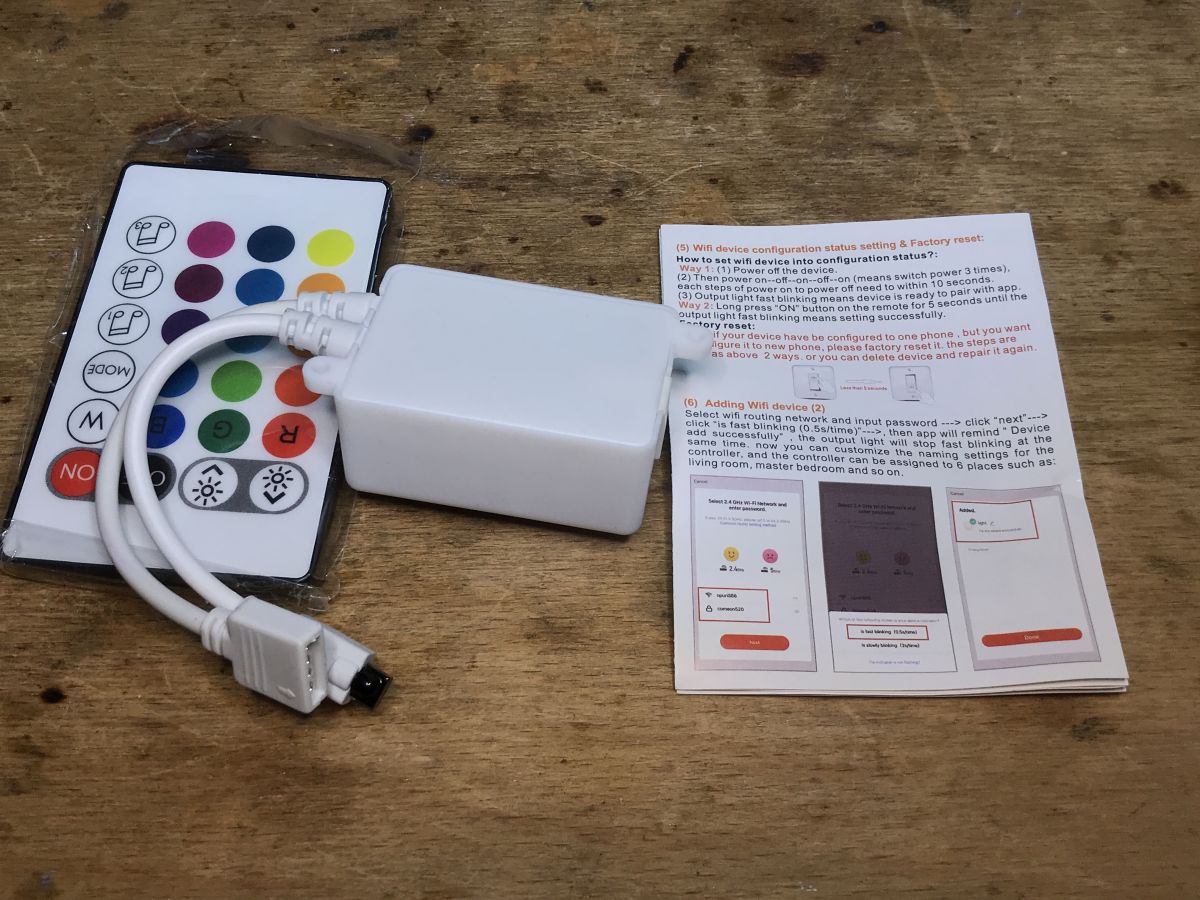
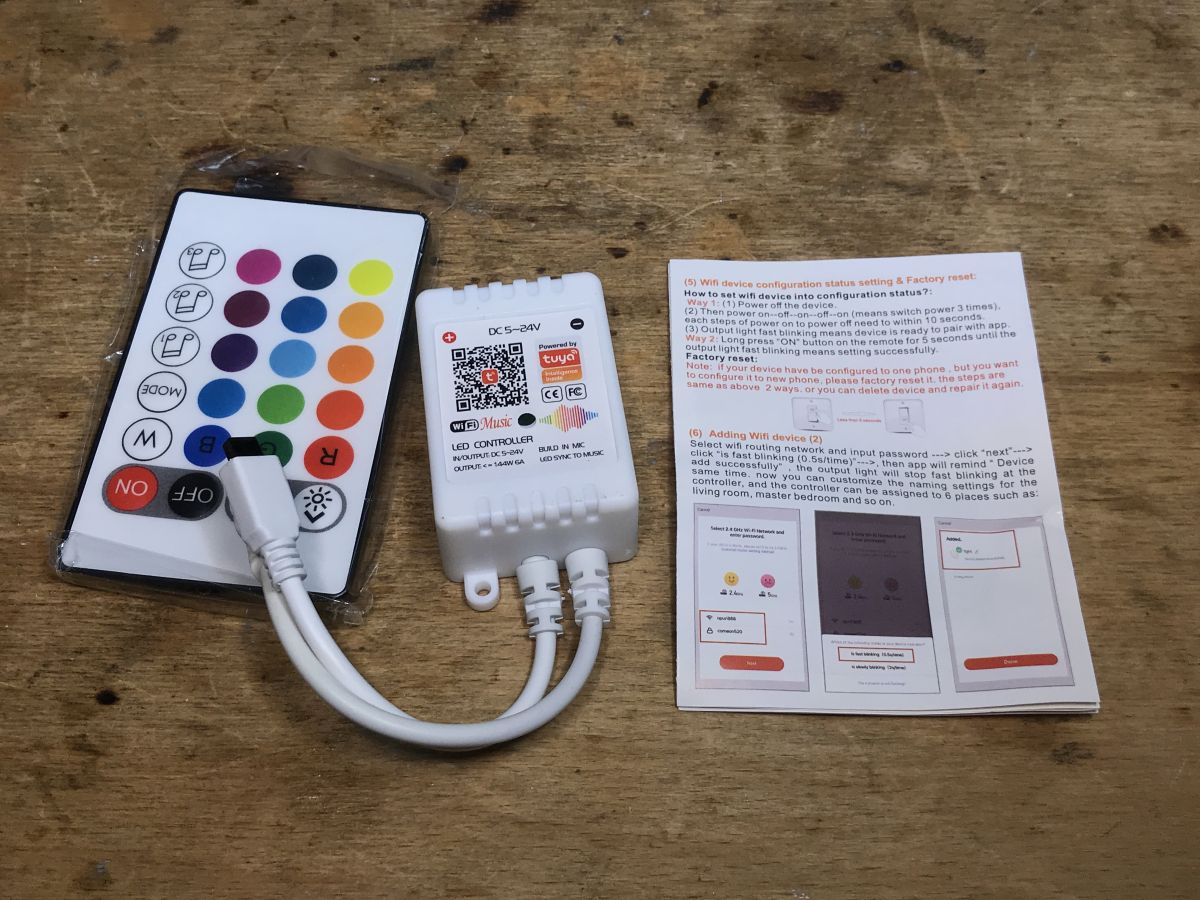
  • LED controller with remote and instructions on a wooden background.
    Today, a short topic - the interior of a very cheap LED strip controller, available for purchase on a Polish auction website, offering WiFi control, remote control and playing to the rhythm of music. This time there will be a not-so-known WiFi microcontroller inside, the TR6260S1, which has only been mentioned on our forum only once or twice. At the moment, I don`t know if it`s possible to change the charge, but if I make progress, I`ll try to document what I found here.

    Purchasing an LED strip
    You can get the belt from the Krasław importer, although we know that it is produced in China and the importer only sticks its logo on it. Here is a screenshot of the auction:
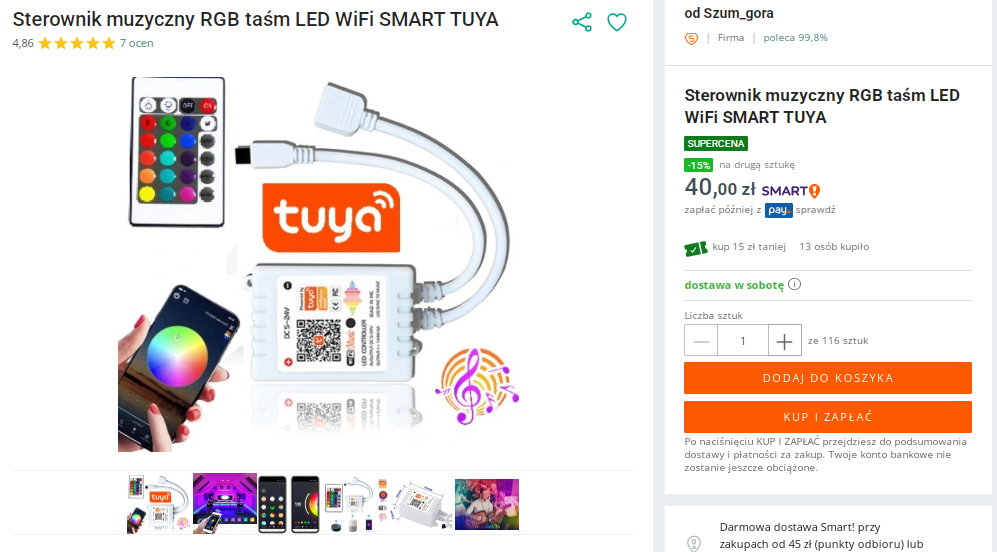
    Screenshot of an online auction displaying a music RGB LED strip controller WiFi SMART TUYA with a remote control and smartphone app.
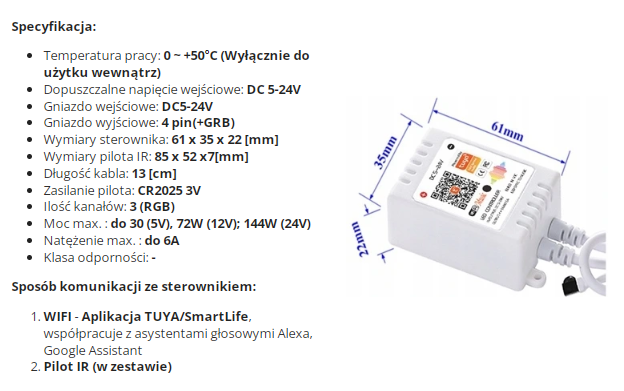
    Specification:
    Image of a WiFi LED controller with dimensions and technical specifications.
    There are no markings on the packaging:
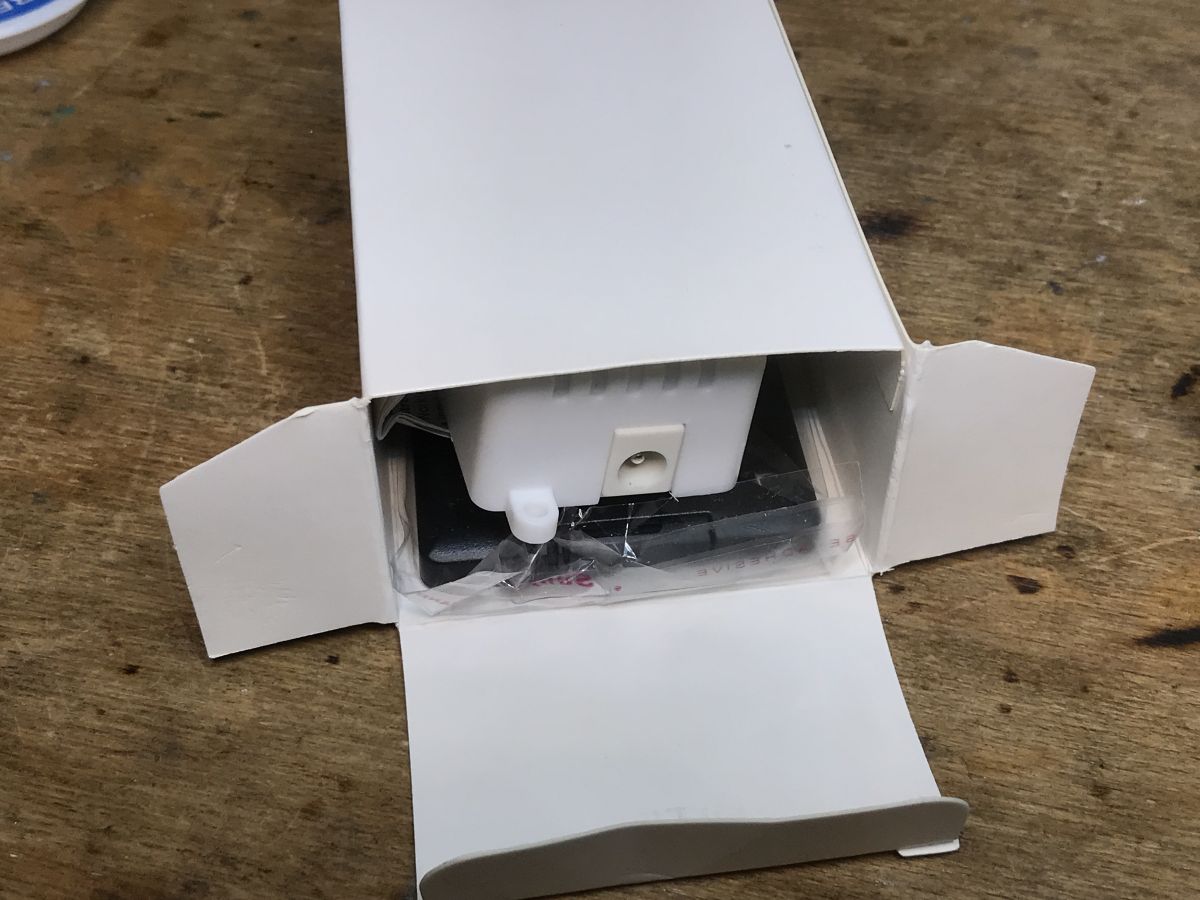
    Opened package of LED strip controller on a wooden table. White box with the text LED CONTROLLER on a wooden surface. White box on a wooden background. White box labeled LED CONTROLLER.
    The set doesn`t even include a strip of tape to attach the strap:
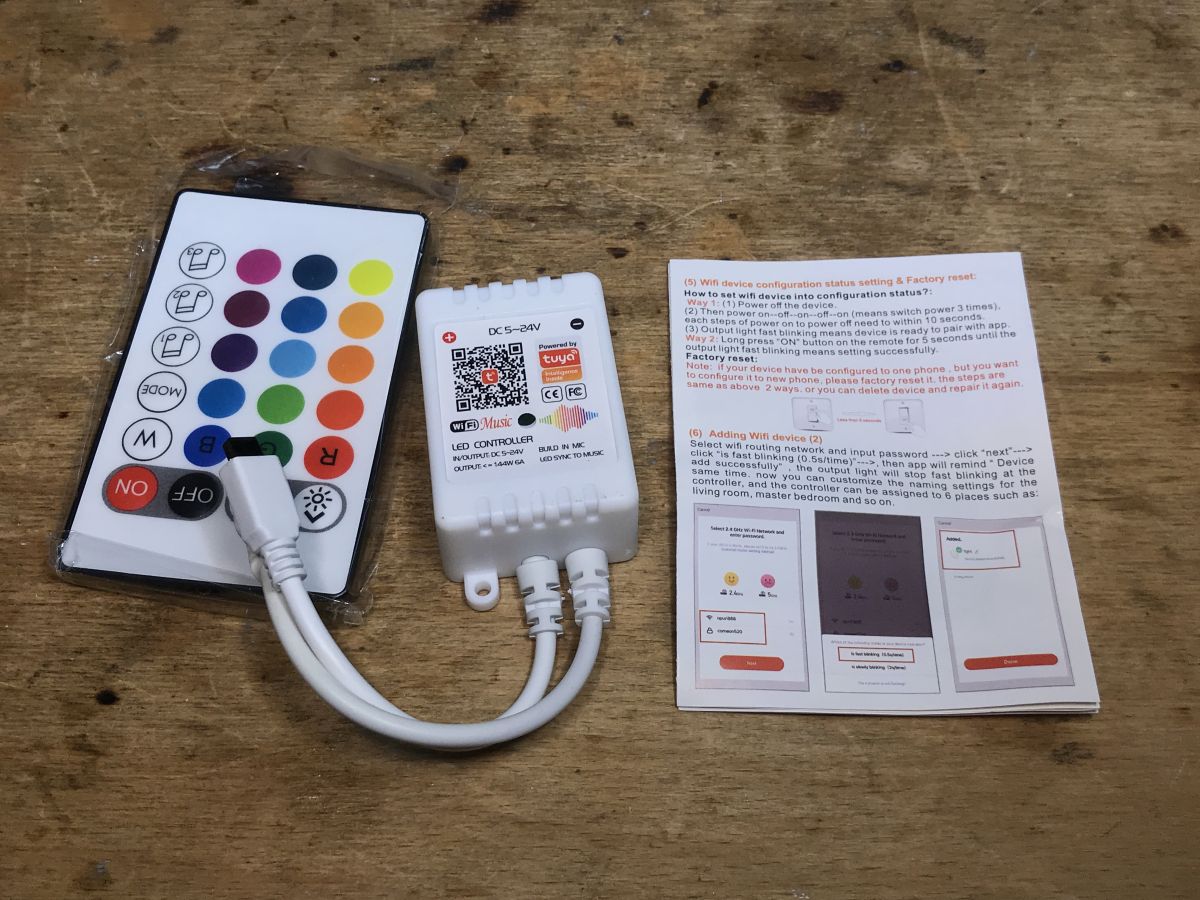
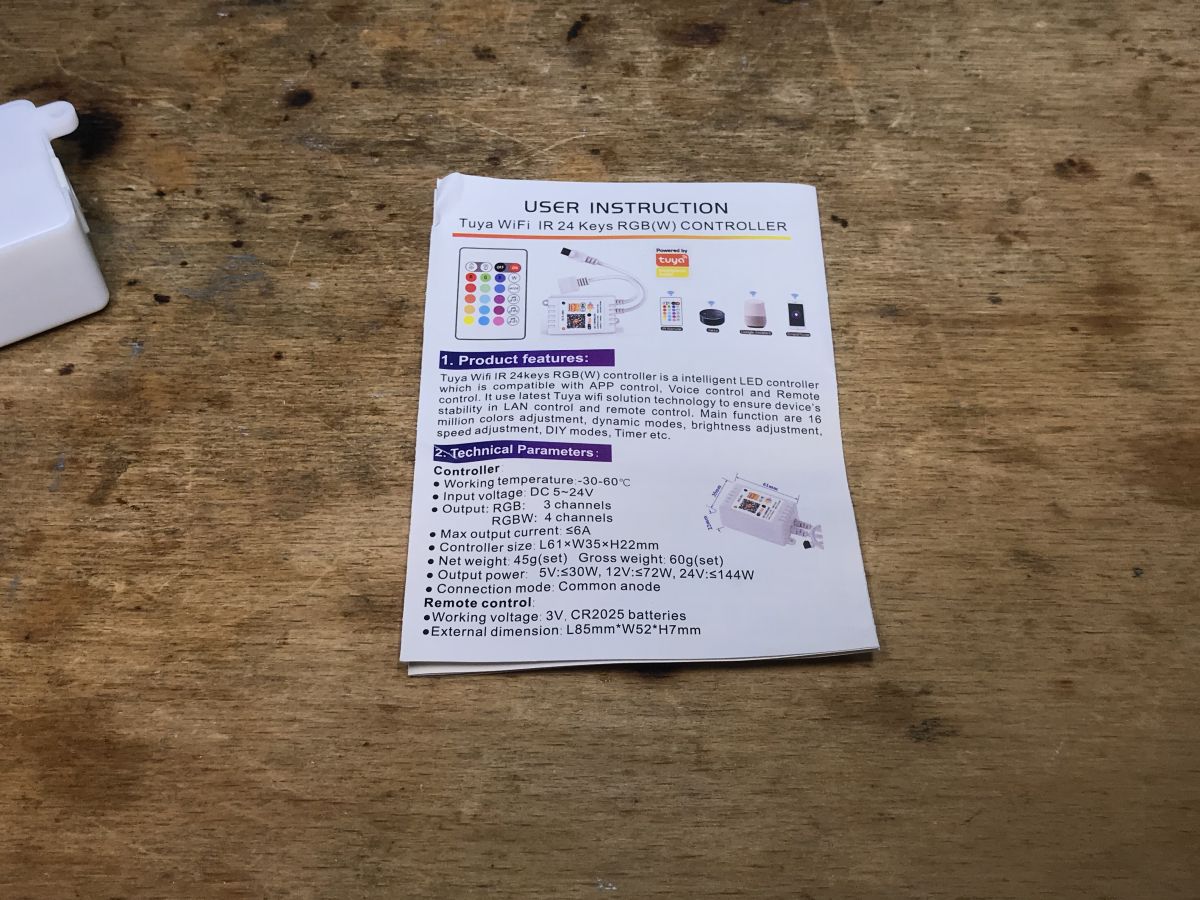
    LED strip controller with remote and instruction manual LED strip controller with remote and manual on wooden background User manual for the Tuya WiFi IR 24 keys RGB(W) LED controller.

    The inside of the controller
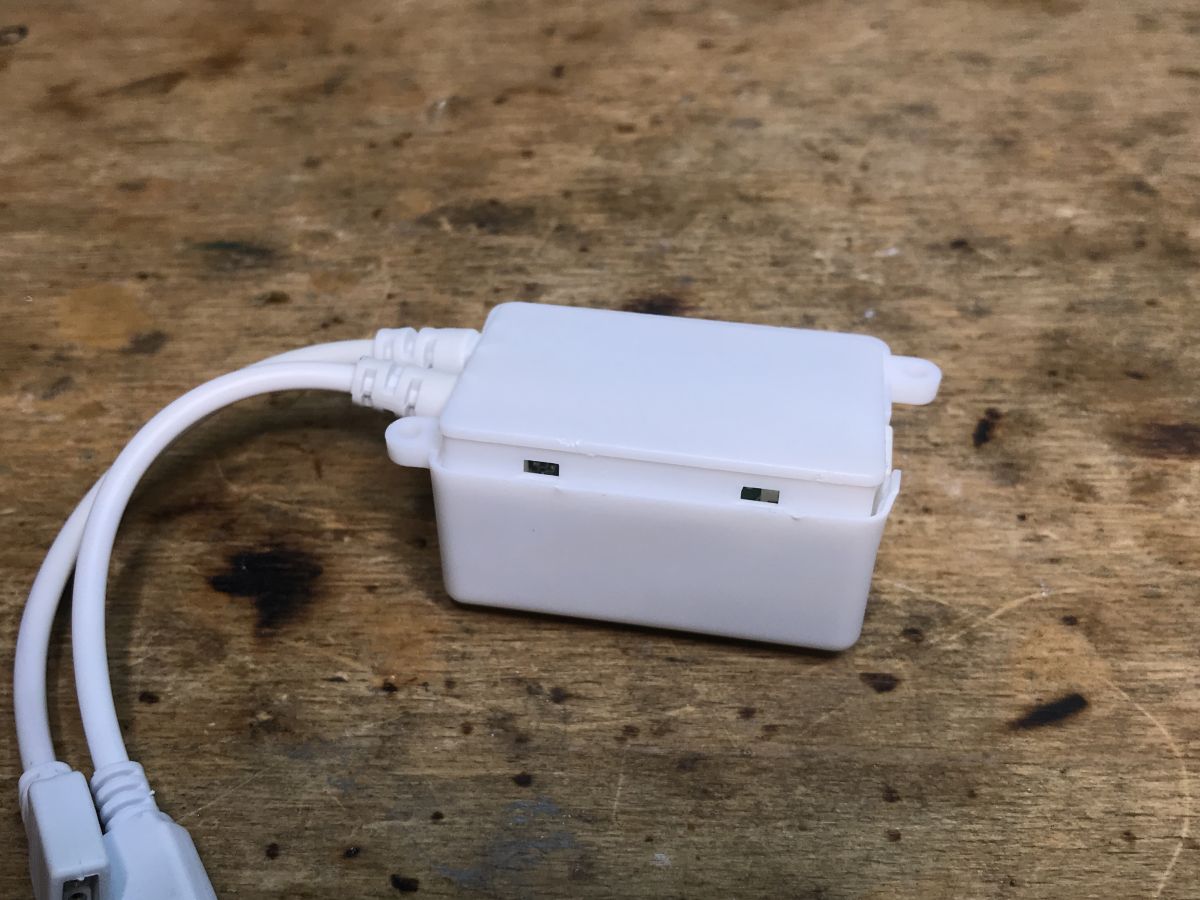
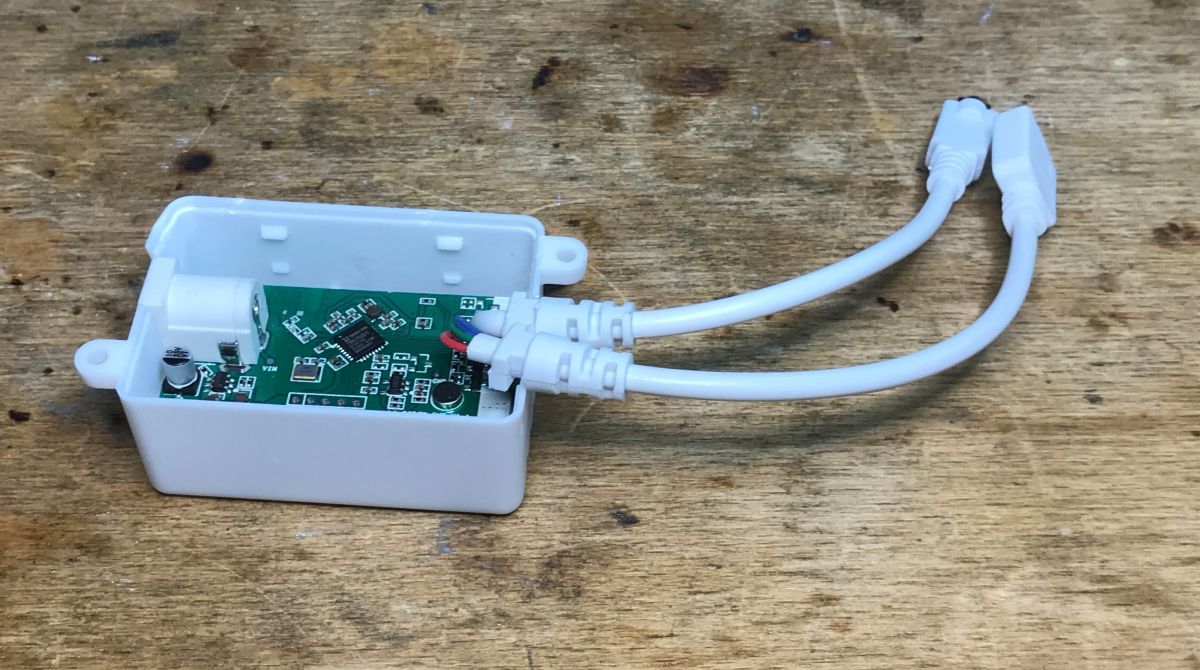
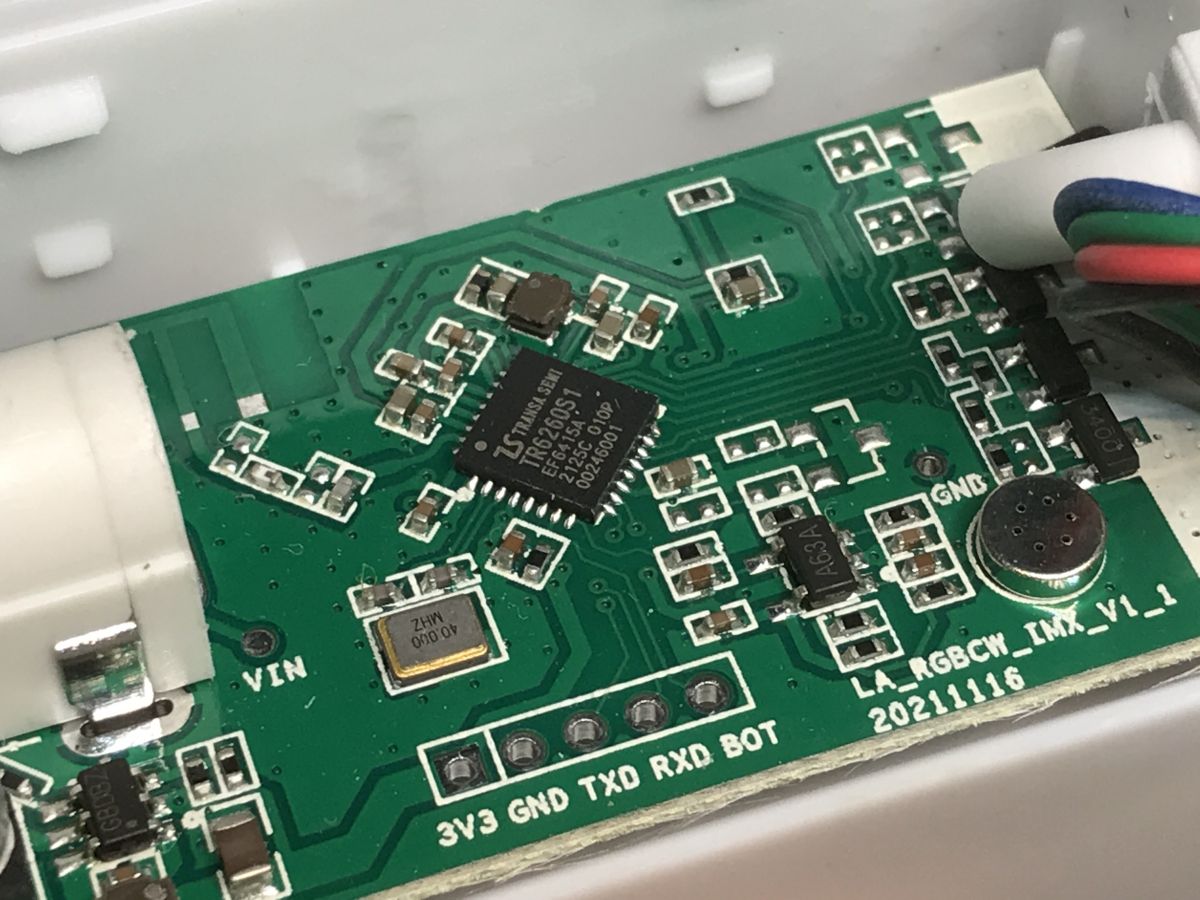
    We pry the cover and experience an unpleasant surprise - inside there is a very unknown microcontroller with WiFi:
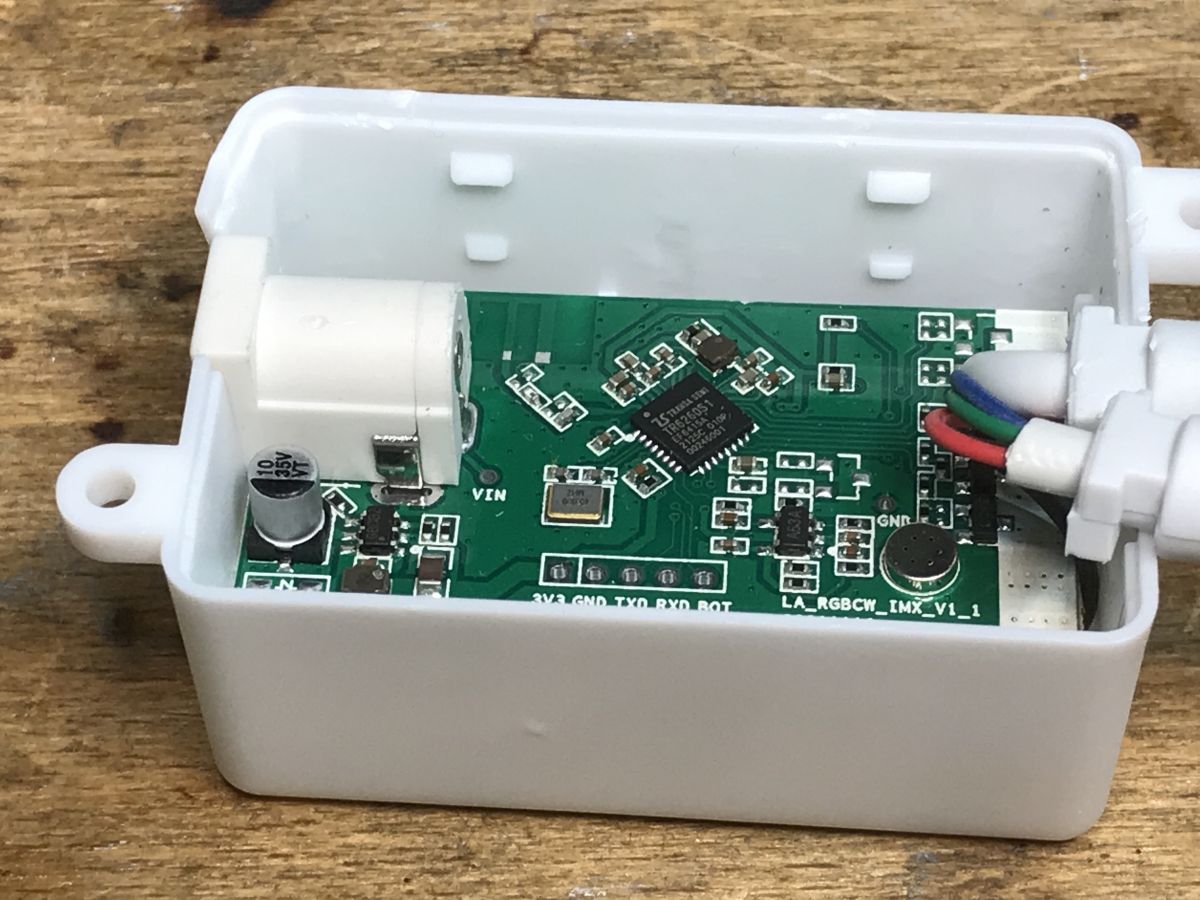
    Interior of the LED controller with a microphone and TRS6260S1 chip. Small white plastic box with cables on a wooden surface. Interior of an LED strip controller showing a microcontroller and two output cables.
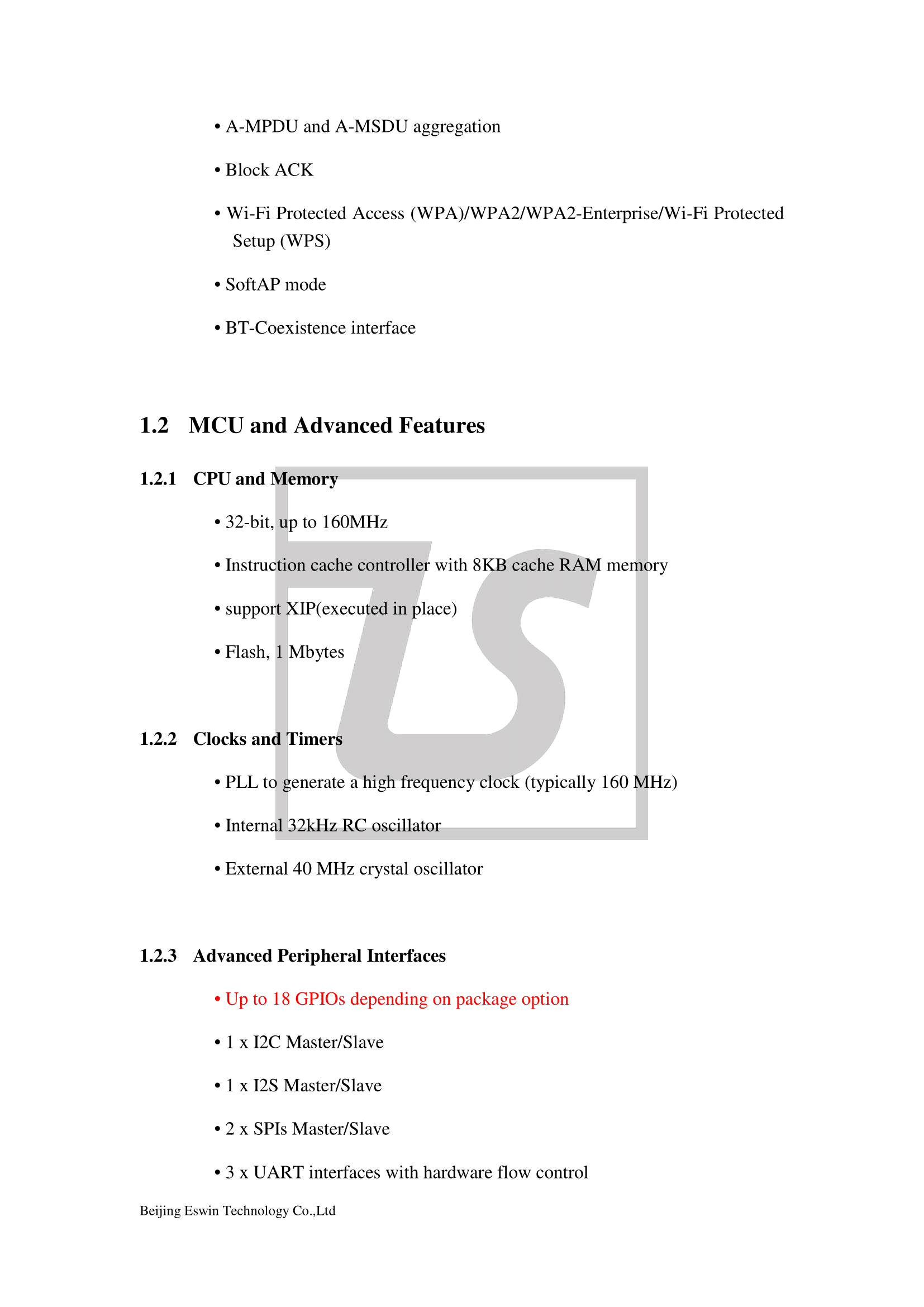
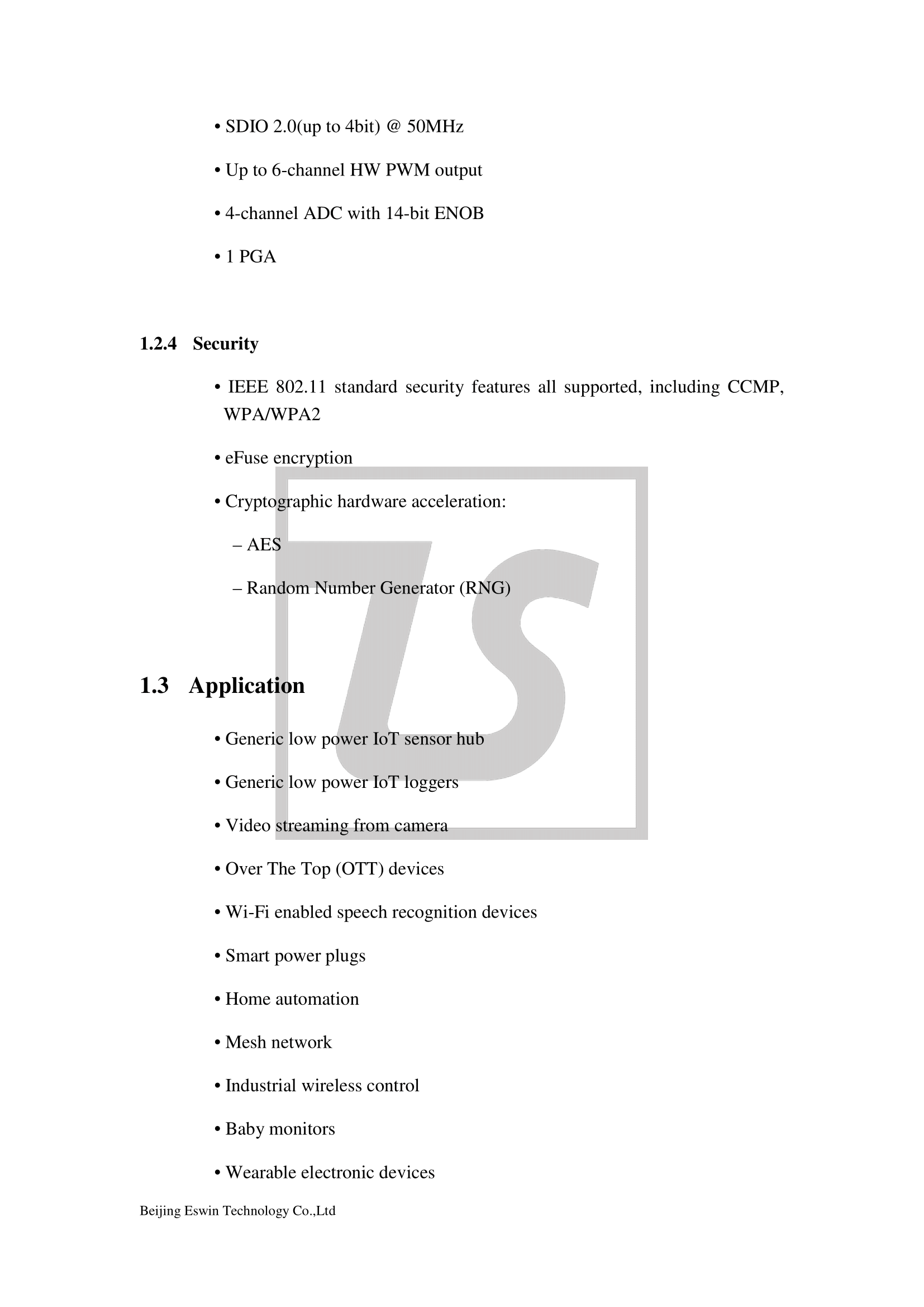
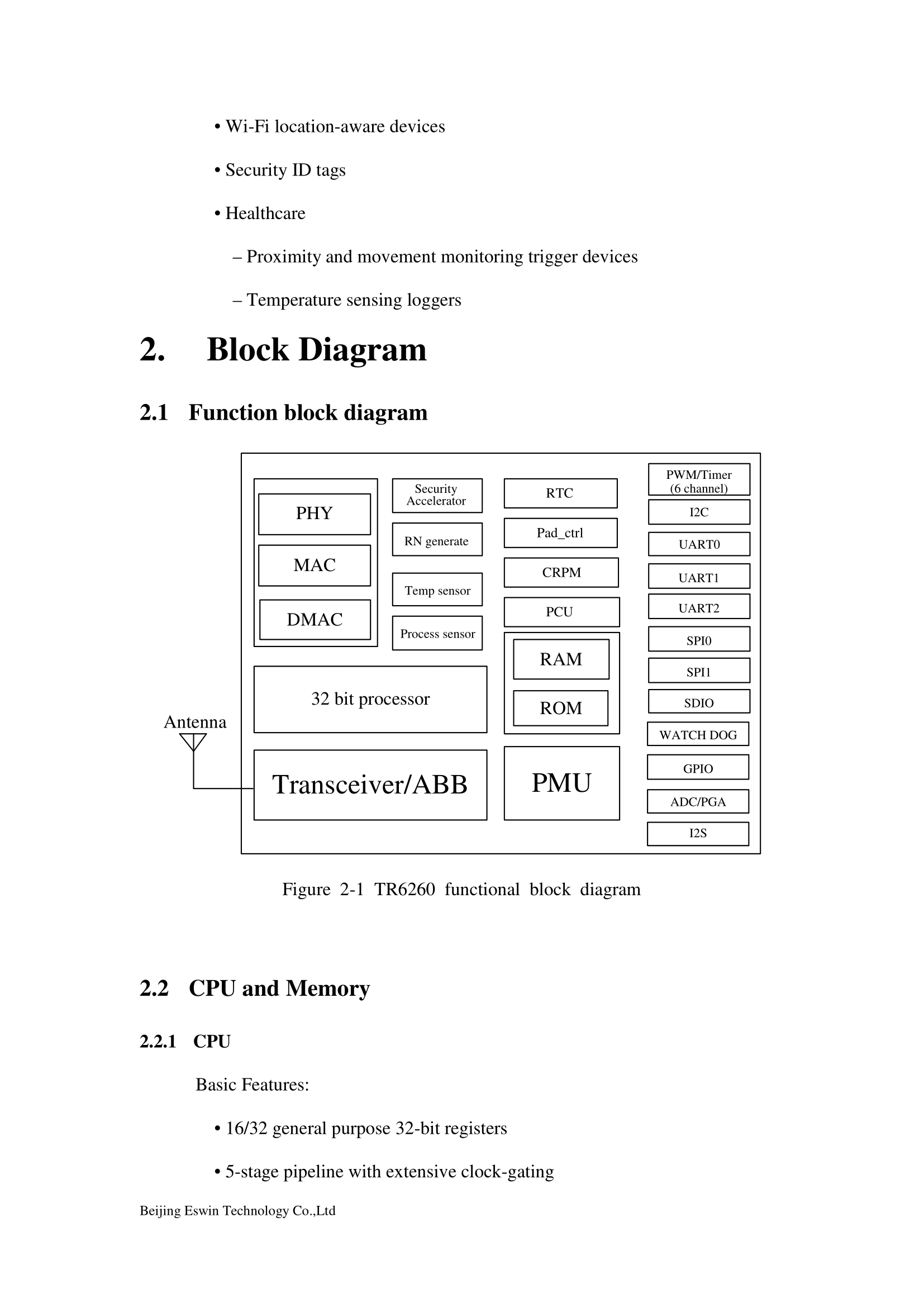
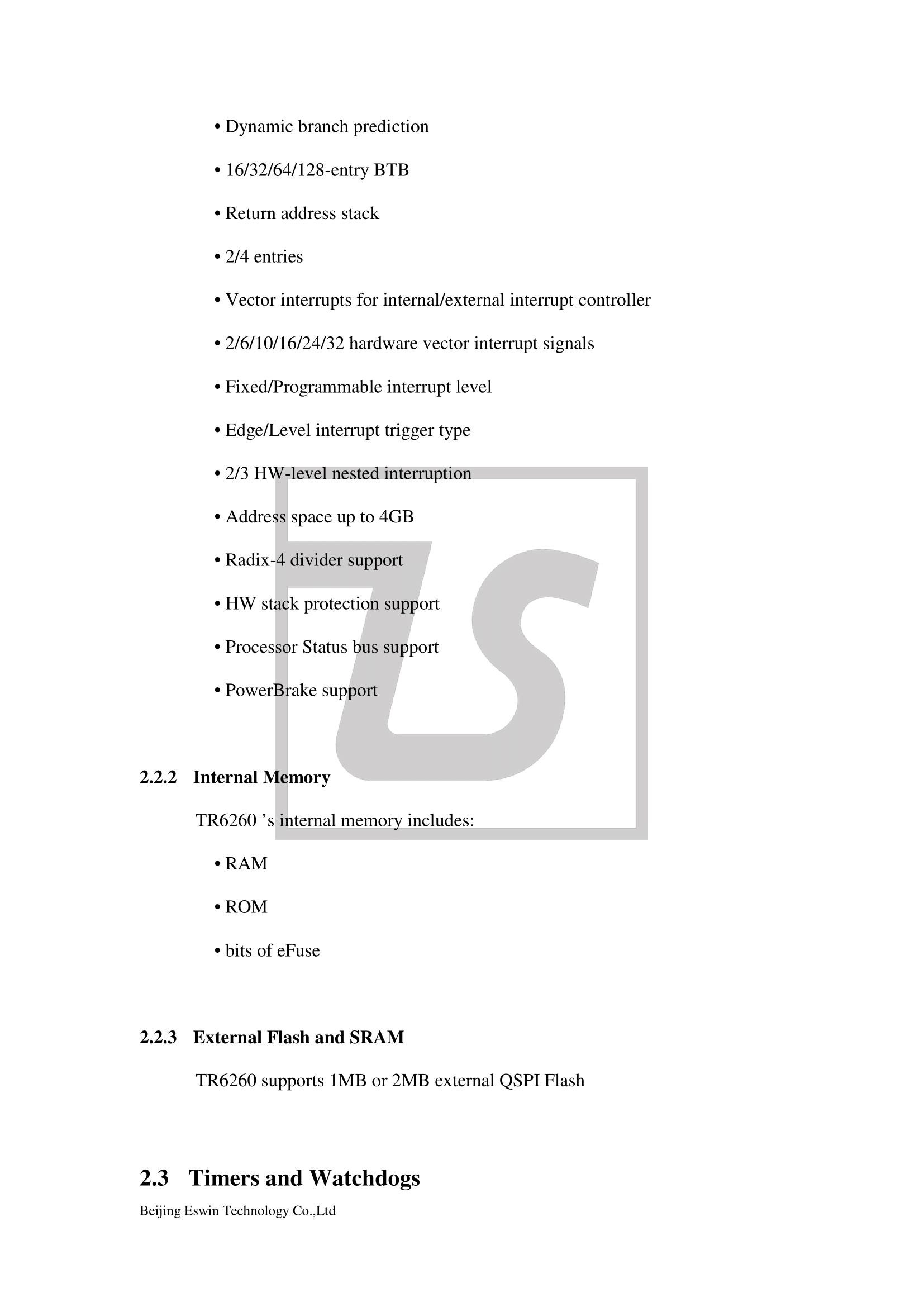
    TR6260S1... there is some information about it on the Internet:
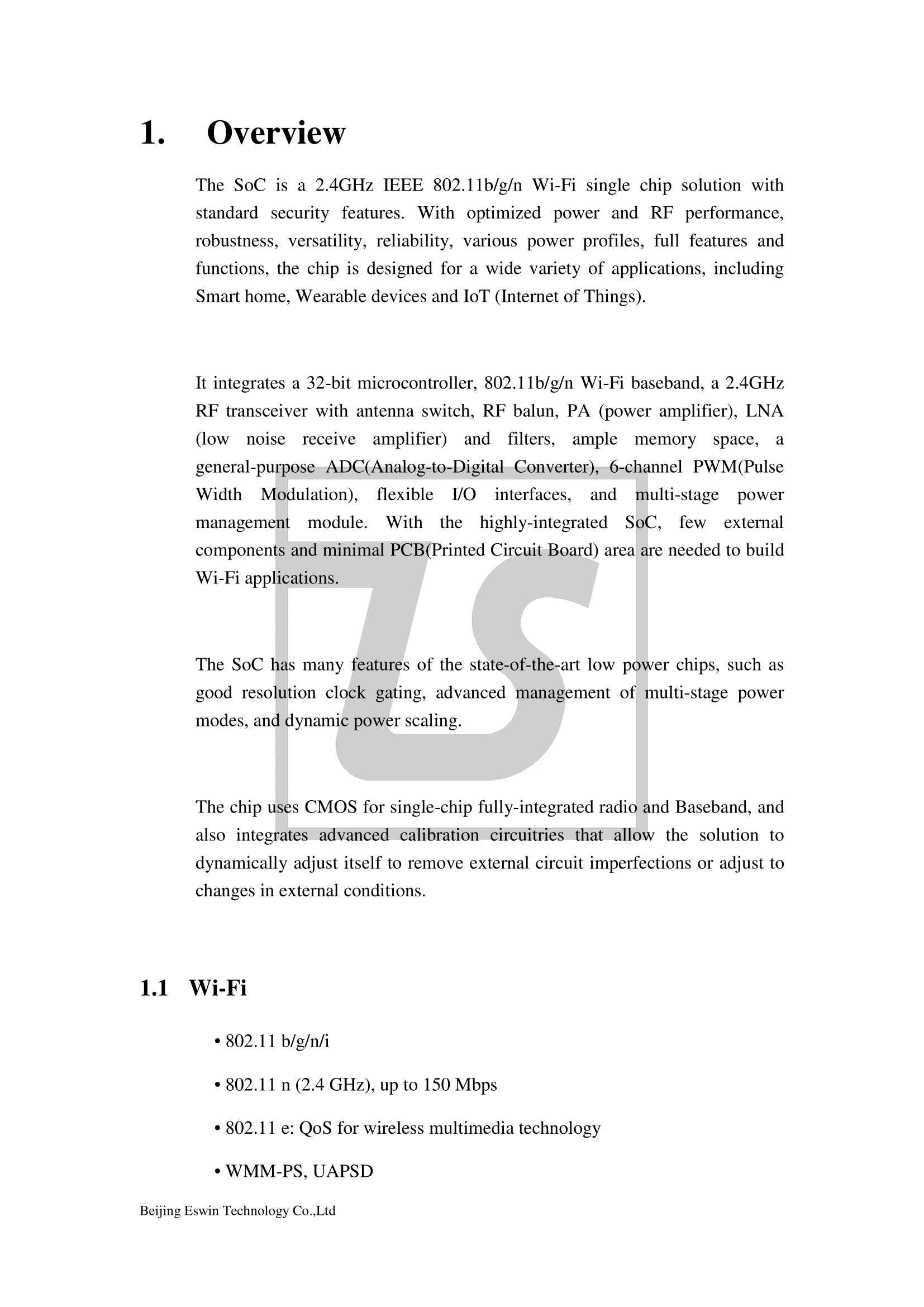
    Fragment of a document describing the TR6260 SoC microcontroller. List of features of the TR6260S1 microcontroller in a PDF document. Technical specifications of the TR6260 chip with features and applications. Block diagram of TR6260 controller Technical specification of the TR6260 microcontroller.
    The pinouts are also described, and there is even some information about the boot mode that reminds me of ESP:
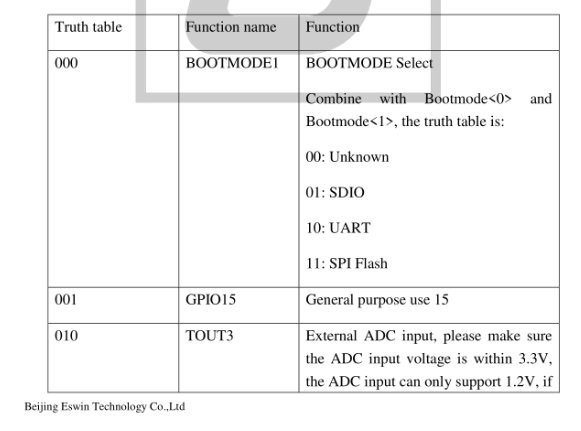
    Truth table of TR6260 functions
    There are RX, TX and BOT (BOOT) signals on the PCB. I experimented with them a bit, I tried using various programmers from the Internet, also using various similar exotic systems, and I even experimented with Esptool.py, but to no avail. It`s a different microcontroller.
    There is also a microphone on board, which means the strap can respond to sound.
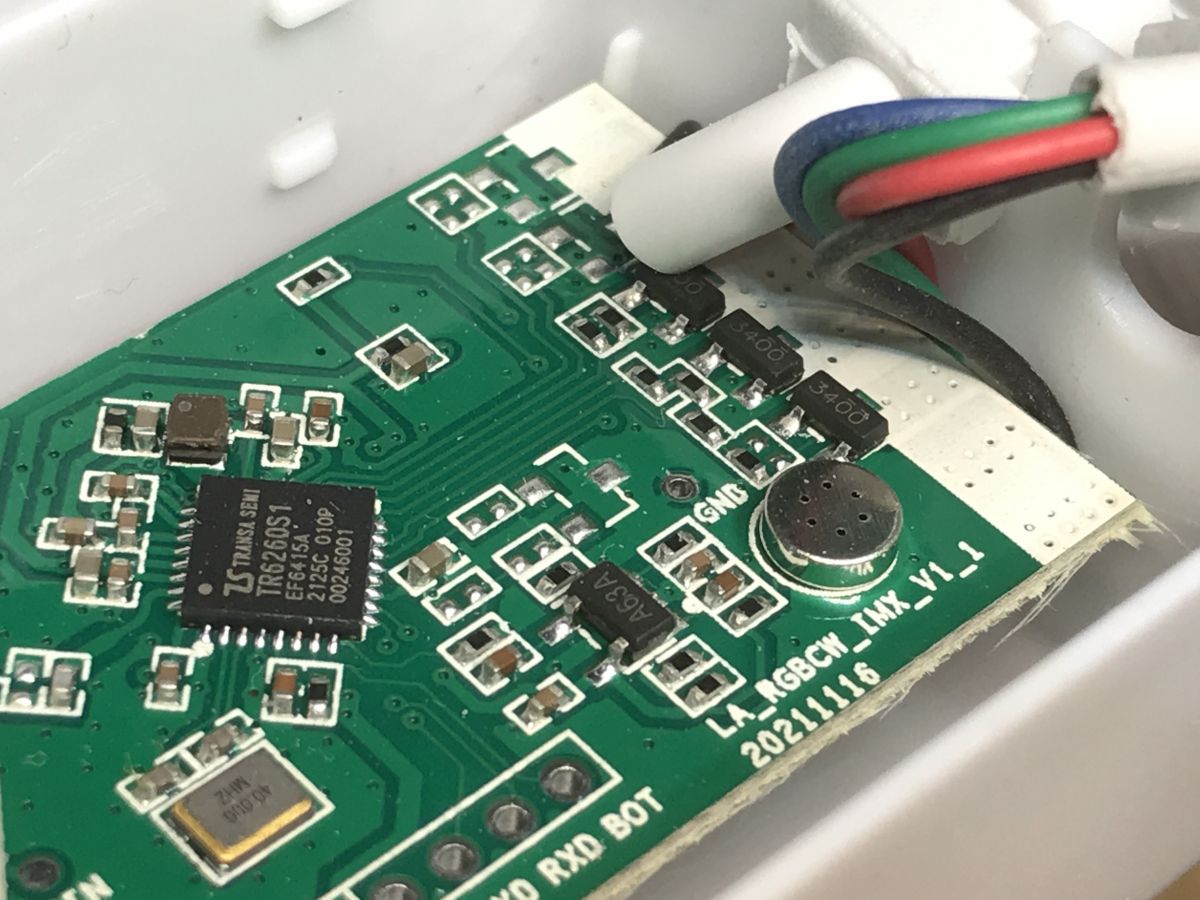
    Close-up of a circuit board with a TR6260S1 microcontroller and a microphone. Close-up of the inside of an LED controller with TR6260S1 microcontroller Interior of LED strip controller with TR6260S1 microcontroller.
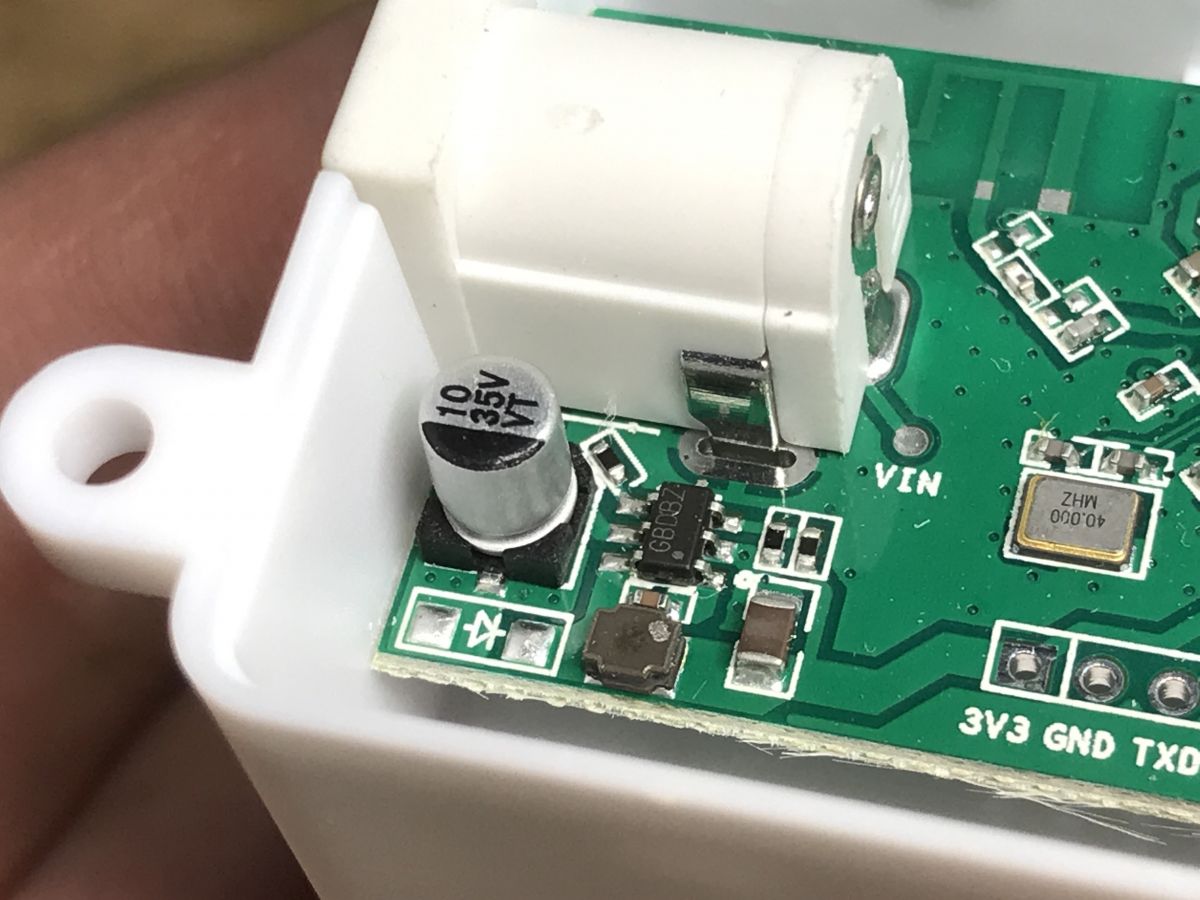
    There is a step down converter in the power supply block, because something must generate 3.3V for the WiFi module from the 12V we have at the input.
    The transistors have the SMD 3400 code, so probably:
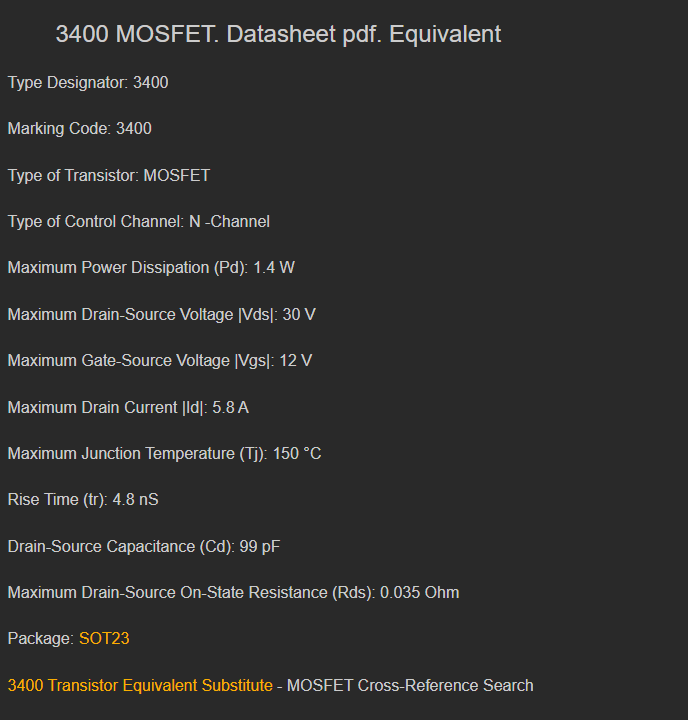
    MOSFET transistor specification with marking code 3400.
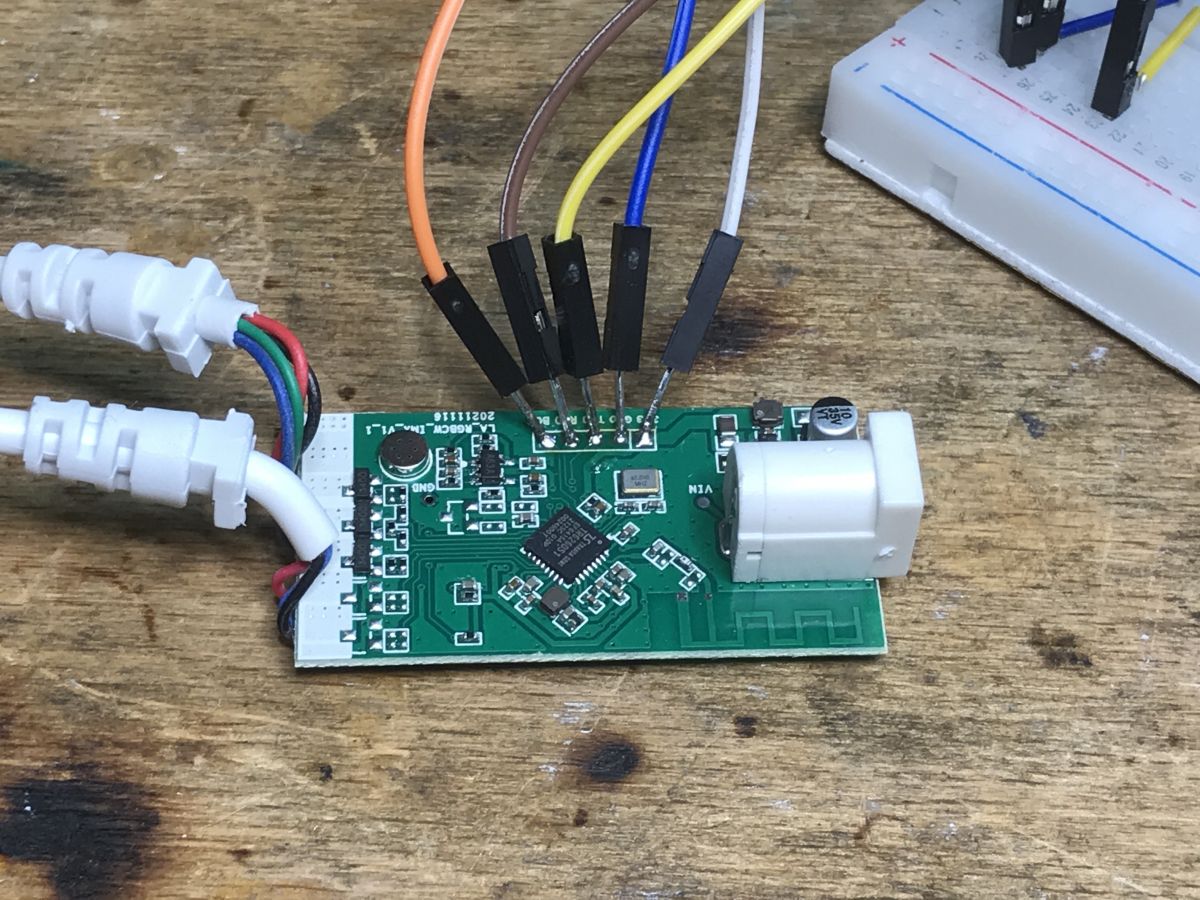
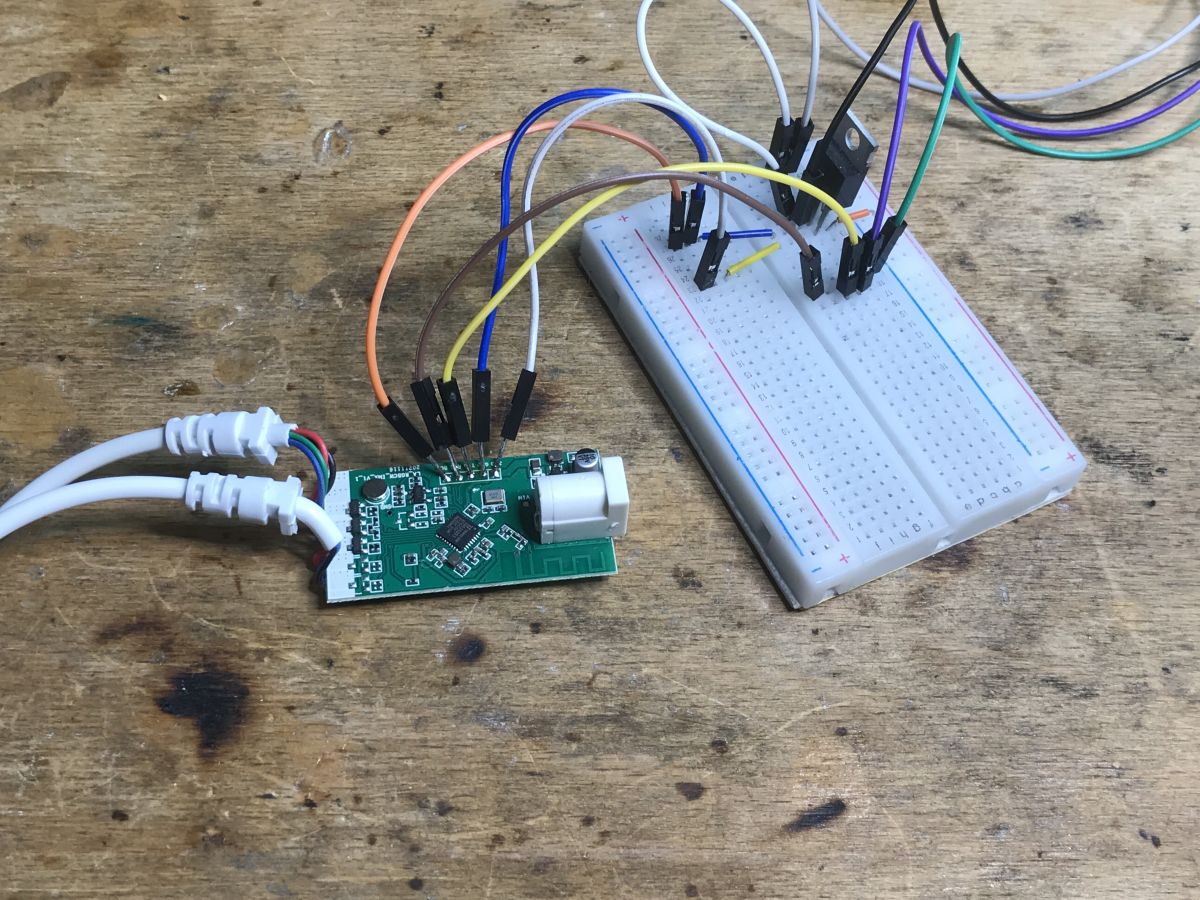
    During experiments:
    PCB of LED controller with connected wires for testing. PCB with TR6260S1 microcontroller connected to a breadboard.
    I searched on Github, even in the source codes themselves:
    https://github.com/search?q=TR6260&type=code
    For example, newracom nrc7292 sdk seems to have support for this chip:
    https://github.com/newracom/nrc7292_sdk
    but at the moment I have the impression that something is still missing.
    https://github.com/search?q=repo%3Anewracom%2Fnrc7292_sdk%20TR6260&type=code

    Here is the boot log from this system:
    
    
          рШ°АЖЖЮ`ЖfАцЮ■Ю~fЮцЮШрШ``°fЮцЖxрЮАц°Ю рцЮ■~ ШЮцЮxfЖ[00:00:00.681][01-01 18:12:15 TUYA Err][light_main.c:47] led_init LED_DRIVER_PWM_CW product_type: 0x5507
     [00:00:00.690][01-01 18:12:15 TUYA Err][cmd_rgb.c:70] ++++++++++++++++++++++++ <light_cmd_init_rgb> +++++++++++++++++++++++++
    
     [00:00:00.702][01-01 18:12:15 TUYA Err][tuya_main.c:219] sdk info: < TUYA IOT SDK V:1.0.10 BS:40.00_PT:2.2_LAN:3.3_CAD:1.0.2_CD:1.0.0 >
    < BUILD AT:2020_10_20_21_23_01 BY embed FOR ty_iot_wf_rtos_sdk AT tr6260 >
    IOT DEFS < WIFI_GW:1 DEBUG:1 KV_FILE:0 SHUTDOWN_MODE:0 LI      L╣  └╚      ─╒! иг  L╣  аг     p╦  p╦  L╣  h╦     └╣  SYSTEM Task                                                  еееееееееееееееееееееееееееееееееееееееееееееееееееееееееееееееееееееееееееееееееееееееееееееееееееееееееееееееееееееееееееееееееееееееееееееееееееееееееееееееееееееееееееееееееееееееееееееееееееееееее[01-01 18:12:15 TUYA Err][tuya_main.c:108] ++++++++++++++++++++++++++++++++++++++++++++++++++++++++++++++++++++++++++++++++++++++++
     [00:00:00.764][01-01 18:12:15 TUYA Err][tuya_main.c:109] +++++++++++ BUILD: 2021-12-16-11:24:04: +++++++++++
     [00:00:00.774][01-01 18:12:15 TUYA Err][tuya_main.c:110] +++++++++++ FNAME: line_rgb_wifi_user_2.2.10 +++++++++++
     [00:00:00.783][01-01 18:12:15 TUYA Err][tuya_main.c:111] +++++++++++ FKEY: keygdg4gpysneder +++++++++++
     [00:00:00.792][01-01 18:12:15 TUYA Err][tuya_main.c:112] +++++++++++ PID: euxjqrqtzgrr2bdk +++++++++++
     [00:00:00.801][01-01 18:12:15 TUYA Err][tuya_main.c:115] +++++++++++ KEY_EN: 0, IR_EN: 1, BOOT_CNT_EN: 1, BOOT_SMART: 0, BOOT_AP: 0, CFG_FOREVER: 0, CFG_FADE: 0, LTIME: 0, WFC_LED_ON: 0, C_CS: 0, C_ON: 0, RS: 2, MIC: 1, MAGIC: 0 +++++++++++
     [00:00:00.823][01-01 18:12:15 TUYA Err][driver_pwm.c:229] ++++++++++++ RGB channel r: 0, g: 1, b: 2, pn: 0 +++++++++++
     [00:00:00.832][01-01 18:12:15 TUYA Err][tuya_main.c:117] ++++++++++++++++++++++++++++++++++++++++++++++++++++++++++++++++++++++++++++++++++++++++
     [00:00:00.846][01-01 18:12:15 TUYA Err][tuya_main.c:124] led power on cnt: 6, nc_type: 1
     [00:00:00.852]
    ************************************** WF_START_AP_FIRST *****************************************
     [00:00:01.645][01-01 18:12:15 TUYA Err][light_main.c:47] led_init LED_DRIVER_PWM_CW product_type: 0x5507
     [00:00:01.655][01-01 18:12:15 TUYA Err][cmd_rgb.c:70] ++++++++++++++++++++++++ <light_cmd_init_rgb> +++++++++++++++++++++++++
    
     [00:00:01.667][01-01 18:12:15 TUYA Err][tuya_main.c:219] sdk info: < TUYA IOT SDK V:1.0.10 BS:40.00_PT:2.2_LAN:3.3_CAD:1.0.2_CD:1.0.0 >
    < BUILD AT:2020_10_20_21_23_01 BY embed FOR ty_iot_wf_rtos_sdk AT tr6260 >
    IOT DEFS < WIFI_GW:1 DEBUG:1 KV_FILE:0 SHUTDOWN_MODE:0 LI      L╣  └╚      ─╒! иг  L╣  аг     p╦  p╦  L╣  h╦     └╣  SYSTEM Task                                                  еееееееееееееееееееееееееееееееееееееееееееееееееееееееееееееееееееееееееееееееееееееееееееееееееееееееееееееееееееееееееееееееееееееееееееееееееееееееееееееееееееееееееееееееееееееееееееееееееееееееее[01-01 18:12:15 TUYA Err][tuya_main.c:108] ++++++++++++++++++++++++++++++++++++++++++++++++++++++++++++++++++++++++++++++++++++++++
     [00:00:01.728][01-01 18:12:15 TUYA Err][tuya_main.c:109] +++++++++++ BUILD: 2021-12-16-11:24:04: +++++++++++
     [00:00:01.738][01-01 18:12:15 TUYA Err][tuya_main.c:110] +++++++++++ FNAME: line_rgb_wifi_user_2.2.10 +++++++++++
     [00:00:01.748][01-01 18:12:15 TUYA Err][tuya_main.c:111] +++++++++++ FKEY: keygdg4gpysneder +++++++++++
     [00:00:01.756][01-01 18:12:15 TUYA Err][tuya_main.c:112] +++++++++++ PID: euxjqrqtzgrr2bdk +++++++++++
     [00:00:01.765][01-01 18:12:15 TUYA Err][tuya_main.c:115] +++++++++++ KEY_EN: 0, IR_EN: 1, BOOT_CNT_EN: 1, BOOT_SMART: 0, BOOT_AP: 0, CFG_FOREVER: 0, CFG_FADE: 0, LTIME: 0, WFC_LED_ON: 0, C_CS: 0, C_ON: 0, RS: 2, MIC: 1, MAGIC: 0 +++++++++++
     [00:00:01.787][01-01 18:12:15 TUYA Err][driver_pwm.c:229] ++++++++++++ RGB channel r: 0, g: 1, b: 2, pn: 0 +++++++++++
     [00:00:01.796][01-01 18:12:15 TUYA Err][tuya_main.c:117] ++++++++++++++++++++++++++++++++++++++++++++++++++++++++++++++++++++++++++++++++++++++++
     [00:00:01.810][01-01 18:12:15 TUYA Err][tuya_main.c:124] led power on cnt: 6, nc_type: 2
     [00:00:01.819]tuya_hal_get_serialno------------------------------------------
     [00:00:01.825]--tuya_hal_wifi_set_country_code:735--  [CN]
     [00:00:01.914][01-01 18:12:15 TUYA Err][boot_cnt.c:16] ******** boot count set: 6 ********
    
     [00:00:01.939][01-01 18:12:15 TUYA Err][light_irda.c:1373] ++++++++++++++++++++++++ <hal_ir_init> +++++++++++++++++++++++++
    
     [00:00:01.950][01-01 18:12:15 TUYA Err][light_irda.c:1360] ##<ir_config_init>ir_port: 21,ir_key_cnt: 24
    
     [00:00:01.959][01-01 18:12:15 TUYA Err][light_mic.c:377] ++++++++++++++++++++++++ <music_local_mic_init> +++++++++++++++++++++++++
    
     [00:00:01.971]--tuya_hal_wifi_set_work_mode:435--workmode 4
     [00:00:01.976]sniffer stop, crcerr_close
     [00:00:01.979]Ap Start Info, ssid:SmartLife-26CD passwd:[] channel:6 hidden_ssid:0 authmode:0
     [0000ff59]OK
     [00:00:01.988]
     [0000ffb4]OK 
     [0000ffe3]OK
     [00:00:01.992]
     [00010038]OK
     [00:00:02.001]
     [0001008d]OK
     [00:00:02.004]
     [000100e1]OK
     [00:00:02.006]
     [00010143]OK
     [00:00:02.009]
     [00010197]OK
     [00:00:02.012]
     [000101eb]OK
     [00:00:02.014]
     [00010241]OK
     [00:00:02.017]
     [00:00:02.019]wpa state:DISCON->SCAN.
     [00:00:02.022]vif_id:1, scanning:true
     [00:00:02.027]create task name[udp_ap_v3], stack[3584], func[40c45f8e], ret[1], handle[0024b200], prio[5]
     [00:00:02.037]vif[1],event[27]
     [00:00:03.325]vif_id:1, scanning:false
     [00:00:03.341]wpa state:SCAN->COMPLETED.
     [00:00:03.349]vif[1],event[1]
     [00:00:03.352]vif[1],event[27]
     [00:00:03.354]vif[1],event[15]
     [00:00:12.018][01-01 18:12:25 TUYA Err][boot_cnt.c:16] ******** boot count set: 0 ********
    
     [00:03:01.534][01-01 18:15:16 TUYA Err][wifi_cfg.c:31] ****** wifi_cfg_timeout_cb, boot_cnt: 0 ******
    
     [00:03:01.542]sniffer stop, crcerr_close
     [00:03:01.546][01-01 18:15:16 TUYA Err][cmd_status.c:184] app_status_clear, reason: 1
     [00:05:05.501]wait channel time. [1|4194303]


    The name of the platform is clearly visible in the log: tr6260 .
    Indeed, this is one of the platforms supported by Tuya:
    ManufacturerChipset platformType
    BEKENBK7231NTuya standard chip
    RealtekRTL8720CFTuya standard chip
    RealtekRTL8720DNTuya standard chip
    RealtekRTL8710BNTuya standard chip
    ESWINTR6260Third-party chip
    AltoBeamATBM6431Third-party chip
    Lightning SemiconductorLN8825Third-party chip
    Bouffalo LabBL602Third-party chip

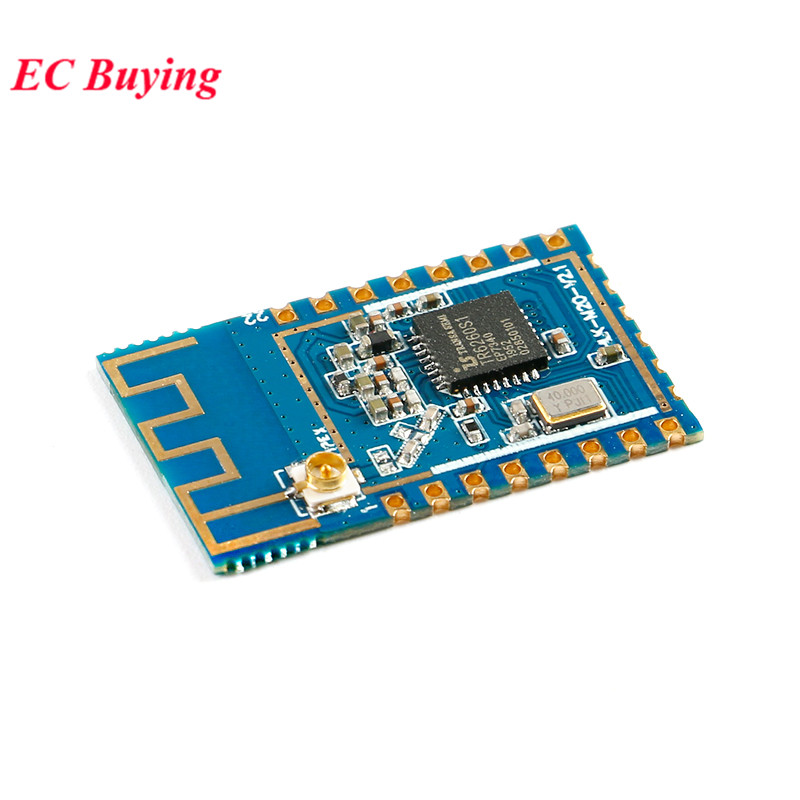
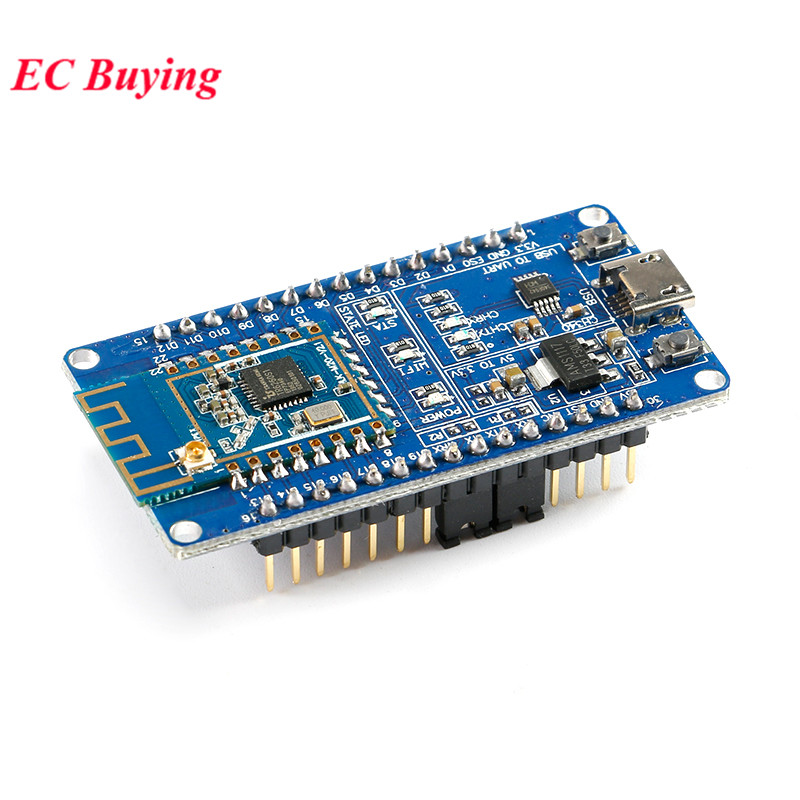
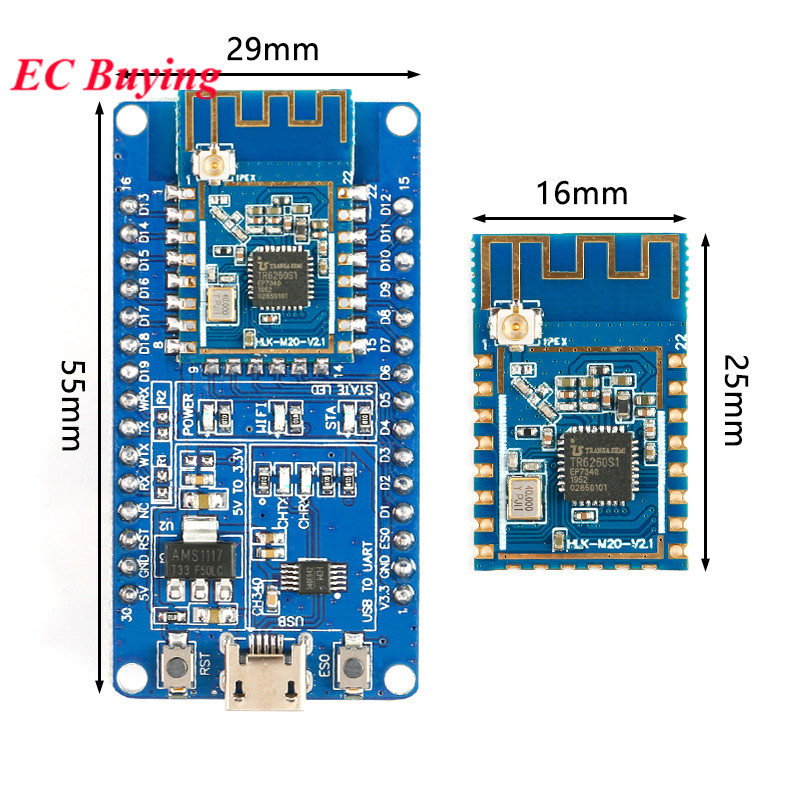
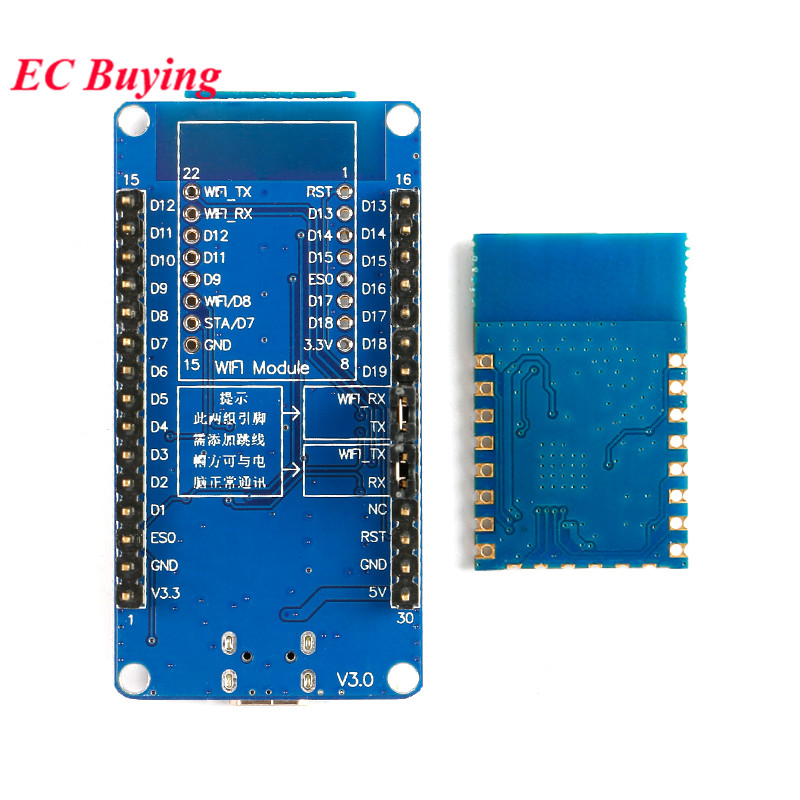
    Additionally, on Aliexpress, I found a development board with a similar module, but there was no information there about what tools can be used for this TR
    
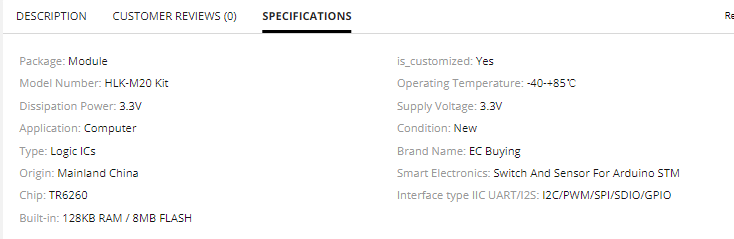
    HLK-M20 Serial Port 2.4G WiFi Wireless Module IOT Serial to WiFi Transparent Transmission Low Power SDK M20 Development Board Ki
    

    Photos:
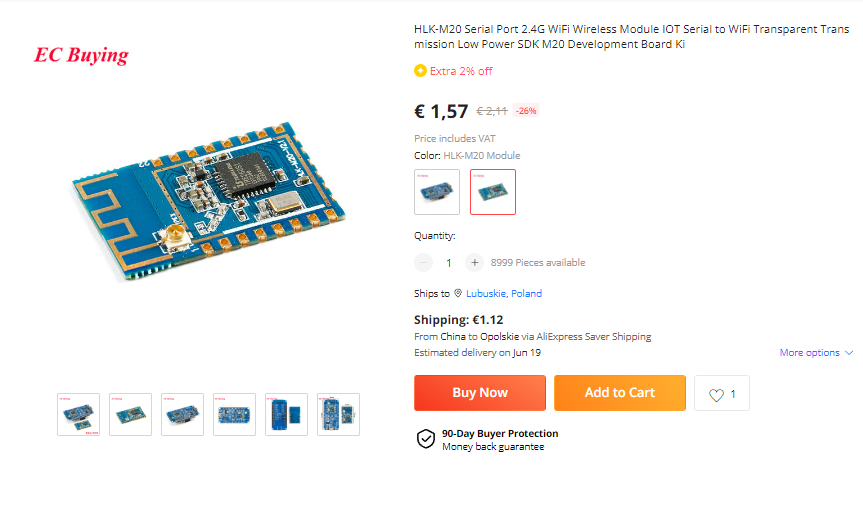
    Screenshot of an AliExpress listing for the HLK-M20 WiFi module.
    TR6260S1 WiFi module on a PCB.
    TRS6260S1
    Development board with TR6260 WiFi module on a white background. Image of two WiFi modules with the TR6260S1 microcontroller. Set of boards with a WiFi module and pin labels.
    Specifications of the HLK-M20 module with TR6260 chip.


    Summary
    Unfortunately, I have to advise against this product—unless you're fine with using the manufacturer's cloud. Personally, I was hopeful we could free it from the cloud, which would have been easy if it had an ESP8266 or ESP32 inside (then Tasmota could save us), or if it was built on BK7231N or T, BL602, XR809, W600, or W800 (then we could flash OpenBeken). What's worse, the WiFi microcontroller is directly on the PCB, so changing it to an ESP module isn't possible, and that would be irreversible anyway...
    In summary, there's no room for experimentation. If any of the readers find more information about the TR6260S1, please share.
    I've been researching this topic myself:
    https://www.elektroda.com/rtvforum/topic3960571.html
    But there are no specifics; the SDK isn't complete, and I haven't found a flasher for this version either.
    If anyone knows or finds anything more, please let me know.
    PS: Additionally, I have a feeling that considering the transistors inside, the 144W is a bit exaggerated, but that's already standard in these types of products...

    Cool? Ranking DIY
    Helpful post? Buy me a coffee.
    About Author
    p.kaczmarek2
    Moderator Smart Home
    Offline 
    p.kaczmarek2 wrote 14225 posts with rating 12120, helped 647 times. Been with us since 2014 year.
  • ADVERTISEMENT
  • #2 20656591
    tmf
    VIP Meritorious for electroda.pl
    Since you have already described a lot of different devices, some could be flashed, some could not, I have an idea. Maybe in the section we could permanently pin a post with a table - device + infor whether it is reflashable, and additional information - it works in the manufacturer`s cloud, works standalone, etc. This would be very useful for buyers. At the same time, it would promote knowledge about problems with such devices.
  • ADVERTISEMENT
  • #3 20656640
    p.kaczmarek2
    Moderator Smart Home
    It`s a good idea, but doesn`t something like this basically already exist?

    We have a topic:
    Global list of interior IoT devices (ESP8266, BK7231, BL602, W600, etc.)
    which basically links to mine electrode-friendly page/aggregator of links to Elektroda from Github:
    https://openbekeniot.github.io/webapp/devicesList.html
    The list includes a convenient search engine (by model name, description and tags) for devices, shows one photo of the device and allows you to quickly find the appropriate topic on Elektroda.

    The list itself is made by the community, and its source can be found here:
    https://github.com/OpenBekenIOT/webapp
    more specifically, here is the "database" in JSON:
    https://github.com/OpenBekenIOT/webapp/blob/gh-pages/devices.json
    Anyone can open a pull request and add an entry, I try to do it myself from time to time to keep the list up to date. This topic will also be added to this list when I find some time.

    It is also worth noting that the mentioned list of devices includes both products supported by OpenBeken and those that are not yet supported. In the case of supported products, the list also offers access from the firmware level to be able to configure the device with one click:
    [TR6260S1 Transa Semi] Smart LED strip controller 144W 6A RGB, IR, firmware
    (sorry for the bad image of the device in the screenshot, I`m on mobile internet, everything loads slowly, there is a good image in the database...)
    This is a screenshot from Web App OBK, this is what access to the list of devices looks like in the firmware (or rather in the web app, but it`s not important). There are also links to the forum, to a topic discussing the device, etc.

    PS: Just as a curiosity, I would like to add that an attentive reader will note that in the screenshot there is a local IP address and there are mentions of Windows - this is not a mistake, my software simply supports Windows (together with all MQTT, etc.), and has a primitive simulator for Windows, which allows me to quickly test things even when I don`t have the hardware at hand. Below is a screenshot from the simulator:
    Spoiler:
    [TR6260S1 Transa Semi] Smart LED strip controller 144W 6A RGB, IR, firmware

    So, to sum up, the list is basically there and with a good search engine, the only thing you can think about is how to improve it (better interface, support status, etc.), because with the number of 366 entries (at the time of writing the post) it is simply necessary to keep it just posting on the forum would be impractical. The mini site on Github is better, and it still links to us (Electroda).
    Helpful post? Buy me a coffee.
  • #4 20656687
    tmf
    VIP Meritorious for electroda.pl
    I didn`t even know. Pretty cool. Tylok IMHO, it would be worth highlighting it somehow and at least making a new sticky post with information on why to reflash the firmware at all, a short guide and a search engine for compatible equipment.
  • ADVERTISEMENT
  • #5 20656937
    p.kaczmarek2
    Moderator Smart Home
    A very good idea, although I actually had that in mind. You could also mention how to start the game, what is the cheapest, and how to control it (e.g. through the very primitive Tasmota Control for a phone and device with a static IP address).

    As for the list itself, you could also think about better displaying the support status, I`ll think about it.
    Helpful post? Buy me a coffee.
  • ADVERTISEMENT
  • #7 21352079
    p.kaczmarek2
    Moderator Smart Home
    tmf wrote:
    find compatible hardware.
    .
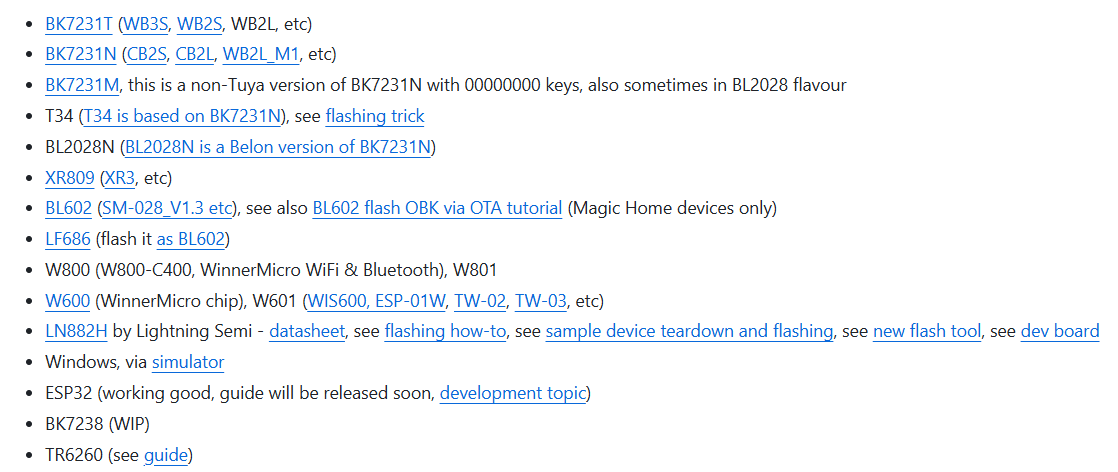
    Speaking of compatible hardware, it's time for a little update - TR6260 is newly supported! . You can flash.
    Details:
    How to sflash the TR6260 with open source software? Guide, pinout, booting .
    List of compatible hardware, as at 17.12.2024:
    List of devices compatible with open source software, including TR6260. .
    Helpful post? Buy me a coffee.
  • #8 21554377
    tlifschitz
    Level 1  
    Hi! @p.kaczmarek2, I have exactly this device but with BK7231N chip. I have not seen a teardown of it, should i upload one?
  • #9 21554501
    p.kaczmarek2
    Moderator Smart Home
    Sure, please share, along with 2MB flash backup (before pairing)
    Helpful post? Buy me a coffee.
📢 Listen (AI):

Topic summary

✨ The discussion centers on the TR6260S1-based smart LED strip controller, a low-cost device offering WiFi and IR control, RGB output, and music rhythm synchronization. The controller is sourced from a Chinese manufacturer and sold under a Polish importer’s branding. The TR6260S1 microcontroller is relatively obscure, with limited prior forum mentions. Recent developments confirm that the TR6260S1 is now supported for firmware flashing using open-source tools, with available guides detailing pinout, boot modes, and flashing procedures. A community-maintained global device list aggregates IoT hardware information, including reflashability status, cloud dependency, and standalone operation, facilitating buyer awareness and firmware modification efforts. The discussion also references related hardware such as the HLK-M20 module and BK7231N-based devices, with encouragement to share teardowns and firmware backups to aid community knowledge. The conversation highlights the value of a pinned, searchable database of IoT devices with firmware flashing compatibility and control options, including integration with tools like Tasmota Control for static IP devices.

FAQ

TL;DR: Only 1 of 366 catalogued IoT devices uses the TR6260S1, yet “TR6260 is newly supported— you can flash” [Elektroda, p.kaczmarek2, post #21352079] Expect Wi-Fi, IR and 6 A RGB output but cloud-lock until reflashed.

Why it matters: knowing chip support saves hours and money.

Quick Facts

• MCU: ESWIN TR6260S1 – 32-bit Wi-Fi SoC listed as a Tuya “third-party chip” [Elektroda, p.kaczmarek2, post #20655808] • Rated strip load: 12 V × 6 A = 72 W per channel; vendor advertises 144 W total [Elektroda, p.kaczmarek2, post #20655808] • Power rail: 12 V → 3.3 V step-down converter feeds the MCU [Elektroda, p.kaczmarek2, post #20655808] • Flash-ready pins: RX, TX, BOT; boot strapping mimics ESP logic [Elektroda, p.kaczmarek2, post #20655808] • OpenBeken database now tracks 366 devices for quick compatibility checks [Elektroda, p.kaczmarek2, post #20656640]

What microcontroller powers this LED-strip controller?

The PCB carries an ESWIN TR6260S1 Wi-Fi SoC, identified in photos and boot logs as the “tr6260” platform used by Tuya’s third-party lineup [Elektroda, p.kaczmarek2, post #20655808]

Is custom firmware finally possible on TR6260?

Yes. As of December 2024 the TR6260 gained open-source flashing support; “TR6260 is newly supported – you can flash” according to the maintainer [Elektroda, p.kaczmarek2, post #21352079]

Which tools and files do I need to flash it?

Download the programmer and SDK bundle linked from the cross-reference thread starting at post #21290001 plus the step-by-step guide in topic 4093752 [Elektroda, divadiow, #21305049; p.kaczmarek2, #21352079].

How do I put the board in boot mode?

  1. Solder headers to RX, TX, BOT and 3.3 V / GND.
  2. Hold BOT low while powering at 3.3 V.
  3. Release BOT after the flasher connects. This three-step sequence matches the boot-strap table printed on the datasheet excerpt [Elektroda, p.kaczmarek2, post #20655808]

Does Tasmota work on this chip?

Not yet. Tasmota targets ESP8266/ESP32, while TR6260 uses a different core. Current community firmware choice is OpenBeken’s new TR6260 branch [Elektroda, p.kaczmarek2, post #21352079]

What real power can the controller handle?

Although marketed for 144 W, internal SOT-23 transistors (mark 3400) are rated around 4.2 A each, suggesting safe continuous power nearer 60–80 W before thermal stress [Elektroda, p.kaczmarek2, post #20655808]

Why did esptool.py fail during earlier experiments?

esptool targets Espressif chips. The author saw only garbled output and no handshake because TR6260’s bootloader is incompatible with ESP protocol [Elektroda, p.kaczmarek2, post #20655808]

Where can I check if other smart devices are reflashable?

Use the community-maintained OpenBeken device list (366 entries and growing) with a search filter for chipset and support status [Elektroda, p.kaczmarek2, post #20656640]

Is there a development board for TR6260?

Yes. The HLK-M20 dev-board exposes TR6260 pins, ships with a transparent-serial firmware and costs approx. US $7 on AliExpress (HLK-M20 Product Page).

What features rely on the on-board microphone?

The microphone feeds the ‘music_local_mic’ routine; firmware toggles LED patterns to sound peaks, confirmed by log lines like “music_local_mic_init” on boot [Elektroda, p.kaczmarek2, post #20655808]

Edge case: what fails if I flash wrong firmware?

A mismatched binary can brick Wi-Fi setup, leaving only the IR remote functional because PWM runs from a different core; recovering then needs serial reflashing under boot-strap mode [Elektroda, p.kaczmarek2, post #20655808]

I have the same controller but with BK7231N—should I post a teardown?

Yes; the maintainer requested photos plus a 2 MB flash backup before pairing to aid database accuracy [Elektroda, tlifschitz, #21554377; p.kaczmarek2, #21554501].

What’s the fastest way to start experimenting at low cost?

Buy a BK7231N or ESP8266 device (~€5), flash OpenBeken or Tasmota, then control it with the free Tasmota Control mobile app over static IP [Elektroda, p.kaczmarek2, post #20656937]
ADVERTISEMENT