Czy wolisz polską wersję strony elektroda?
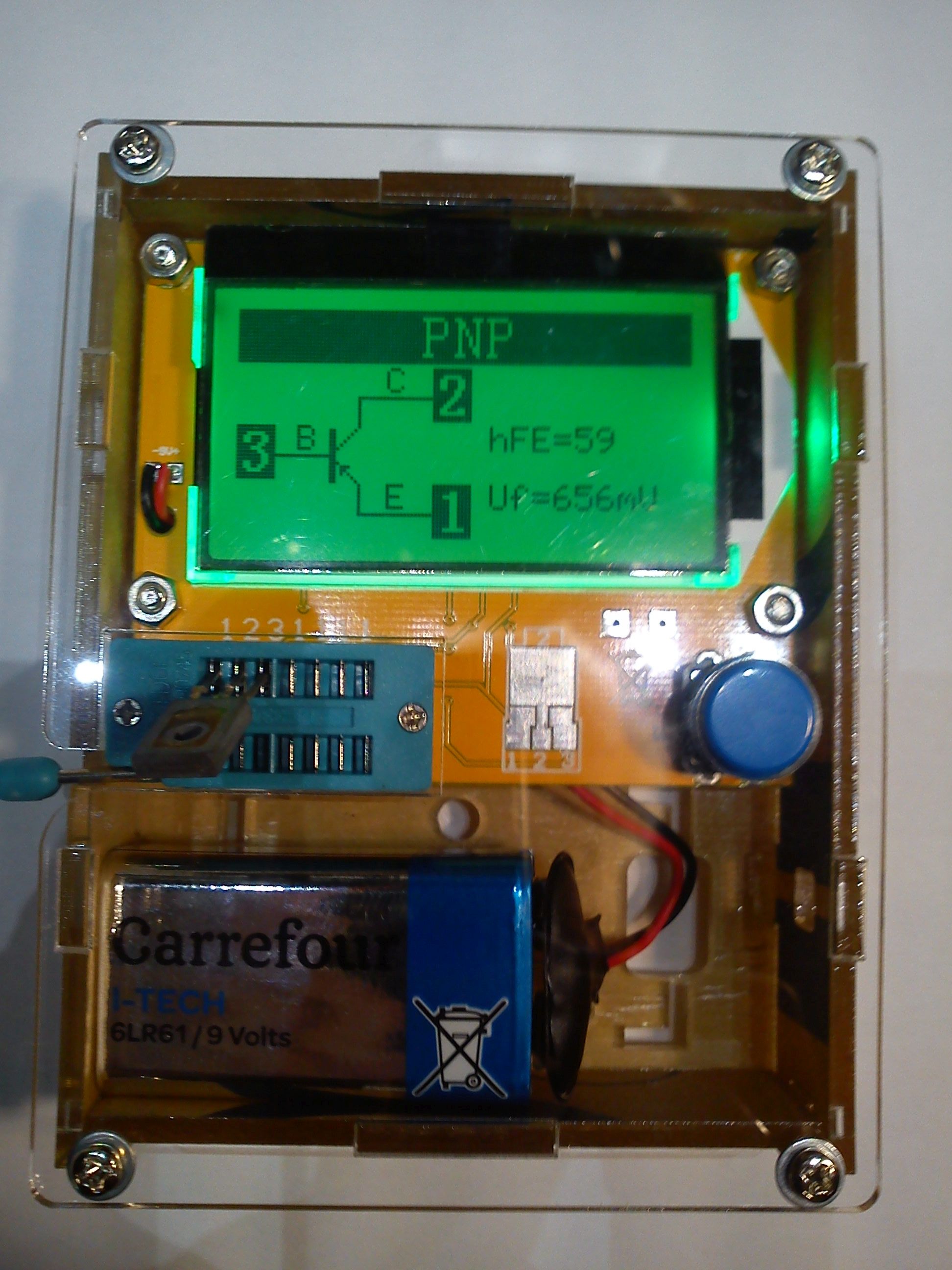
Nie, dziękuję Przekieruj mnie tamrafcio_21 wrote:Only why complicate life for yourself ?? Did your friend hear about 6F22 rechargeable batteries? For a dozen or so PLN, buy one instead of a battery and you can also charge.I am also waiting for delivery, I will immediately reprocess my tester instead of the 9V battery will be a boost converter for this some charger and batteries from the phone. You will not need to replace the battery every now and then just need to recharge your needs. Because, apparently, on this 9V, he can stand it for a short time.
rafcio_21 wrote:"The tester is powered from a 9V battery and during the measurement draws a current of 12-15mA, while in the sleep mode according to the description of 20nA." @ rafcio_21 you are going to use this TESTER as the only measuring device? (hopefully not "workshop").You will not need to change the battery every now and then
gumisie wrote:I have a lot of components from disassembly eg capacitors and in a workshop meter I do not have capacitors and many other elements which I do not want to measure with the meter and a 2 s tester either to the drawer or to the basket.rafcio_21 wrote:"The tester is powered from a 9V battery and during the measurement draws a current of 12-15mA, while in the sleep mode according to the description of 20nA." @ rafcio_21 is you going to use this TESTER as the only measuring device? (hopefully not "workshop").You will not need to change the battery every now and then
gumisie wrote:I see that some have misunderstood my words. My point was that the tester can confuse / recognize the item as something else. As for the tester, it requires less knowledge than a multimeter. I wonder how it would handle a coil with a bifilar winding or other rarity such as an IBGT transistor?Dear Gentlemen, after all this is not a device that may be used to smoke for us. Reading the statements such as: E8600 wrote: So, without the elementary knowledge of electronics, the tester is of little use.
gumisie wrote:I also think that the battery will last for a long time but if I was wrong, the idea of rafcia reminded me of having an unused step-up converter"The tester is powered from a 9V battery and during the measurement draws a current of 12-15mA, while in the sleep mode according to the description of 20nA."
vodiczka wrote:Personally, I did not check it, a colleague who bought the meter from the previous series told me.gumisie wrote:I also think that the battery will last for a long time but if I was wrong, the idea of rafcia reminded me of having an unused step-up converter"The tester is powered from a 9V battery and during the measurement draws a current of 12-15mA, while in the sleep mode according to the description of 20nA."![]()
rafcio_21 wrote:Add time to the appropriate shape of the pins of each element, if you do not make the appropriate adapters for a quick measurement, not to mention that the measurement of electrolyte with a capacity of several hundred ?F takes longer than 2 seconds after pressing the button.I have a lot of disassembly components, eg capacitors ... a 2 s tester either into a drawer or into a basket
vodiczka wrote:It seems to me that it will be faster to correct eg inserting the transistor's feet into the base and pressing the button than the meter to apply the probes once to one pair to the second pair of leads to determine whether it is npn or pnp or mosfet, and with these 2s capacitor measurement that's what I was toldrafcio_21 wrote:Add time to the appropriate shape of the pins of each element, if you do not make the appropriate adapters for fast measurement, not to mention that the measurement of electrolyte with a capacity of several hundred? F takes more than 2 seconds after pressing the button.I have a lot of disassembly components, eg capacitors ... a 2 s tester either into a drawer or into a basket
TechEkspert wrote:I am very impressed with the colleague's effect. It's great. My appreciation for my friend's skills in this field. I thought it was impossible to even make an electrode logo in this tester, not to mention the Polish language. Kuro cool!I was able to not spoil the tester and place the firmware on this page in the microcontroller: https://www.mikrocontroller.net/svnbrowser/transistortester/ Here the description: change of firmware in the LCR T4 tester
rafcio_21 wrote:Yes a bit OT - I do not know the effective way of checking / confirming ** mosfets with a meter that I will write this way: "reliable" although at such a level as bipolar ones. That's why a few years ago I made a crude, but effective tester of field effect transistors, incidentally based on the scheme found on Elektrod ( HERE post # 4). I even thought about throwing in some DYI, but first of all primo was not too much to brag about - the assembly of "3D" elements in a box, without any tilesthan to apply probes to one pair once to the other pair of leads to determine if it is an npn or pnp or mosfet
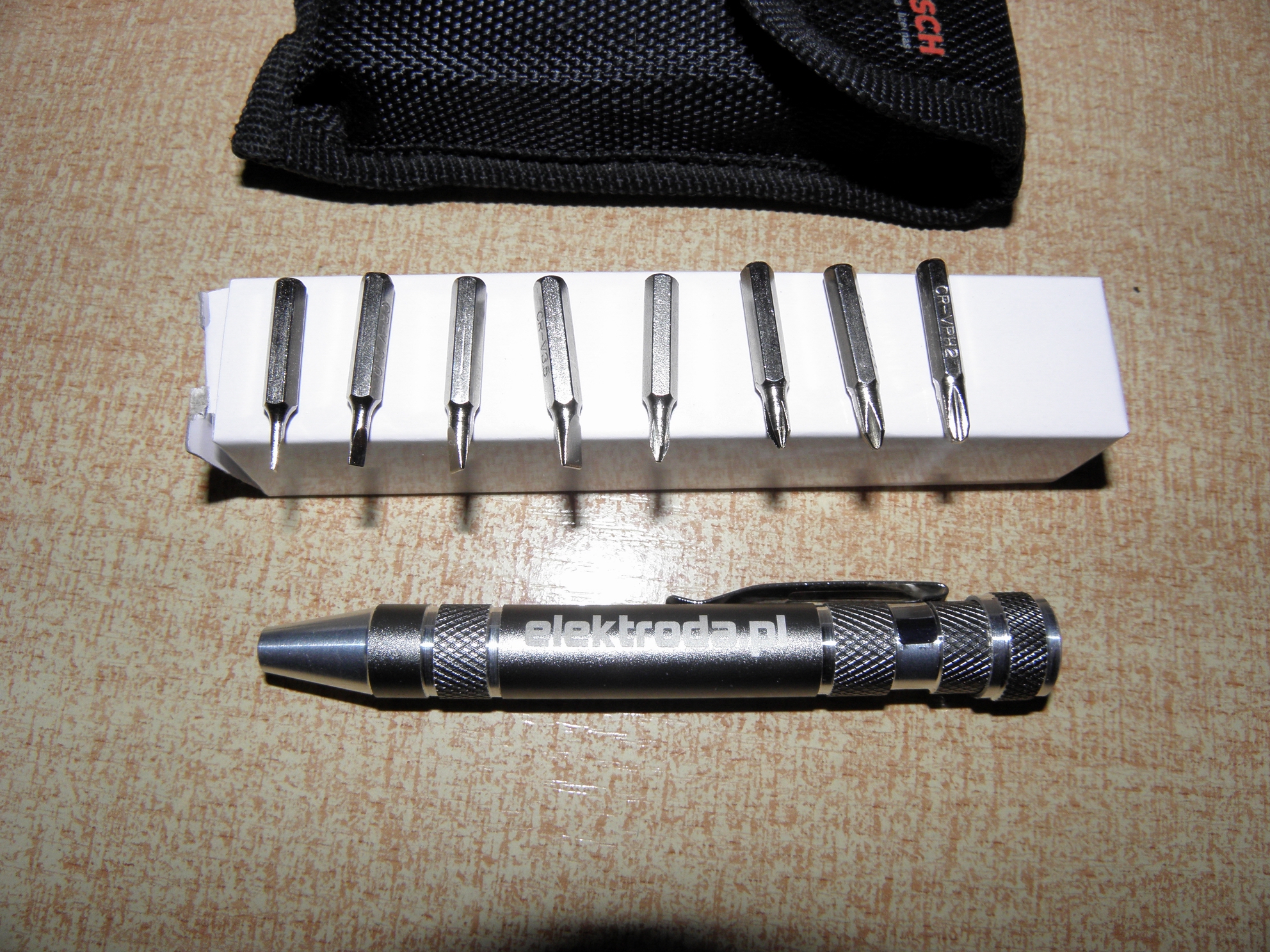
398216 Usunięty wrote:Thank you very much for the info, it's also time for the meter to exchange. You talk about the wolf, and the courier behind the door. I got it and quickly checked that it works. It shows the capacity of the gate in the mosfet very well. It was supposed to be around 5nF and 5 items have just around 5nF. Although all more by some 11% more than in DS.I recommend such as in the picture - cheaper than branded, and better (I have a comparison after a digital meter). Oh - there are still red of the same brand - also good, but blue better (I also checked).
wojtek1234321 wrote:Well, but cool. Maybe now there are such tester sets + such a screwdriver? Or Mikołaj was wrong.
mirex wrote:I do not know if this is a good example for testing, but ... my tester's copy does not show ESR differences between the measurement of capacitors soldered on the PC motherboard and those already desoldered (measured "directly" in the tester's slot). I used two twenty-centimeter UTP twisted-pair wires as measuring tips.How does this tester behave when measuring ESR, but for capacitors in the system, not in bulk?
TL;DR: LCR-T4 auto-tests 14 part types, draws only 12-15 mA per measurement, and “will be useful in every workshop” [Elektroda, TechEkspert, post #16556695] Accuracy stays within ±2 % for most resistors. Firmware flashing adds live-scan mode and Zener tests. Why it matters: you get multimeter-level insight from a €10 gadget.
• Supply: 9 V battery; 12-15 mA active, 20 nA sleep [Elektroda, 16556695] • R range: 0.1 Ω – 50 MΩ, C range: 25 pF – 100 000 µF, L range: 0.01 mH – 20 H [Elektroda, 16556695] • Typical accuracy: ±1 % R, ±3 % C, ±5 % L (user tests) [Elektroda, 16556695] • ESR read-out for electrolytics ≥1 µF [Elektroda, post #16556695] • Open-source firmware: AVR-based, 40 V boost for Zener mode [Elektroda, 16666684]