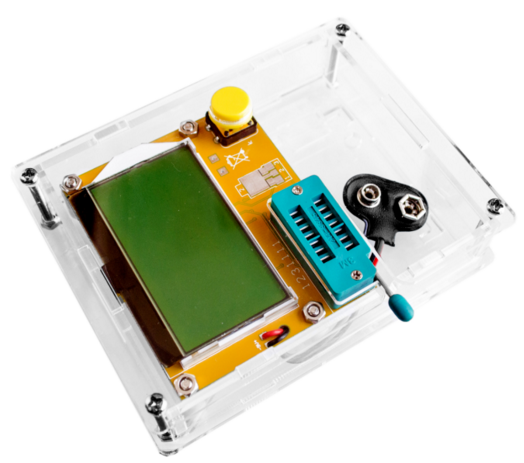
@GUTEK@ wrote:Yes, that's how it works for me.When the tester is turned on while holding down the button for a few seconds, the display contrast can be set. This probably was not written before.




Czy wolisz polską wersję strony elektroda?
Nie, dziękuję Przekieruj mnie tam
@GUTEK@ wrote:Yes, that's how it works for me.When the tester is turned on while holding down the button for a few seconds, the display contrast can be set. This probably was not written before.
TechEkspert wrote:I recognize my T7 after the inscription "T7" on the casingHow do you recognize these testers TC1, TC4, TC7, is there any indication on the display / PCB?
 Does he report himself, I did not even look at it carefully. For sure at the start, it shows the battery voltage. If there is interest, I can undress him and take photos of the guts. But this is next week, because he was at work. As for others, especially those DIYs without housing - I do not know. We were looking for a complete "ready", because no one at work would play sculpting, some modding, etc. In the Chinese there is a lot of it, there are also versions for self-assembly (plate and elements separately). As mentioned by one of the foreheads, Aliexpress or similar are now a mine of electronic gadgets-ideas. Example of search results with the keywords "transistor diode tester": https://en.aliexpress.com/wholesale?catId=0&i...0701011119&SearchText=transistor+diode+tester
MiernikZKauflanda wrote:What are you Chinese portal for? Gentlemen, is it here. These testers are already 39 PLN already housing on Alle ..... and without housing for 25 PLN! These are pennies, you can buy and test. It is already full now. It does not make sense to bring it from China alone. I do not provide links because the rules prohibit prices Tester with housing full 39 PLN, with delivery 54 PLN Tester without housing 24.99 PLN with shipment 44.98 PLN Same housing for this tester with holes and screws set for this price 22 PLN with shipment PLN 25.20. I do not think that these are large amounts and you have the stock right away.I will sooner come from a well-known Chinese portal than I get so many points ...

Novile wrote:Provide links, I absolve you, I would like to see who sells in Poland for PLN 30, because I saw a minimum of PLN 60 plus shipping.I do not provide links because the rules prohibit prices
Novile wrote:Or they have goods for PLN 100 from a Polish company. Or they have goods for points with a free shipment. The most important is that everyone has a choiceI do not think that these are large amounts and you have the stock right away.
In July there will be a new ESP32 with Bluetooth. And when it comes to testers, it's time to prepare points for August!
Novile wrote:On ebay they are after 22PLN. Sure, with 25pln in Poland is not enough and it is not worth bothering to wait for a shipment from China. But with us, the value of the shipment is often higher than the module, partly due to the fact that the seller is trying to earn a shipment and treats it as a profit margin. However, the elements themselves are expensive in relation to the devices assembled, you can see the labor of the Chinese girl is of low value in their country. The modules are bought for "store". So I can wait and a month. Free shipment is a good thing. If in Poland, find a way for free, or almost free shipments, this would certainly stimulate trade. Remember that the gadget is something that distinguishes the electrode, but it is not the essence of this portal. A nice addition, for giving, helping, etc. Will be 4 or 2 a year, it is less important.Tester without housing PLN 24.99 with shipment PLN 44.98
However, I must say that the cheapest offers are imported from China only we do not care directly, now I checked it. I do not write it directly, it is camouflaged like "goods from a foreign warehouse" etc. But we do not melt the money in an unknown business only someone it is for us and we only require the goods. But this offer with housing is already given the Polish location.
Quote:So they will be sent from China anyway and the "moment" will wait for it.By choosing to participate in our offer, you grant us power of attorney to order the goods and to transfer the payment to a foreign seller to the producer on your behalf.
Novile wrote:Then look at these links and check where the delivery is from and what the deadline isNovil
I will not mention the invoice, because it would probably be a problem, but I do not know for sure. Your first delivery date is 7-45 days, but you must be aware that 7 days is a spring story and the seller knows it. I will not mention complaints, Allegro is a way of suffering, doomed to failure, and yes, for your own satisfaction you can put "I do not recommend" - good and it is from the point of the buyer. Complaints on aliexpress, eBay are definitely better! The Chinese handles us better than the countryman.
piterek-23 wrote:I will not build the tester myself, but I can build it, it will be "own contribution"you can buy a housing for it for $ 2.40 ~ PLN 9
Gulson can announce a contest for the most interesting housing made by itself.
 I have this tester for 2 weeks. It is with housing - measurement of frequency - frequency generator - checking of IR remote controls - temperature and humidity measurement - the rest was mentioned.Cena-65.72PLN-DIY version. I've seen here comparison of indications with the meter for 2500PLN. As for me amateur is great. it takes a couple of hours for me - 4 hours. Free delivery. I recommend it to everyone.
MiernikZKauflanda wrote:@MiernikZKauflanda 1200pkt is not so much especially that you can accelerate the number of points: - writing your finished construction in DIY to + 300pts (4 constructions) - writing your design during construction in DIY to + 200 points (6 constructions) - writing DIY construction from abroad portal / page is + 50 points (24 descriptions) - writing your own Article to + 40pts - settlement news to + 30 points - tutorial videos + 20pts - information about event + 10 pointsI will sooner come from a well-known Chinese portal than I get so many points ...
MiernikZKauflanda wrote:It is not about "scoring points", only earning points for sensible activities. You have cleared the bottom of the shopI know that you can earn points in this way, but you can not abuse this "gift from the administration". I might as well put a few power supplies on the basis of a well-known company in a row to get points for that tester ...
and good, it would be nice to see the response in the forum, when the gadgets will start to reach people, how much can such a shipment, week / two?
vodiczka wrote:I have a hunk like this, but I am looking for a box to civilize it more. Initially I have selected such, only a bit expensive: https://www.aliexpress.com/item/5pcs-lot-Whol...on-box-plastic-black-plastic-abs-enclosure-80 /2039872455.htmlGulson can announce a contest for the most interesting housing made by itself.
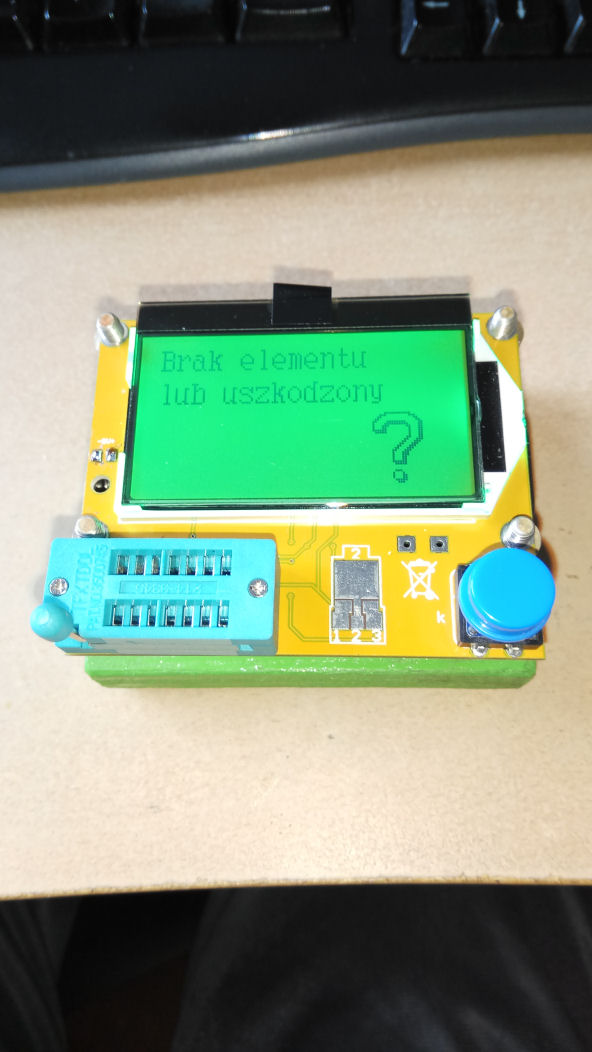
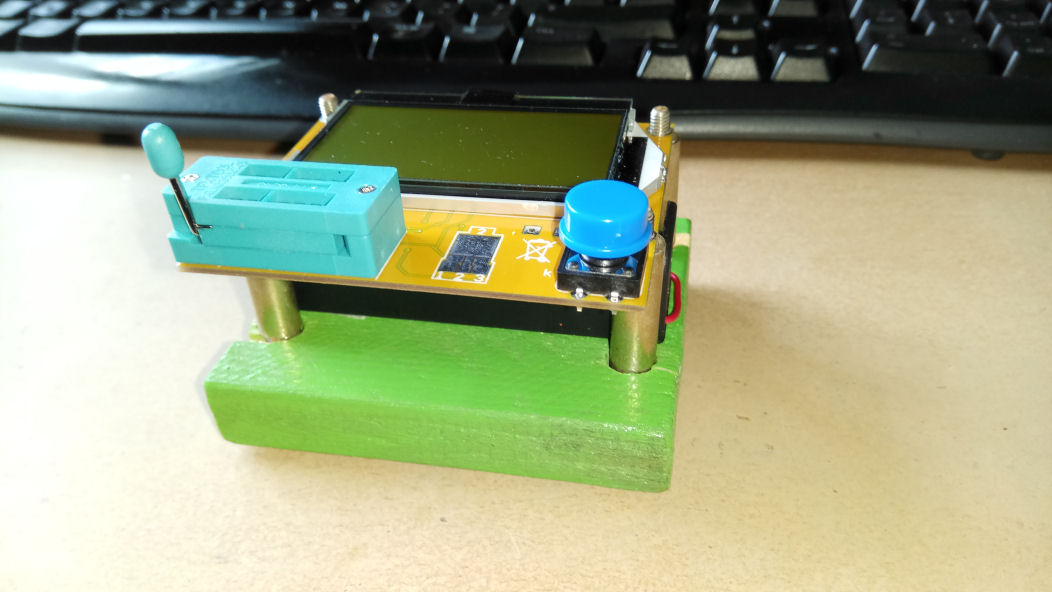
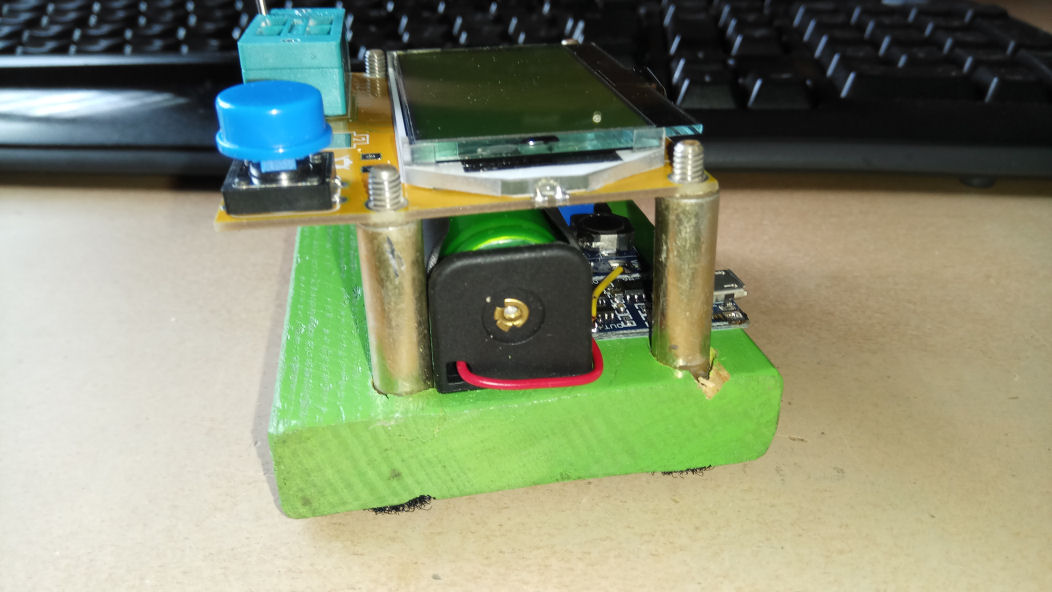
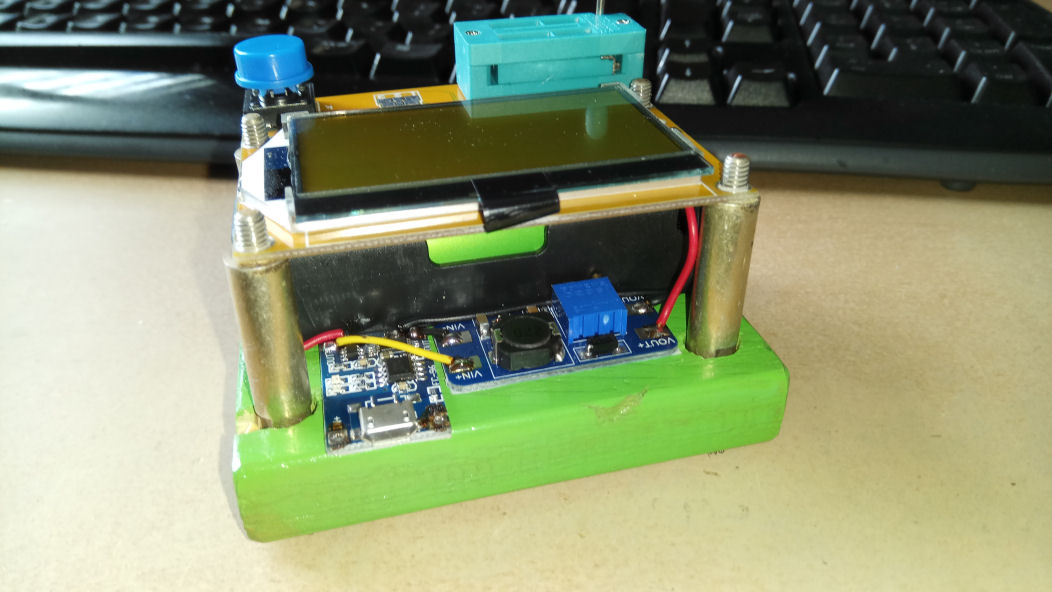

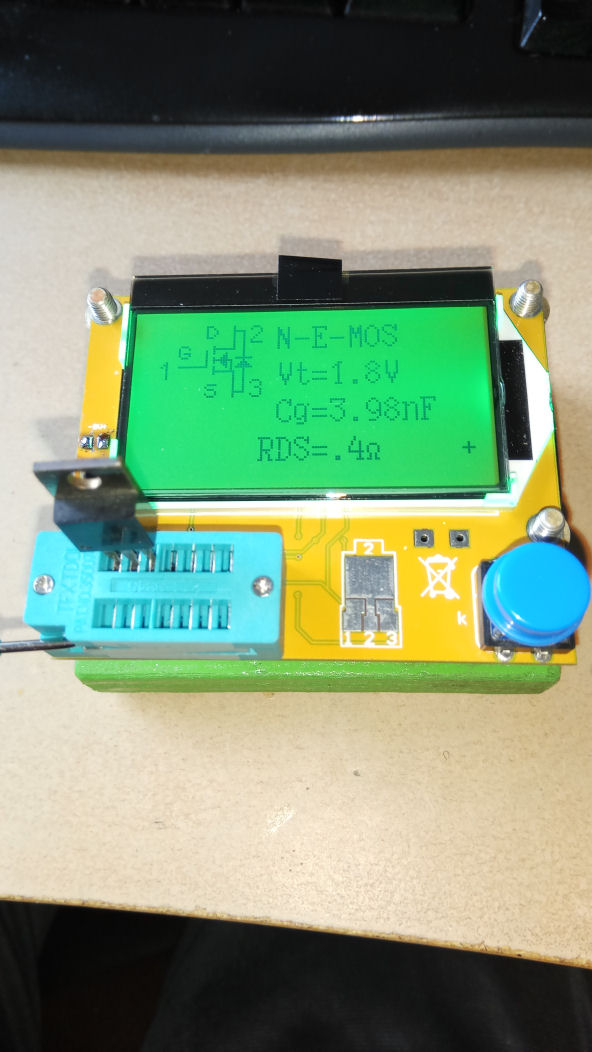

TL;DR: LCR-T4 auto-tests 14 part types, draws only 12-15 mA per measurement, and “will be useful in every workshop” [Elektroda, TechEkspert, post #16556695] Accuracy stays within ±2 % for most resistors. Firmware flashing adds live-scan mode and Zener tests. Why it matters: you get multimeter-level insight from a €10 gadget.
• Supply: 9 V battery; 12-15 mA active, 20 nA sleep [Elektroda, 16556695] • R range: 0.1 Ω – 50 MΩ, C range: 25 pF – 100 000 µF, L range: 0.01 mH – 20 H [Elektroda, 16556695] • Typical accuracy: ±1 % R, ±3 % C, ±5 % L (user tests) [Elektroda, 16556695] • ESR read-out for electrolytics ≥1 µF [Elektroda, post #16556695] • Open-source firmware: AVR-based, 40 V boost for Zener mode [Elektroda, 16666684]