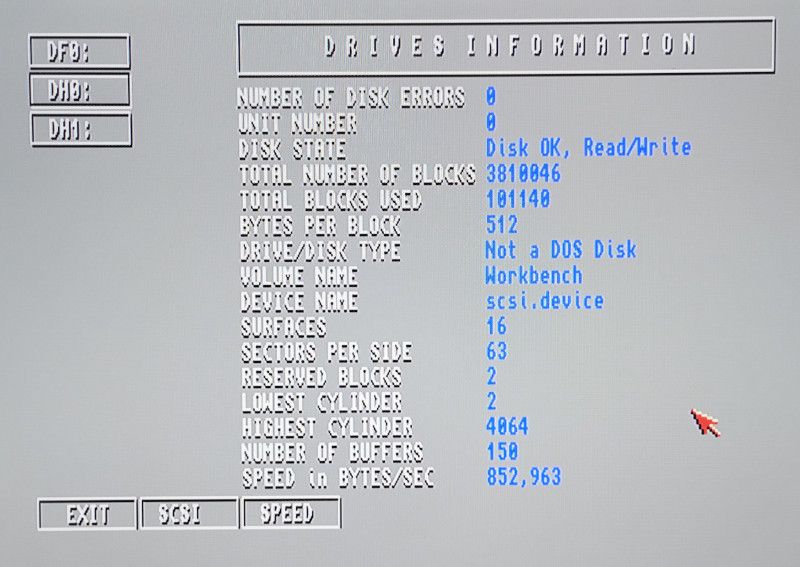
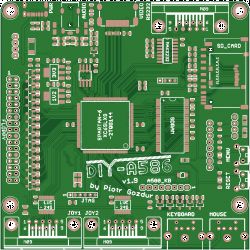
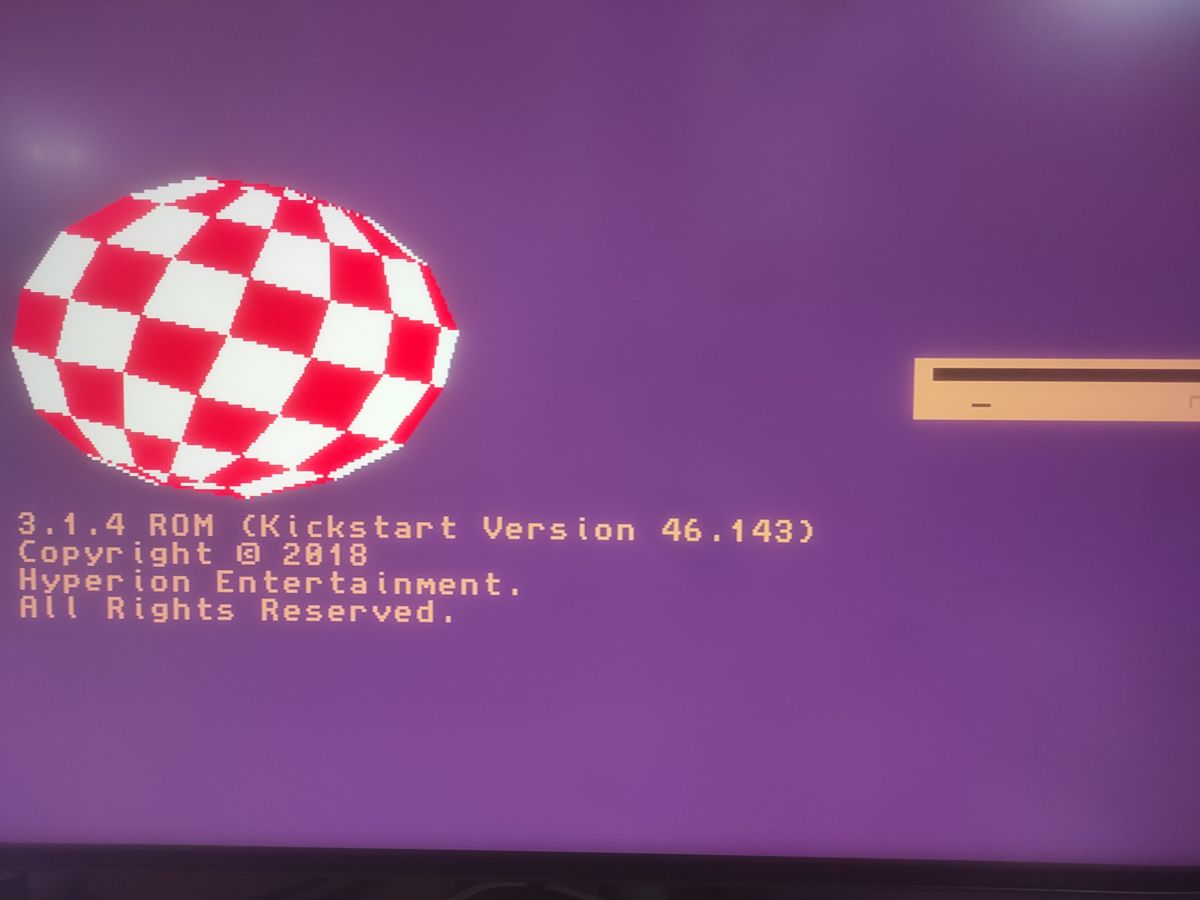
Kickstart (kick31.rom, kick3221.rom, etc.) just like the SD.rom file and core is to be in the spi flash memory previously loaded through the menu from the SD card formatted to fat32 . In the latest version of core mikan does not need to be patched. At least I have not patched anything.
The prepared HDF file must be "recorded" on the memory card, for example, using RPI Imager or balena etcher (I have not tested).
ADVERTISEMENT
SDRAM connection fault suspected from core behavior
Probably something is not connecting (or shorting) between the FPGA and SDRAM. Try core NES.
1. After overheating the Spartan solder and memory, core NES and Mikan work. NES boots without any add-ons. 2. For Amiga, required kickstarts for A500, A600 will not run otherwise. Thanks @Macosmail. 3. Under WB3.2 needed KS 3.2.2, otherwise after installation at startup it throws errors
Because you probably use kickstarts for the A1200, they should be for the A600. At least that's what I was guided by when choosing. Peter somewhere gave checksums of specific kickstarts.
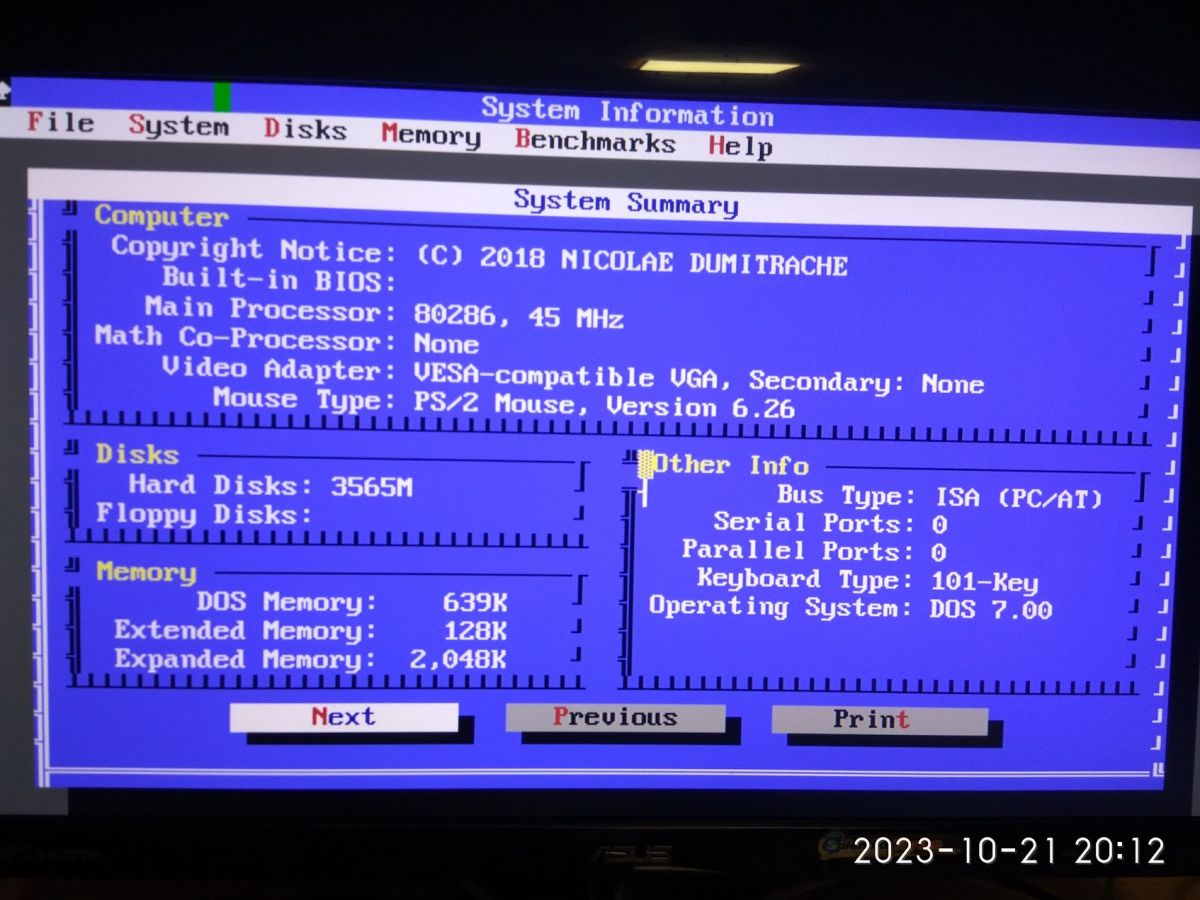
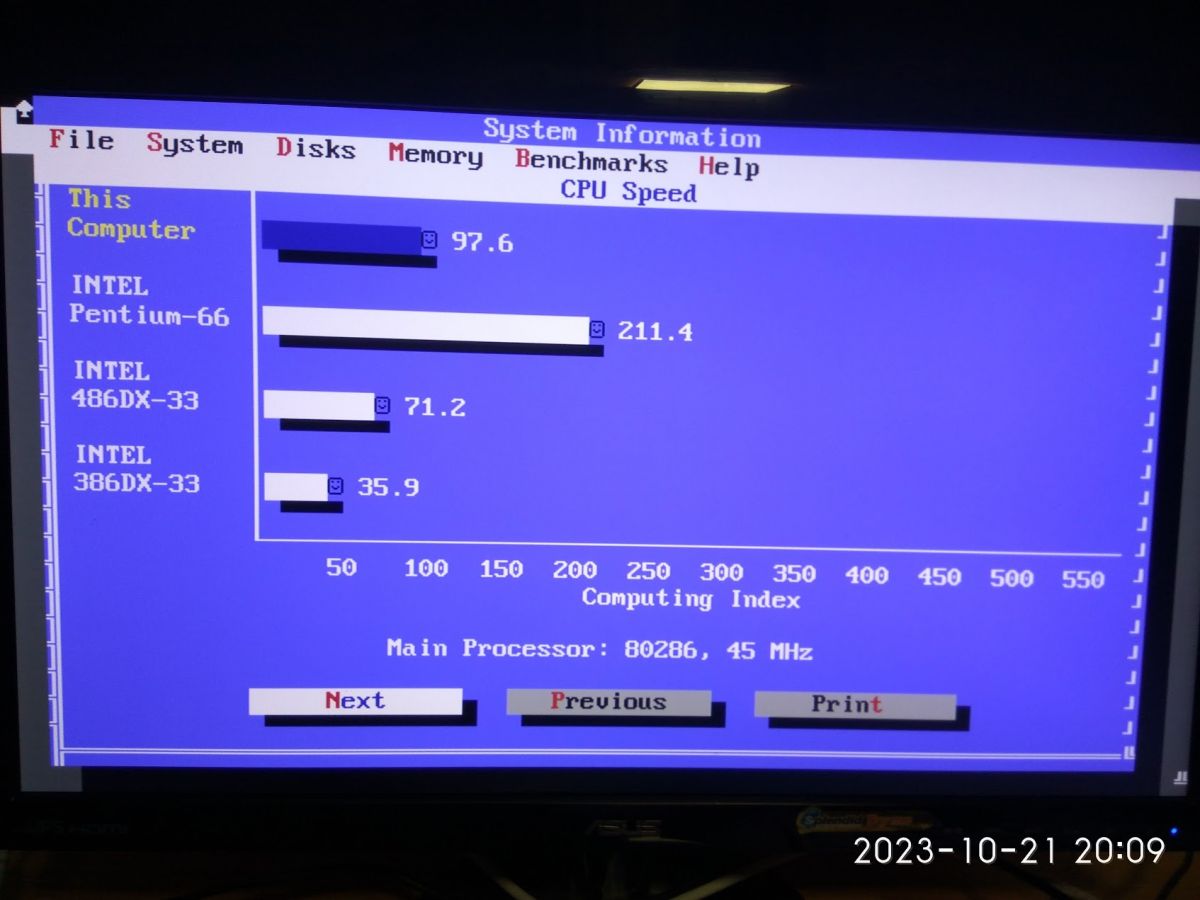
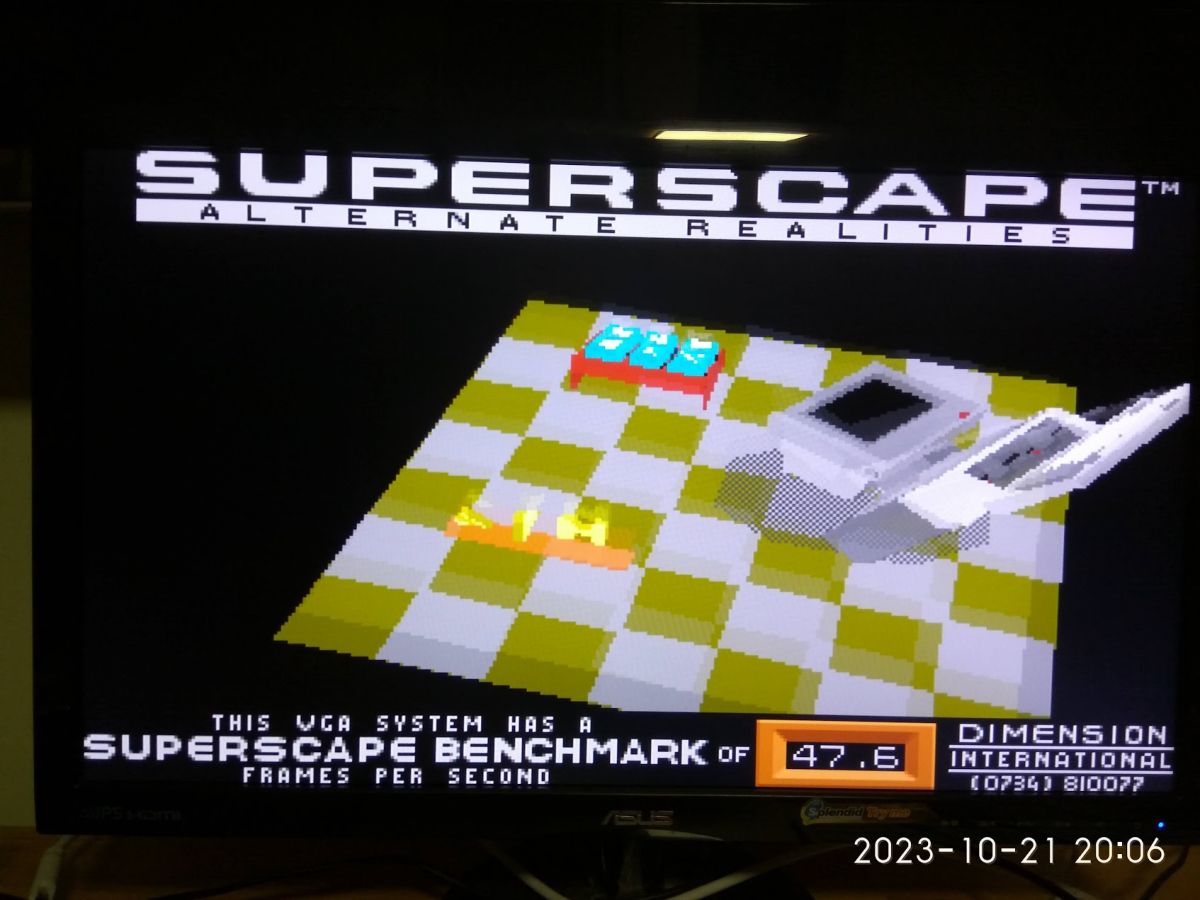
Since I managed to fire up the board version 1.9 over the weekend, I decided to make a quick summary and encourage all those who are thinking of assembling. I started the project six months ago, so I was not particularly in a hurry, but I finally did it. All I have left to solder are the Amiga mouse, joy, serial and disk station ports. They are not required, because Workbench will fire with keyboard and mouse on PS2. A disk image done on UAE will allow you to fire up most games via WHDLoad. After spending several hours testing Amiga games, I must say that everything fires up. Some games will run a little faster - Flashback, due to the fact that the Amiga is overclocked, has problems during the intro, Jaguar XJ220 - goes a little too fast. But on the other hand, Gunship 2000 will not lose frames, and Stunts 4D Sports Driving can be fired up in better details. Overall it was worth it. The only thing that would come in handy is the joystick I'm going to get - the board doesn't have USB, so we won't go crazy with a pad. Thanks for the cool project @piotr_go.
I noticed that I only have a problem with the floppy disk drive on kickstart 1.3. Does not want to read floppy disks at all, sometimes read, but during loading grinds the head as if the floppy disk is damaged and unreadable. On kickstart 2.04 and above reads without a problem.
Gotek on kickstart 1.3 loads floppy images is also all okey, so in the configuration of disk station+kick1.3 on DIY-A586 something is not working for me. The PC floppy disk station converted to read with Amiga. I also tested it on an Amiga 500 with kick1.3 and everything also read. I had to check connect a real Amiga floppy disk station to the DIY-A586 on kick1.3.
Has anyone also had a problem reading floppy disks on kick1.3?
From your description I would aim that since Gotek works, the station may not like DIY after conversion. Try another station to convert, a different model. Self I have not yet tried the floppy disk station. I don't particularly miss floppy disks and I don't want to convert them. If I did, I was thinking rather to assemble an adapter: https://github.com/istedman/Floppy_adaptor
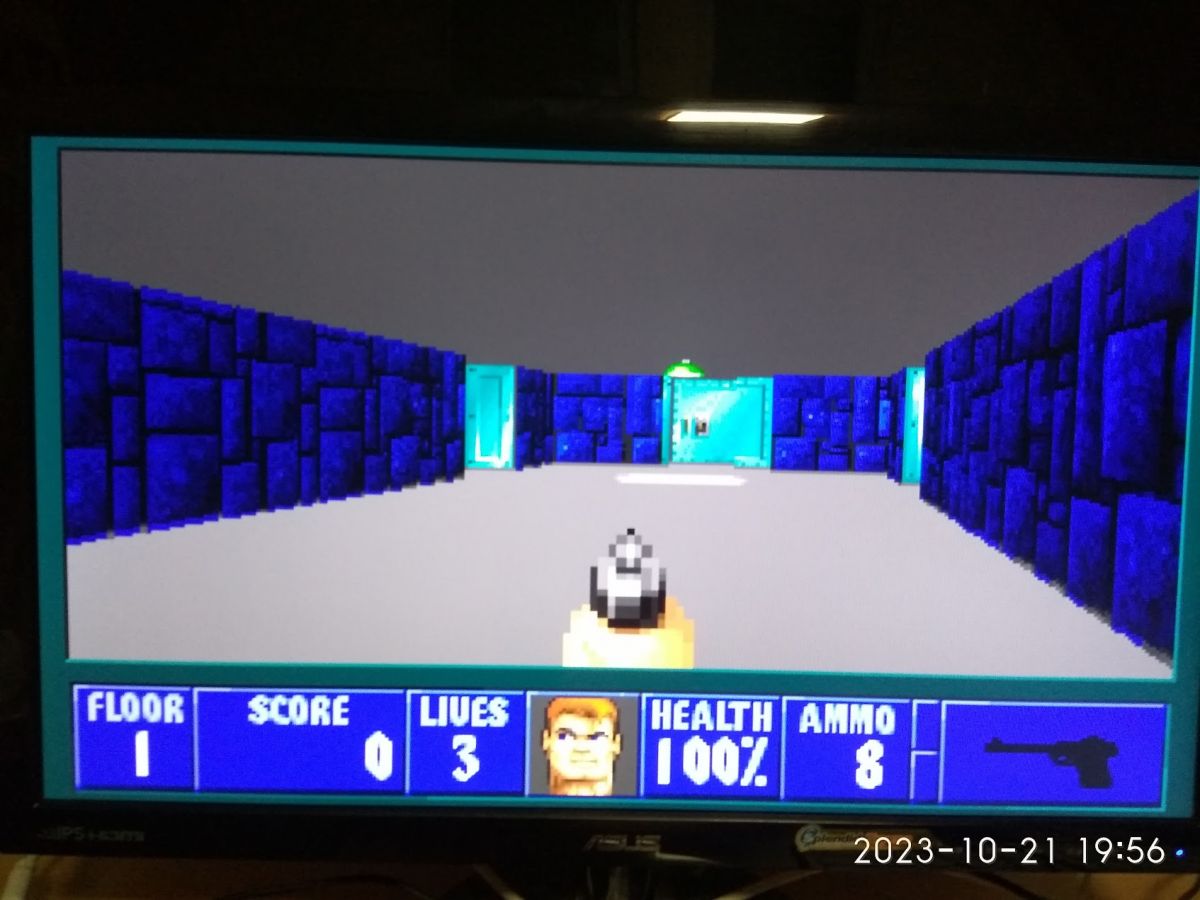
yes, i fired up doom on risc-v, and left the demo/intro for 15 minutes - on core 0.4.1, everything was fine. on risc-v 0.4 i had artifacts and doom crashed after a few minutes.
Has anyone managed to run DIY with an SD card larger than 4GB? I've installed HSTWB with various options, but I always get an Error at startup and I don't know if I'm doing something wrong or it just doesn't have a chance to work - on FS-UAE it works beautifully. If anyone would like to try it, here is the link - https://hstwb.firstrealize.com/get-started#hstwb-self-install-hdf-image
thanks again, it helped! workbench is really responsive on a better card, and will be able to fit a large library in 32GB. Besides, DIY is probably the fastest Amiga500+.
I'm slowly getting ready to build a DIY project and I have these questions.
1. Can you ask for the Gerbers to be improved so that there are also micro-SD soldering pads under the large SD card slot?
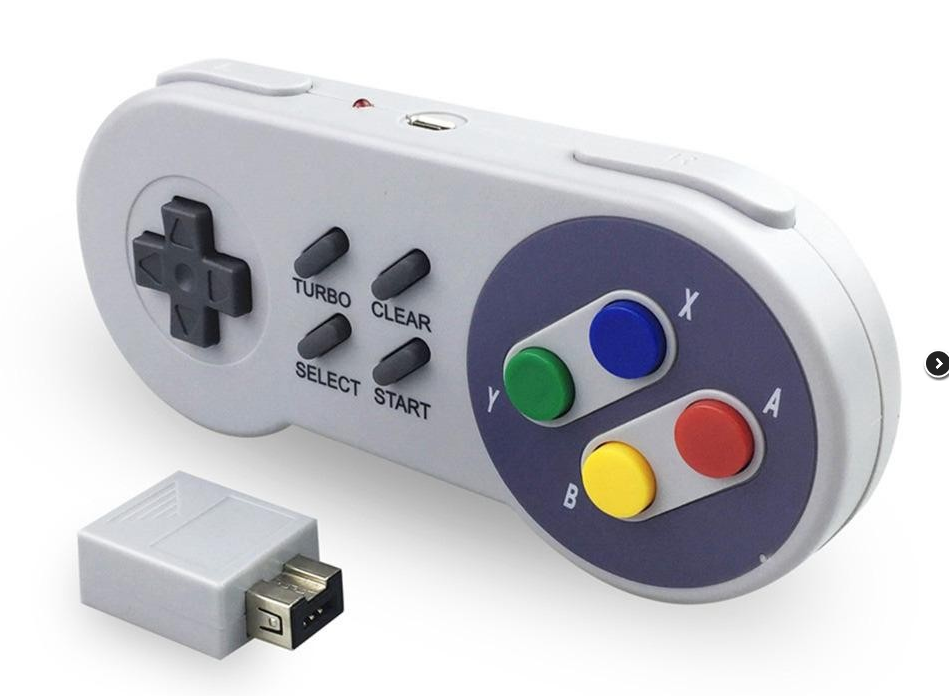
2. There are NES/SNES pads with USB and additionally with a plug as shown in the photo below. I understand that embedding the USB stack may be time-consuming and problematic, but the pads below enable operation as per the SPI protocol, is it possible to add their support?
3. Will any SDRAM stick with 3v3 CL2 133MHz work or are there any other parameters that must be compatible?
4. Is there a planned C64 core? I saw in one of the photos that there was an attempt to run the Commodore as well?
2. Check the nes directory for v1.6 on github, there is a pad adapter, it should work with nes for v1.9
3. Theoretically it should work, but as far as I know there are some problems with core risc-v.
4. I don't know. If someone wants to try it themselves, I can send them what I have done so far. C64 itself works, you would also need to add flopp or SD support.
Attachments:
piotr_go DIY-A586 v1.9 uSD.zip(277.81 KB)
You must be logged in to download this attachment.
A crazy idea came to my mind today. I`m thinking about commissioning a paste stencil from a company that makes stickers, signs and CNC cutting. it`s about precise cutting in thicker paper, vinyl or plastic at a local company. Shipping a template from China costs more than the template itself, and I don`t need it in metal because I can only assemble a few more boards. If the price is affordable, you can always cut out a few templates, I`ll call you tomorrow and find out if something like that is even possible. the idea comes from this article: https://www.sparkfun.com/tutorials/383
replying to your previous post; local companies don`t really know how to deal with the matter. If I had to have the material, maybe they would be able to tell me if it`s possible on their equipment. I also considered the idea of etching the template with acid in aluminum, but it would be a waste of time for the dubious savings. so it`s probably best to take the template from JLCPCB for now, preferably together with the board. I may be tempted to order it together with the uSD version. I just can`t find which SD card slot to buy. strange footprint.
I have already prepared a basket with parts to order for LCSC, but something occurred to me and I was thinking about expanding the current project a bit.
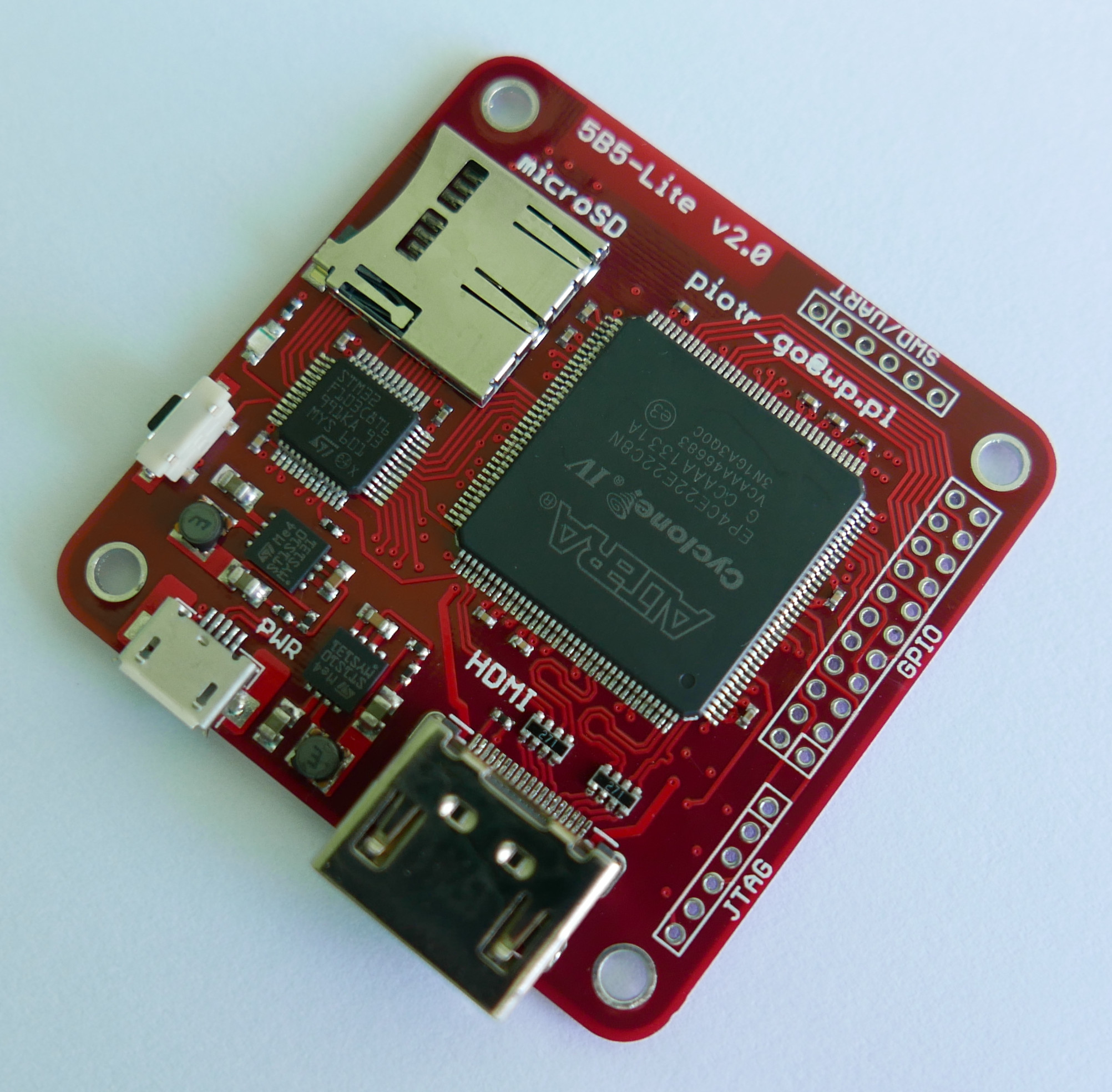
@piotr_go, in the thread regarding version v1.6, you mention work related to the 2.0 board and a stronger FPGA. Which system are we talking about and is there a chance to release version 1.9 also for this newer fpga, I`m mainly concerned about the possibility of future expansion and, for example, adding AGA support. If you manage to implement AGA support, do you plan to add it to version 1.9?
I see that the PCB at the bottom is practically a ground field, so it was thinned to add other electronics. What I mean here are projects like picoinfones or mcume . Additionally, apart from rp2040, I would add esp32 and the project bluepad32 . From the functional side, esp32 would be responsible for communication with the peripherals, i.e. support for pads/keyboard/mouse via Bluetooth and controllers via cable, then this data could be transferred to fpga via SPI and rp2040. The role of rp2040 would be to run cores from mcume, rp2040 can also act as a usb host and support hid devices via usb. The last additional system would be a 3:1 HDMI selector, i.e. esp32 would select the signal source using the received combination, whether it should be rp2040, fpga or an additional hdmi input (e.g. external console).
Additionally, esp32 and rp2040 could also be able to program each other or fpga.
All of the above measures would be aimed at creating one test platform for retro gaming, freeing itself from the mass of cables.
I can design the board again in Kicad with appropriate changes.
@piotr_go How do you see it from your side, if this project would come to fruition, then Would you be able to add appropriate changes to your code to make the FPGA talk to ESP32 without allocating so many pins?
✨ Discussion of the DIY-A586 v1.9 FPGA-based Amiga-compatible board by piotr_go, built around a Spartan-6 XC6SLX9 with 32 MB SDRAM, 16 MB flash, HDMI, analog audio, SD, RS232, joystick, PS/2, floppy and A500 keyboard interfaces. The thread covers core architecture (own core with TG68 CPU), compatibility, FPGA resource usage, synthesis constraints, and comparisons with Minimig/MiSTer. A large part of the discussion focuses on assembly and bring-up: flash programming, ROM loading, SD card formatting, Kickstart patches, floppy-drive conversion, Gotek compatibility, SDRAM timing, oscillator choice, and soldering order. Later posts report fixes and updates for Amiga core, SD support, PS/2 reset, floppy reading, audio, and bitplane handling, plus questions about parts sourcing, connector footprints, and possible future ports or expansions such as AGA, C64, Spectrum, and alternative FPGA platforms. AI summary based on the discussion. May contain errors.








 .
.