





Czy wolisz polską wersję strony elektroda?
Nie, dziękuję Przekieruj mnie tam
Hello my dears Here I will describe my experience with running an LED driver MAX7219 and a library to support it, which I developed for PIC microcontrollers. In short MAX7219 is a cube that allows you to control a very large number of LEDs using only a few microcontroller pins. What... [Read more]

Hello, I would like to boast of a very simple but interesting device from the category: what to do with an old microwave ;) I decided to diversify my apartment a bit with a new table, it fell on an oak table with a lightning pattern, so I was forced to develop a tool for this. The... [Read more]
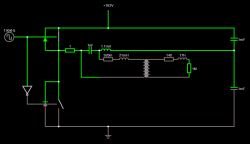
Assumption Half bridge LC resonant with parallel load to C topology. I don't know why but we can find information about it as "parallel resonant converter" that I think is not a true (where is parallel resonant here?) Supply voltage = 230 AC ≈ 325DC lowest frequncy = 100kHz... [Read more]

For some time now, I became interested in network security and came across an article on how to make a Wi-Fi Jammer (deauthentication attack). I did not even suspect that you can make someone's life so easy and simple. To make a Jammer All we need is esp8266. The principle of... [Read more]
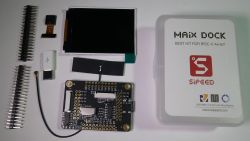
Architecture RISC-V has already discussed on elektroda.pl, a set SiPEED MAiX DOCK in the price of $ 19.90, it is based on the SiPEED M1W module containing the K210 dual-core CPU in RISC-V architecture, KPU (support for artificial neural networks) and WiFi 2.4GHz connectivity (previous... [Read more]
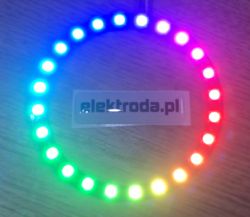
. Hello my dears . Today's topic will be the WS2812 LED driver. First I will describe its operation from the theoretical side, and then I will present my library to support it designed for the PIC18F45K50. What is WS2812? . The WS2812 is an intelligent LED controller connected to... [Read more]
In many materials, for example PCIe 5.0 interface if systems equipped with this interconnect unit appears GT / s - gigatransfer per second. What does it really mean? It appeared with the presentation of the PCI Express (PCIe) standard developed by PCI-SIG (PCI Special Interest Group).... [Read more]
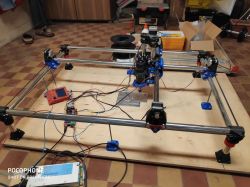
Hi! Another project for my workshop equipment is MPCNC, i.e. a CNC milling machine printed on a 3D printer, today I will share my humble opinion with you (no time for testing, session at PW :( ). I always wanted to be able to precisely cut elements in wood, plexiglass and aluminum.... [Read more]
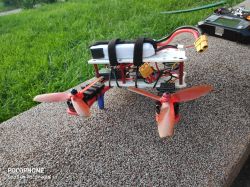
Hi! This is another construction from me :) actually made by me :) I would like to present you a cool toy for every little bit older boy/girl or for adults :) Namely this is a racing drone whose frame I printed on a 3D printer (which I made myself, to be found at this link Link ,... [Read more]

I remember the times when the bandwidth from the Internet provider was a key issue when choosing an offer. Initially hundreds of Kb / s, then single Mb / s, up to a quick jump to tens of Mb / s, then hundreds of Mb / s to 1 Gb / s. In the 30-100Mb / s throughput period, the client's... [Read more]
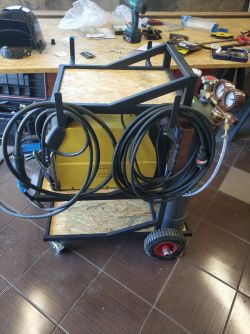
I haven't posted anything on the forum yet, so it's time to show something. I present for a quickly built welding cart. Construction made of 18x30x2 sections. Reinforcements for shelves - 20x4 flat bar. Shelves made of 18mm OSB. Front wheels - swivel 75mm with brake. Rear... [Read more]
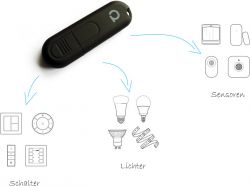
The ZigBee "ConBee II" module is a new version of the ConBee USB dongle, offering an improved output signal amplifier, which translates into a greater range of radio interfaces, as indicated by the manufacturer, Dresden-Elektronik. The device uses a new 32-bit controller with ARM... [Read more]
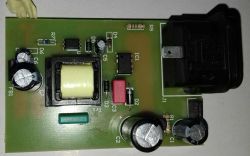
1. Introduction Flyback converter is a buck-boost converter. It is one of the most popular topologies used to power devices with low power, has gained popularity thanks to its simple design and simple principle of operation. Many companies have added their solutions, improving some... [Read more]
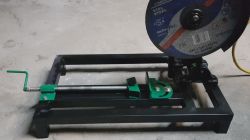
While I was doing a vise recently, I noticed that my cutting line was not straight. After putting two elements together, it turned out that there was a gap and then they had to be filled with a weld. So without thinking long, I decided that as soon as I finished the vice, I would... [Read more]
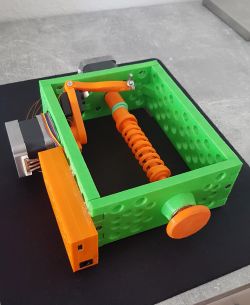
Hello, as Christmas is fast approaching, I would like to present you an egg printer (in the sense of Easter eggs :wink: ) that I recently launched. This is one of those unnecessary projects, but that's where fun counts :D I designed all the necessary elements of the structure... [Read more]
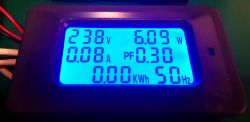
Panel meter of power consumption / consumption of electricity type P06S-20 and P06S-100 I received the above two power / energy meters for testing. They are identical in appearance, the only difference is the transformer attached to the stronger version. The dimensions of the module... [Read more]
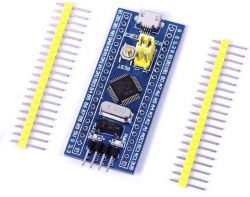
Everyone likes Arduino, from the smallest modules on Attiny85 to the largest modules based on MEGA2560 microcontrollers. Unfortunately, they have their limitations - if we need more computing power, higher precision or more analog inputs, we do not have much choice in the Arduino... [Read more]
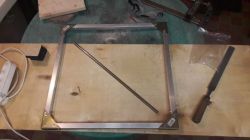
Hi, today I wanted to present you my construction of a 3D printer from start to finish designed and made by me! I'll start with the construction, at the end I'll summarise the costs :) I got interested in 3D printing through the 3D printing circle in my department at university, as... [Read more]
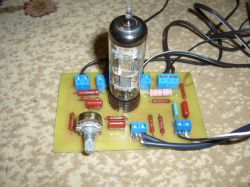
Hello everyone Today I would like to introduce you to the design of a tube amplifier, this is my second tube design. After the successful construction of a long wave tube radio receiver - link below I decided to build a tube amplifier - as the budget for a tube amplifier was not too... [Read more]
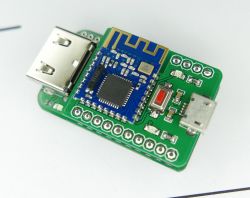
Welcome back. This time I present a retro-emulator based on the Chinese FPGA by Anlogic. The emulator has 8MB of 32bit SDRAM embedded in FPGA. The JDY-08 wireless module based on the CC2541 chip, which I programmed with my own FW, is responsible for communication with the keyboard,... [Read more]
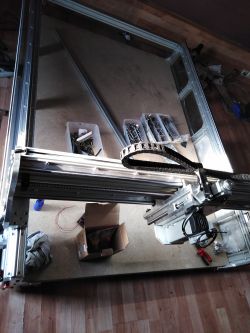
Hello I present my next CNC milling machine which I have not finished long ago. The purpose is mainly: milling, engraving, cutting in materials such as: - wood - mdf - plexiglass The main assumptions are: a large working field combined with the stiffness of the structure and good... [Read more]
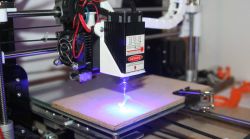
Hello everyone. Today I wanted to demonstrate how to give the Anet A8 3D printer a new function in the form of a laser plotter. I have described the whole project at For this project you will need a laser that we can buy in China. It is important to pay attention to its power –... [Read more]
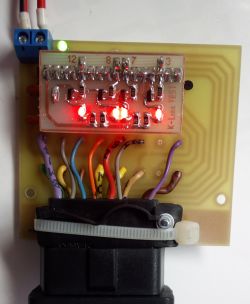
Hello to all forum members! Today I would like to present a project that was created out of pure boredom now, because I felt a bit sick ;) Seriously, I have the Multidiag Pro + diagnostic interface with slight modifications, and I wanted to see how it works, what it sends, and what... [Read more]
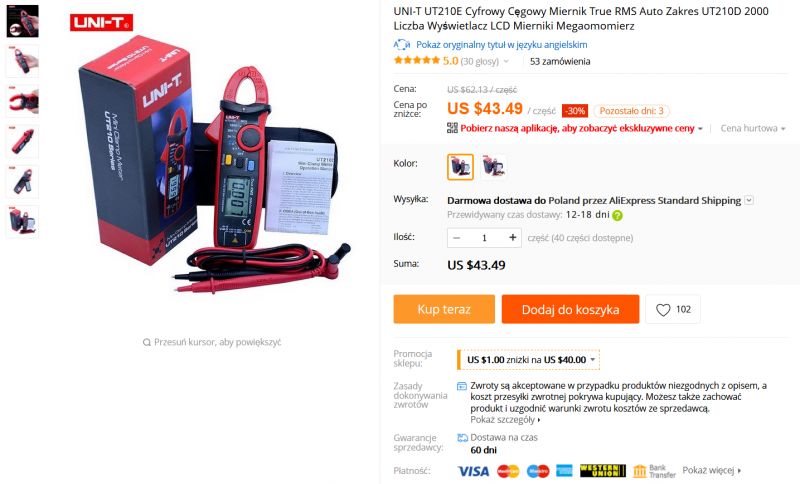
It took me a little bit, but as promised, I am presenting you a "Chinese" branded meter UNI-T though I don't know how much truth there is :D . This multimeter is available in several versions (from AND down E. ) that differ in their functions. I have purchased UT210E , because... [Read more]
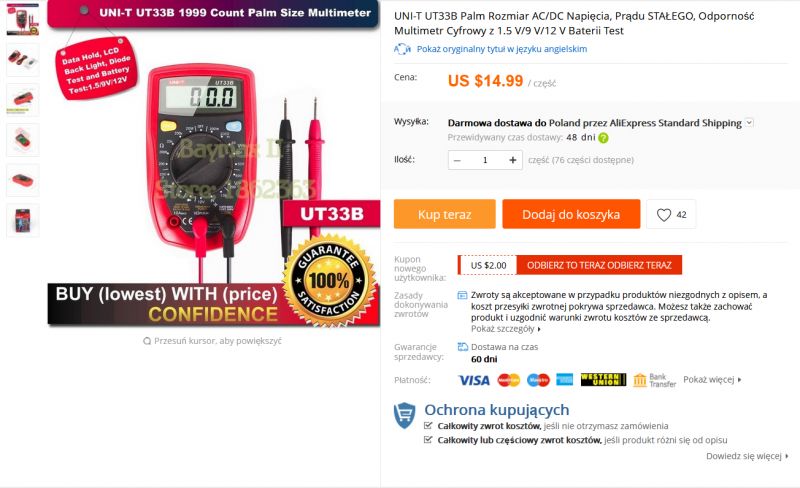
Recently, a few people from our forum ordered the UNI-T UT33 multimeter, which I learned from the thread Gadgetomania - gadgets Electrodes for points . As literally a few days earlier I got such a multimeter (version with the letter "B" at the end) from a friend, because he was in... [Read more]
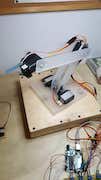
Hello, I present to you a project that I have been working on for the last year. It is a 5-axis manipulator based on the Arduino Uno board. I started the project with the desire to develop my existing skills and learn new things about robotics. Mechanics The base is made of plywood... [Read more]
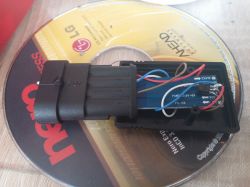
Hello everyone, I was inspired by another thread on the electrode related to the 232 interface for the gas installation. I made the interface presented here over 2 years ago, in the meantime, about a week, new versions were created. The final version was quite universal. It can be... [Read more]
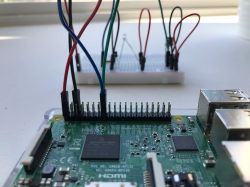
The author of the following project, having no experience with Raspberry Pi, set about creating a simple air conditioning control system. As he did very well, he decided to create the following guide so that any other person could also build a similar device. Step 1: What you'll... [Read more]
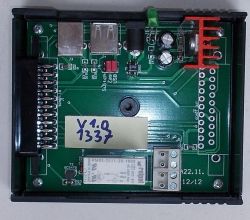
When the capacity of the USB stick attached to the tuner ceased to be enough for me, I connected an old 2.5 "disk. When it was too small, I connected a 3.5" HD disk. There is a power problem. The power supply and disk had to work all the time when I set to record my favorite program.... [Read more]
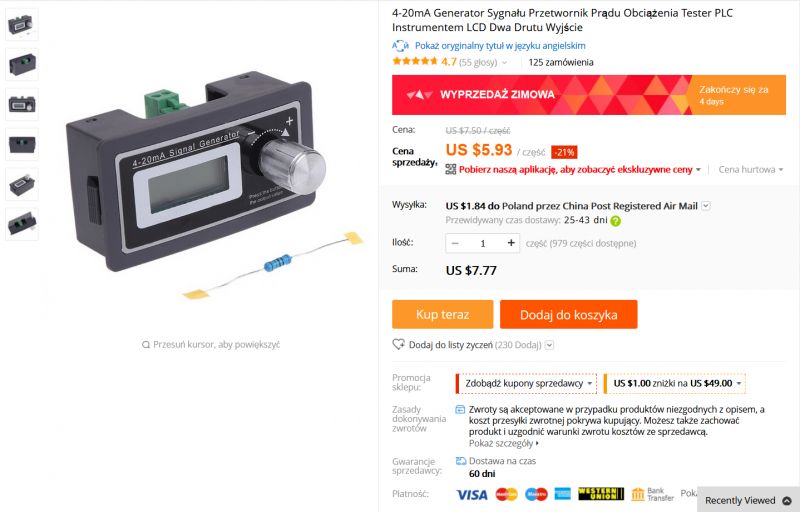
The inspiration for today's article was a colleague @kkknc who in the thread dedicated to gadgets that may appear in the Electrode shop , he proposed two interesting devices, and I quote: "Cheap and interesting. 1Hz-150KHz 3.3V-30V PWM Board Pulse Signal Generator Module PWM Frequency... [Read more]